
Your Audi is built to perform, but even the best cars can develop problems over time. One of the most stressful issues any Audi owner can face is a transmission problem. If your car is slipping gears, making strange noises, or refusing to shift properly, you are not alone.
Transmission problems in Audi vehicles are more common than most people think. This guide walks you through the most common transmission issues, what causes them, and how they can be fixed.
Whether you drive an Audi A4, A6, Q5, or any other model, understanding your gearbox can save you time, money, and worry.
How Professionals Repair Audi Transmission Problems?
When it comes to transmission work, a skilled technician does much more than just replace a part. The repair process follows a clear set of steps to make sure the root cause is found and fully fixed.
Step 1: Full Diagnostic Scan
The first thing a professional does is connect the car to a diagnostic tool. This reads fault codes stored in the car’s computer system. These codes tell the technician exactly where the problem started. Without this step, a mechanic is just guessing.
A proper scan saves time and avoids unnecessary part replacements. For Audi vehicles, specialized diagnostic tools like VCDS or ODIS are commonly used.
Step 2: Physical Inspection
After the scan, the technician does a hands-on inspection. They check the fluid level and condition, look for leaks around the gearbox, and listen for any unusual sounds during a test drive.
This helps them confirm what the scan found and spot any additional issues that codes may have missed.
Step 3: Fluid Change or Flush
In many cases, the first repair step is a fluid service. The old fluid is drained and replaced with the correct Audi-approved fluid. If the fluid is heavily contaminated, a full flush is done.
This clears out sludge and metal particles that build up over time. Fresh fluid often improves shifting quality right away.
Step 4: Part Replacement or Rebuild
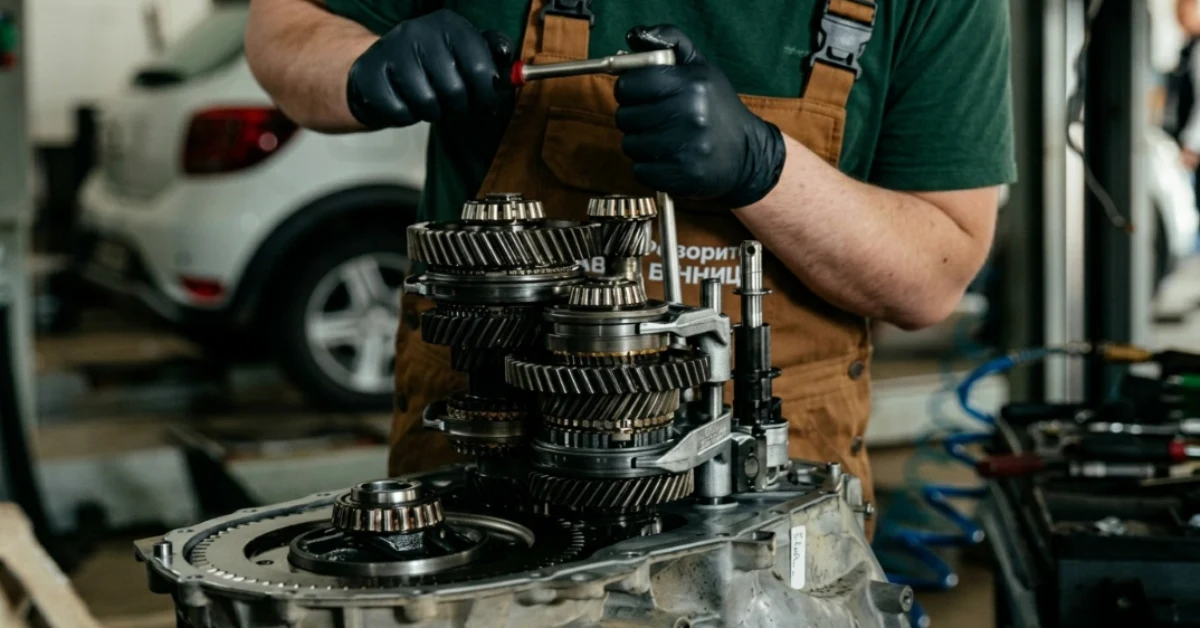
If the problem goes beyond fluid, the technician will remove the transmission for a closer look. Worn solenoids, damaged clutch packs, a faulty valve body, or a failing torque converter are replaced as needed.
In severe cases, a full transmission rebuild is carried out. Every internal part is inspected, cleaned, and replaced if worn. Only quality parts that meet Audi standards are used during this process.
Step 5: Software Update and Recalibration
After the mechanical work is done, the technician updates the transmission control unit software if needed. They also recalibrate the gearbox so it shifts smoothly with the engine.
This final step is very important for Audi vehicles because the transmission and engine work closely together through the car’s computer system.
Step 6: Test Drive and Quality Check
No repair is complete without a proper test drive. The technician drives the car under different conditions to make sure all gears shift correctly. Also, there are no warning lights, and the transmission feels smooth. If everything checks out, the car is returned to the owner with a full report of the work done.
DIY vs. Professional Repair
Some car owners try to fix transmission issues on their own. Simple tasks like checking the fluid level or topping it up can be done at home. However, opening the gearbox, replacing internal parts, or running a software update requires special tools and training.
Audi transmissions are complex systems. A small mistake during a DIY repair can turn a minor issue into a full replacement job. For anything beyond basic checks, it is always safer to trust a trained technician.
How to Maintain Your Audi Gearbox?
Good maintenance can prevent most gearbox problems. Here are a few simple habits that help:
- Change the fluid regularly: Follow Audi’s recommended service intervals for fluid changes.
- Avoid overloading: Carrying very heavy loads puts extra stress on the gearbox.
- Warm up the car: Give your Audi a minute or two before driving in cold weather.
- Use the right fluid: Always use the fluid type recommended for your specific Audi model.
- Address small problems early: Small issues fixed early are much cheaper than big repairs later.
Conclusion
Taking care of your Audi transmission is one of the smartest things you can do as a car owner. Ignoring small signs like rough shifting or fluid leaks can turn into very costly repairs. Regular fluid changes, timely part replacements, and proper diagnostics keep your gearbox running smoothly for years.
Do not wait for the problem to get worse before taking action. If you are dealing with any of the issues mentioned in this guide, it is time to speak to a professional. For trusted and expert help with your Audi gearbox repair and service, reach out to 800Sayara today and get your car back in top condition.
Need professional transmission service for your Audi? Contact 800Sayara now and let our certified technicians handle the rest