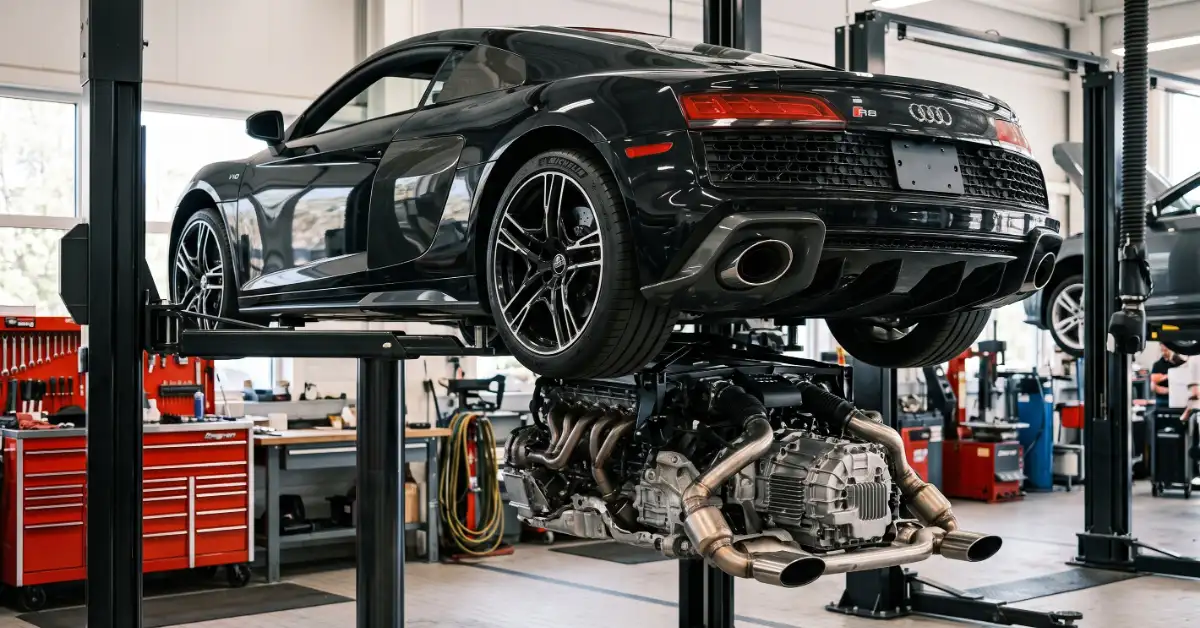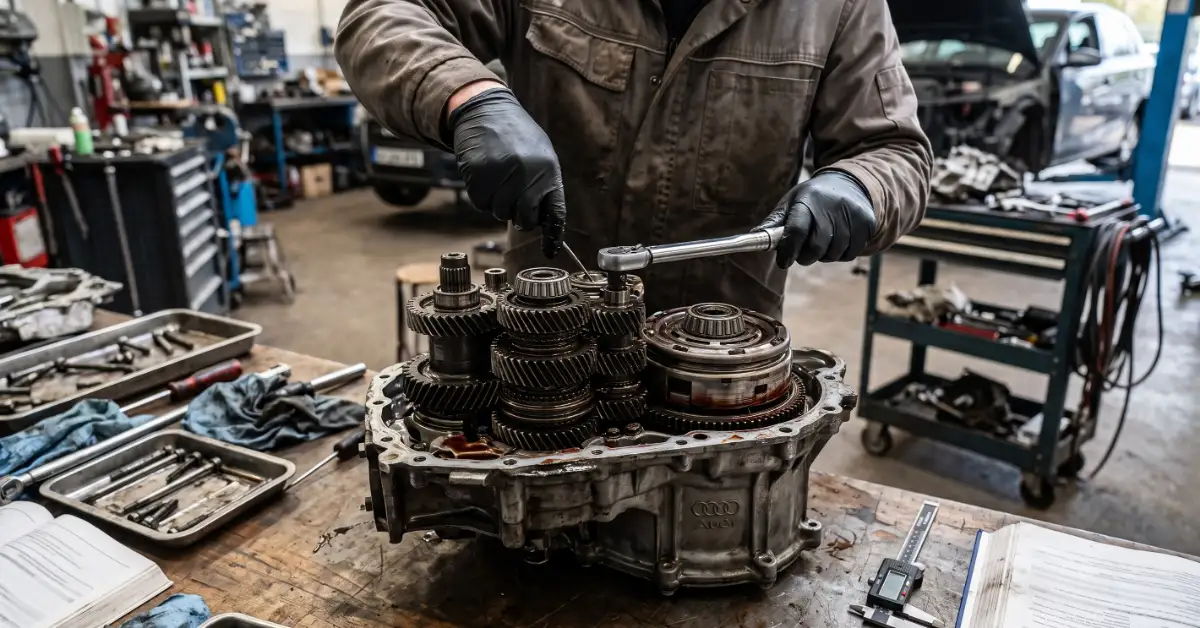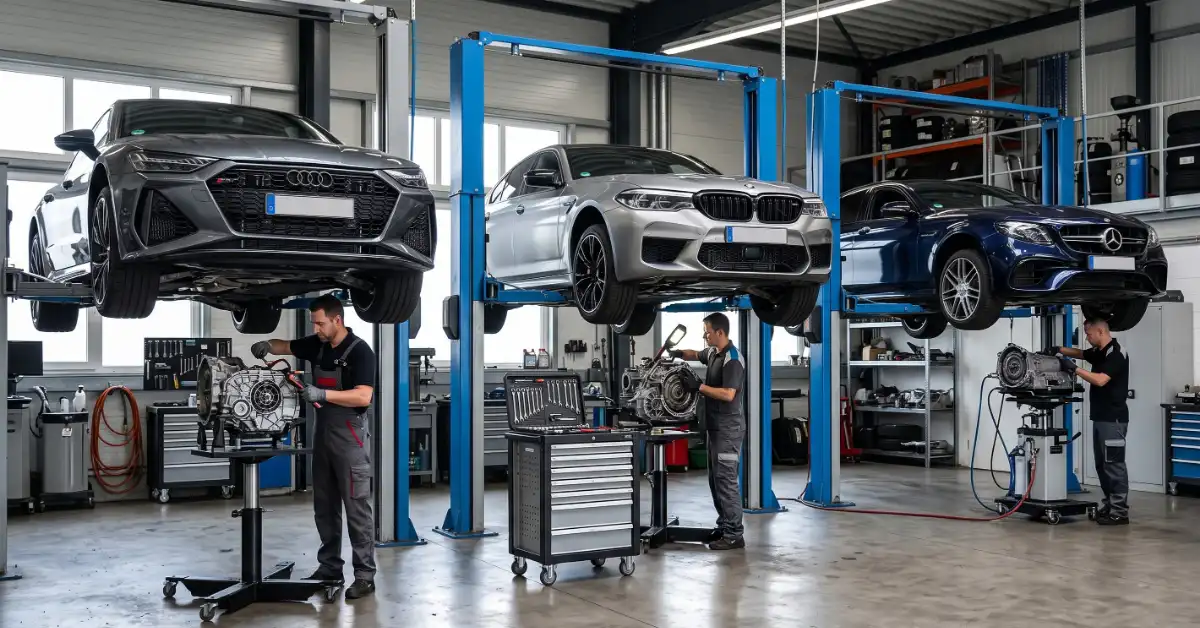
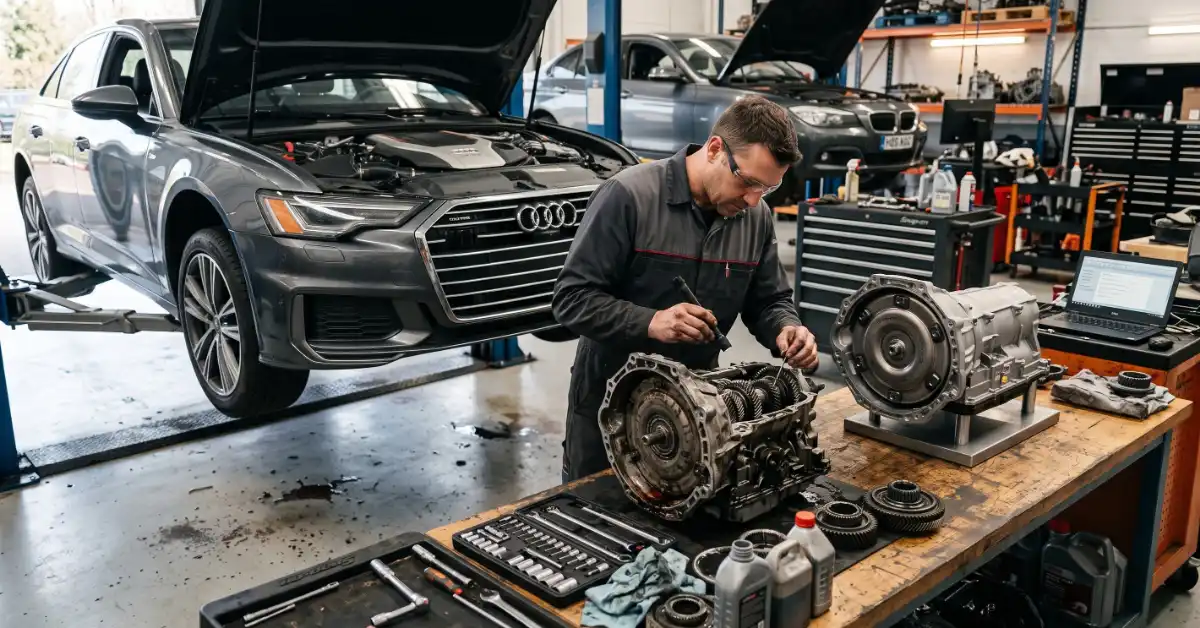
Audi transmission problems do not always mean that the complete gearbox needs to be replaced. The right solution depends on the type of fault, the condition of the internal parts, and the total repair cost.
Minor problems such as fluid leaks, faulty sensors, solenoids, or mechatronics issues can often be repaired. A rebuild may be suitable when several parts are worn, while severe internal damage may make a complete replacement the better choice. A proper diagnosis should always come before spending money on major transmission work.
What Determines the Right Transmission Repair Option?
The condition of the gearbox is the main factor when choosing between repair, rebuilding, and replacement. A technician should first check the transmission control module, fluid condition, fault codes, clutch operation, and internal components.
A diagnostic scan can identify electronic faults, while a fluid inspection may show signs of overheating or metal wear. The age, mileage, service history, and value of the Audi also matter.
If only one part has failed, repairing that part can save money. If several major parts are damaged, replacing the complete unit may make more sense.
When Should You Repair an Audi Transmission?
Repair is usually the better choice when the gearbox is still mechanically sound, and the fault is limited to a few components. Modern Audi gearboxes use electronic controls, sensors, solenoids, and hydraulic systems that can fail without the main gears being damaged.
Fixing these parts can restore normal shifting without replacing the complete unit. Repair can also be suitable when the transmission has a small fluid leak or worn seals.
Early action is important because driving with low fluid levels or low hydraulic pressure can turn a minor fault into serious internal damage.
1. Mechatronics Problems
The mechatronics unit controls gear changes in many Audi S tronic transmissions. When it develops a fault, the transmission may not select gears smoothly or respond correctly.
In many cases, the mechatronics unit, solenoids, or valve body can be repaired without replacing the complete gearbox. Proper scanning and calibration are important after the repair to make sure the transmission works correctly.
Common signs of mechatronics problems include:
- Jerky or harsh shifting
- Delayed engagement
- Transmission warning light
- Limp mode or limited gear selection
- One faulty sensor, solenoid, or mechatronics unit
- Fault codes linked to the mechatronics system
2. Fluid Leaks and Worn Seals
Transmission fluid provides lubrication, cooling, and hydraulic pressure for the gearbox. A damaged seal, gasket, pan, or connection can cause fluid to escape and may lead to overheating or poor shifting.
If the internal parts are still in good condition, repairing the leak and using the correct Audi-approved fluid may solve the problem. The old fluid should also be checked for signs of internal wear.
Common signs of a transmission fluid leak include:
- Fluid spots under the vehicle
- Low transmission fluid level
- Burning smell
- Rough or delayed shifting
- Fluid leaking from seals or gaskets
- No major metal debris in the transmission fluid
3. Clutch Pack Wear
S tronic transmissions use dual clutch packs to transfer engine power and change gears. These clutch parts can wear with mileage, heavy traffic, and repeated stop-and-go driving.
If the main gearbox is still healthy, replacing the worn clutch pack can restore normal operation without replacing the complete transmission. Proper adjustment and calibration may also be needed after the repair.
Common signs of clutch pack wear include:
- Gear slipping during acceleration
- Shuddering when moving
- Delayed engagement
- Difficulty selecting gears
- Uneven power delivery
- No major damage to the main gears or housing
Whichever way the decision goes, it is worth knowing what put the gearbox there. The root causes of failure covers the patterns that lead to each outcome, which is also what tells you whether a repair will hold.
When Is an Audi Transmission Replacement Better?
Replacement becomes more suitable when the gearbox has widespread internal damage that makes repair or rebuilding too expensive. A technician may find damaged gears, bearings, shafts, pumps, or other major components during inspection.
Heavy metal particles in the transmission fluid can also suggest serious internal wear. Repeated failures are another warning sign. If the same gearbox has already received several major repairs but continues to develop faults, installing a quality replacement unit may provide better long-term reliability.
The final choice should consider the repair cost, replacement warranty, vehicle value, and expected future use.
1. Severe Internal Mechanical Damage
An Audi transmission may need replacement when several major internal parts are badly damaged. A failed gear, bearing, shaft, or oil pump can spread metal debris through the gearbox and damage other components.
In this situation, replacing one part may not solve the full problem. A rebuild may still be possible, but a replacement unit can offer better value when the damage is widespread.
Signs of severe internal transmission damage include:
- Heavy metal debris in the transmission fluid
- Grinding or knocking sounds
- Loss of multiple gears
- Severe slipping during driving
- Complete loss of Drive or Reverse
- Burnt or badly contaminated fluid
- Damage to several internal components
2. Repeated Transmission Failures
Repeated gearbox problems can make another repair less practical, especially when several major components have already been replaced. A high-mileage transmission may have wear in many areas, so fixing one fault may only provide a short-term solution.
Comparing the cost of another rebuild with a replacement unit can help you choose the better option. Warranty coverage should also be considered before making the final decision.
Signs that replacement may be a better choice include:
- Repeated major transmission failures
- The same fault keeps returning
- Several major parts have already been repaired
- Repair cost is close to replacement cost
- The gearbox has widespread internal wear
- Multiple gears continue to fail
- Repeated overheating has caused internal damage
How Much Does Transmission Work Cost in the UAE?
Audi transmission costs vary widely because Audi uses different gearbox designs across its models. A basic fluid and filter service may cost around AED 950 to AED 1,500, while mechatronics work can reach AED 5,000 to AED 8,000 or more.
Clutch pack replacement may range from about AED 2,500 to AED 6,000 or more. A complete overhaul can cost around AED 4,500 to AED 15,000 or more.
A brand-new transmission can be much higher, with some units exceeding AED 25,000. These figures are estimates, not fixed prices.
How UAE Heat Affects Audi Gearboxes?
The UAE climate places extra thermal stress on automatic transmissions. High outside temperatures can make it harder for the transmission cooling system to control fluid temperature, especially during heavy traffic.
Excessive heat can speed up fluid breakdown and place more stress on seals, clutch materials, and hydraulic parts. This makes fluid condition especially important for Audi owners in Abu Dhabi, Musaffah and the surrounding industrial districts.
Regular inspection can help find low fluid levels, leaks, and overheating symptoms early. Using the correct transmission fluid and following the proper service schedule can also help protect internal components.
That heat is not evenly distributed across the UAE either. A car doing short congested runs around Musaffah accumulates thermal stress far faster than one covering the same annual mileage on open road, which is why two cars with identical odometers can need very different decisions.
Repair vs Replacement: Which Gives Better Value?
The cheapest option is not always the best option, and the most expensive option is not always necessary. A localized repair can provide good value when the main gearbox is healthy, while a rebuild can work when several parts are worn but the core unit is still usable.
Replacement may be better when internal damage is widespread or repair costs become too high. Compare the cost, warranty, parts quality, and expected service life before making a decision.
| Option | Best For | Estimated UAE Cost | Main Benefit |
|---|---|---|---|
| Repair | Sensors, seals, solenoids, mechatronics faults | AED 800 - AED 8,000+ | Lower cost when damage is limited |
| Rebuild | Multiple worn internal parts | AED 4,500 - AED 15,000+ | Restores the existing gearbox |
| Replacement | Severe internal damage or repeated failures | AED 15,000 - AED 40,000+ | Better option for major gearbox failure |
Important: These are general UAE cost ranges. The actual amount depends on the Audi model, transmission type, parts required, labor, and warranty.
What Should Be Checked Before Making a Decision?
Before approving major transmission work, ask for a complete diagnosis rather than relying only on symptoms. The technician should scan the vehicle for fault codes and check the transmission control system.
Fluid level and condition should also be inspected. If internal damage is suspected, the transmission may need to be opened for a detailed inspection.
It is also useful to ask which parts will be replaced, whether genuine or quality aftermarket parts will be used, and what warranty is provided. Comparing repair and replacement quotes can help you avoid spending money on an unsuitable solution.
Important Signs That Need Attention
Some transmission symptoms should not be ignored because continued driving can increase damage. Watch for:
- Jerky or harsh gear changes
- Delayed engagement when selecting Drive or Reverse
- Transmission warning lights
- Gear slipping during acceleration
- Unusual whining, grinding, or knocking sounds
- Fluid leaks under the vehicle
- Burning smells from the transmission
- Limp mode or limited gear selection
- Shuddering during low-speed driving
- Unexpected changes in engine RPM
Early diagnosis can sometimes turn a major gearbox problem into a smaller repair. Continuing to drive with serious symptoms can increase heat, wear, and internal damage.
The price ranges by job give the figures those checks translate into, so the inspection result and the quote can be read together.
Is a Rebuilt or Remanufactured Unit a Good Choice?
A rebuilt or remanufactured gearbox can be a useful middle option between repairing the original unit and buying a brand-new transmission. A proper rebuild involves inspecting the gearbox, replacing worn components, cleaning internal parts, and checking operation before installation.
A remanufactured unit is usually prepared to meet defined quality standards and may come with a longer warranty. However, quality can vary between suppliers.
Always ask what was replaced, whether the unit was tested, and how long the warranty lasts. A low-cost unit without clear warranty coverage may create more problems later.
How Can You Prevent Future Transmission Problems?
Good maintenance can reduce the chance of major transmission failure. Follow the service interval recommended for your specific Audi transmission and use the correct fluid and filter. Do not ignore small leaks, warning lights, or changes in shifting behavior.
Avoid unnecessary hard launches and repeated aggressive acceleration, especially when the vehicle is already running hot. If your Audi spends a lot of time in heavy UAE traffic, regular transmission checks can be useful.
Keeping the cooling system in good condition also helps control operating temperatures. Early maintenance is usually far cheaper than repairing severe internal damage.
Final Verdict: Repair or Replace Your Audi Transmission?
The condition of the gearbox should always guide the repair decision. Local faults involving sensors, seals, mechatronics, or clutch parts can often be fixed without changing the complete unit. A rebuild may work when the main gearbox is still in good condition, while severe internal damage or repeated failures can justify replacement.
Comparing the repair cost, replacement cost, warranty, and Audi's current value can help you make a sensible choice. Early diagnosis can also prevent a smaller transmission fault from becoming a costly failure.
If your Audi is showing shifting problems, leaks, warning lights, or unusual transmission sounds, Zenfo Auto Services can help with professional Audi transmission services.
Getting the fault checked early can help you choose between repair and replacement before a small issue becomes a major gearbox failure.
The honest version of this decision needs the gearbox opened up or at least scanned properly first. An Audi workshop that will assess it honestly is worth more than any rule of thumb about mileage.