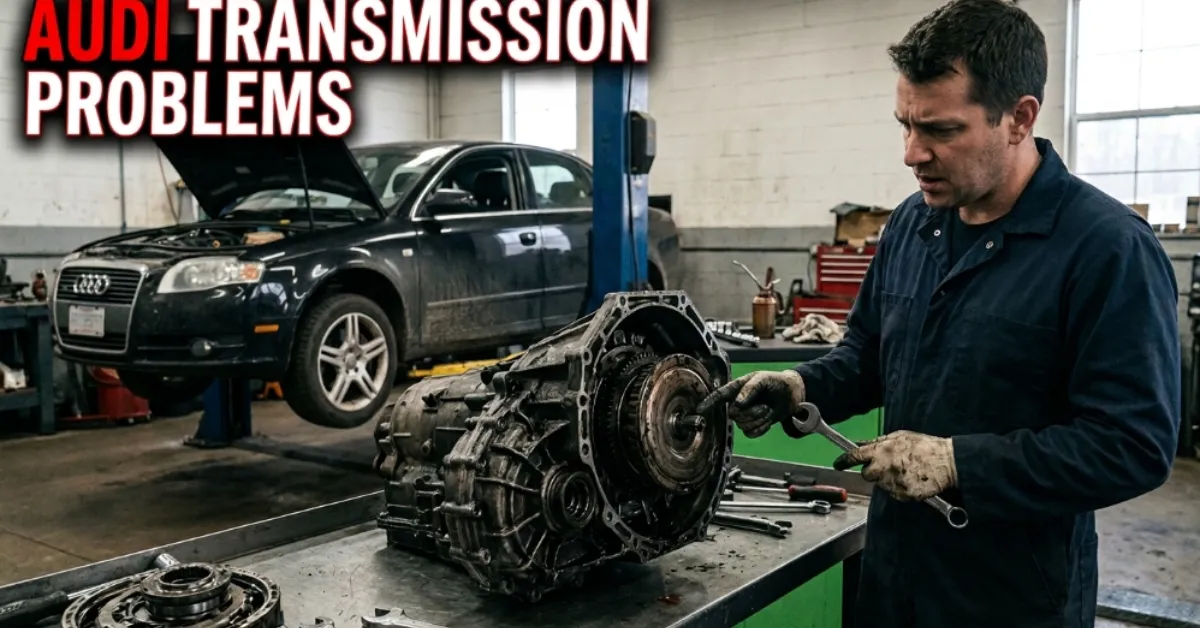
Audi transmission systems are designed to give smooth power delivery, quick gear changes, and a comfortable driving experience. They use advanced technology, including automatic and dual-clutch systems, which work closely with sensors, hydraulic pressure, and electronic control units. Because of this complexity, even small issues can affect overall performance.
Drivers often face problems like delayed shifting, gear slipping, transmission fluid leaks, rough or jerky gear changes, overheating, and mechatronic unit failure. These issues can slowly reduce driving comfort, increase fuel use, and put extra stress on the gearbox. In some cases, ignoring early signs can lead to complete transmission damage and very expensive repairs.
Common Audi transmission problems must be identified early so the vehicle stays safe, smooth, and reliable. Proper maintenance, quick diagnosis, and timely repair help avoid major breakdowns and keep the transmission working in good condition for a long time.
What is Audi Transmission and Why It Matter?
The Audi transmission system transfers engine power to the wheels and controls gear changes based on speed and load. Most Audi models use automatic or S tronic dual-clutch systems.
These systems improve acceleration and fuel efficiency but depend on clean fluid, sensors, and electronic control units. When the system works properly, driving feels smooth and stable. When it fails, performance drops quickly, and the car may become hard to control in traffic or at high speed.
Common Audi Transmission Problems and How to Fix Them
1. Delayed Gear Shifting
Delayed gear shifting happens when the car takes extra time to move from one gear to another. You may feel hesitation when accelerating or a pause before the car responds. This issue is often caused by low transmission fluid, worn clutch components, or faulty transmission sensors.
In some cases, outdated software in the control module can also slow down gear changes and affect driving performance.
How to fix delayed gear shifting?
Start by checking transmission fluid condition and level. Replace it if it is dirty or low. A full transmission service can restore smooth operation.
If the issue remains, a diagnostic scan should be done to check sensors and update the ECU software. Early repair prevents damage to clutch packs and internal gearbox parts.
2. Transmission Fluid Leakage
Transmission fluid leakage is easy to notice through red or dark fluid spots under the car. It usually happens due to worn seals, damaged gaskets, or cracks in the transmission pan.
When fluid level drops, the gearbox loses pressure, which leads to poor shifting and overheating. Driving with low fluid can quickly damage the internal components.
How to fix transmission fluid leakage?
Inspect seals, drain plugs, and the transmission pan for leaks. Replace damaged seals or gaskets immediately. Tighten any loose bolts and refill with correct Audi-approved transmission fluid.
A full inspection during routine servicing helps detect leaks before they turn into major gearbox failure.
3. Gear Slipping
Gear slipping means the car changes gears without control or loses power during acceleration. The engine may rev higher, but the car does not move properly. This happens due to worn clutch packs, low hydraulic pressure, or failing speed sensors inside the transmission system. It is a serious issue that should not be ignored.
How to fix gear slipping?
A complete transmission inspection is required. Worn clutch parts must be replaced, and fluid pressure must be restored. Sensors should also be tested and replaced if faulty.
Regular maintenance and fluid changes help prevent this issue from returning and protect the gearbox from permanent damage.
4. Rough or Jerky Shifting
Rough shifting is when gear changes feel hard, sudden, or uncomfortable. The car may jerk forward or backward during gear changes. This often happens due to dirty transmission fluid, worn mounts, or incorrect calibration of the Transmission Control Unit (TCU). Driving in this condition reduces comfort and increases stress on the gearbox.
How to fix rough or jerky shifting?
Replace old or dirty transmission fluid and clean the filter. Check engine and transmission mounts for wear or damage. A TCU reset or software update can also improve gear smoothness. Regular servicing helps maintain stable and smooth gear transitions.
5. Transmission Overheating
Transmission overheating occurs when the gearbox temperature rises beyond safe limits. This usually happens during long drives, traffic jams, or when fluid loses its cooling ability. Overheating reduces transmission efficiency and can trigger warning lights on the dashboard. If ignored, it can cause severe internal damage.
How to fix transmission overheating?
Replace old transmission fluid with high-quality fluid that supports heat resistance. Check cooling lines and radiator connections for blockages. Avoid aggressive driving until the issue is fixed. In hot climates, adding an external transmission cooler can help maintain safe temperatures.
6. Mechatronic Unit Failure
The mechatronic unit controls gear selection, hydraulic pressure, and electronic signals in Audi automatic transmissions. When it fails, the car may enter limp mode, shift incorrectly, or stop responding properly. This issue is usually caused by electrical faults, overheating, or internal wear of electronic parts.
How to fix a mechatronic unit failure?
A professional diagnostic scan is required to confirm the fault. The unit may need repair, reprogramming, or full replacement depending on the damage. Because it is a sensitive system, only trained Audi specialists should handle this repair to avoid further issues.
Warning Signs of Audi Transmission Issues
- Dashboard warning lights indicate transmission faults, showing internal system stress that needs immediate inspection to prevent serious gearbox damage.
- A burning smell often appears when transmission fluid overheats or breaks down, reducing lubrication and increasing friction inside gearbox parts.
- Delayed response happens when gear shifting takes longer than normal, affecting acceleration and making driving feel slow or unresponsive.
- Strange noises like grinding or whining suggest internal wear, damaged gears, or low fluid levels inside the transmission system.
- Vibration during shifting shows uneven gear engagement, often caused by worn mounts, clutch issues, or transmission imbalance problems.
- Poor acceleration or power loss indicates transmission slipping, reducing engine efficiency and making the vehicle struggle during normal driving conditions.
Simple Maintenance Tips for Audi Transmission
- Check transmission fluid regularly during service to ensure proper lubrication, cooling, and smooth gear operation in all driving conditions.
- Use approved Audi fluids only because wrong fluid types can damage seals, reduce performance, and increase long-term transmission failure risks.
- Avoid harsh driving habits like sudden acceleration and hard braking, which increase stress on clutch packs and gearbox components significantly.
- Do regular inspections every 10,000 to 15,000 km to detect early wear, leaks, or performance issues before major damage occurs.
- Keep software updated in modern Audi systems so transmission control units function properly and provide accurate, smooth gear shifting performance.
Causes of Audi Transmission Problems
- Old or dirty transmission fluid loses its ability to lubricate and cool, causing friction, heat buildup, and internal gearbox damage.
- Aggressive driving behavior such as rapid acceleration and sudden braking puts extra pressure on gears, clutch packs, and the transmission system.
- Overheating during traffic or long drives weakens internal components, reduces fluid quality, and increases the risk of transmission failure over time.
- Electronic sensor or ECU faults disturb gear signals, leading to incorrect shifting, delays, or unpredictable transmission system performance issues.
- Natural wear and tear occurs in high-mileage vehicles, slowly reducing efficiency and increasing the chance of transmission-related mechanical problems.
- Ignoring small issues early allows minor faults to grow into major transmission failures, increasing repair cost and vehicle downtime significantly.
Cost of Audi Transmission Repair
The cost of fixing Audi transmission problems depends on the type of issue and how serious the damage is. Here’s a table that shows which repair has a higher cost:
Repair Type | Description | Cost Level |
Fluid change | Replaces old transmission oil | Low |
Sensor replacement | Fixes shifting signal issues | Medium |
Clutch pack repair | Fixes slipping gears | High |
Mechatronic repair | Repairs control unit faults | Very High |
Full gearbox rebuild | Complete transmission overhaul | Very High |
When to Visit a Workshop for Audi Transmission Problems?
Audi transmission problems should never be ignored once warning signs start appearing regularly. If gear shifting becomes slow, rough, or unpredictable, it is time to visit a workshop. A burning smell, constant warning lights, or loss of power during driving are strong signs of internal transmission stress.
Another important signal is when the car enters limp mode, which means the system is protecting itself from damage. At this stage, driving further can make the problem worse. A professional diagnostic check can identify the exact fault and prevent costly repairs. Getting help early ensures safety and keeps the gearbox in good condition.
Conclusion
Audi transmission systems deliver smooth and powerful driving, but problems can develop over time if maintenance is ignored. Common Audi transmission problems include delayed shifting, fluid leakage, gear slipping, rough shifting, overheating, and mechatronic failure. Each issue has clear warning signs and practical solutions when detected early.
Regular maintenance, proper fluid care, and quick response to warning signs keep the transmission healthy and prevent costly repairs. For professional diagnosis, repair, and full Audi transmission service, contact 800Sayara and keep your Audi performing at its best on every drive.