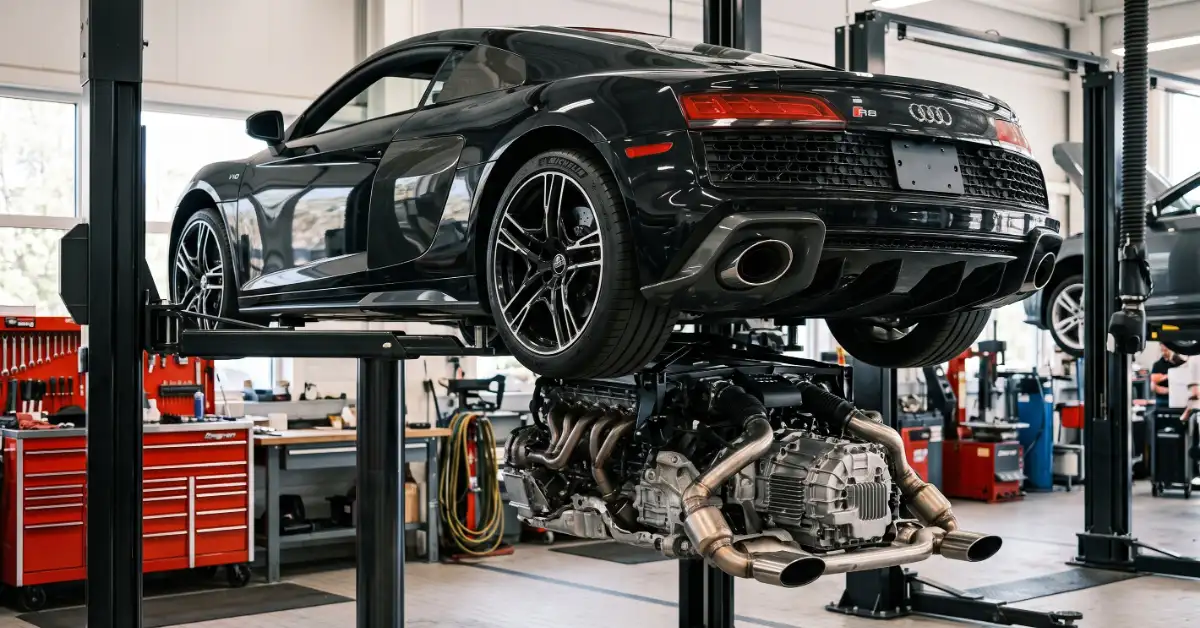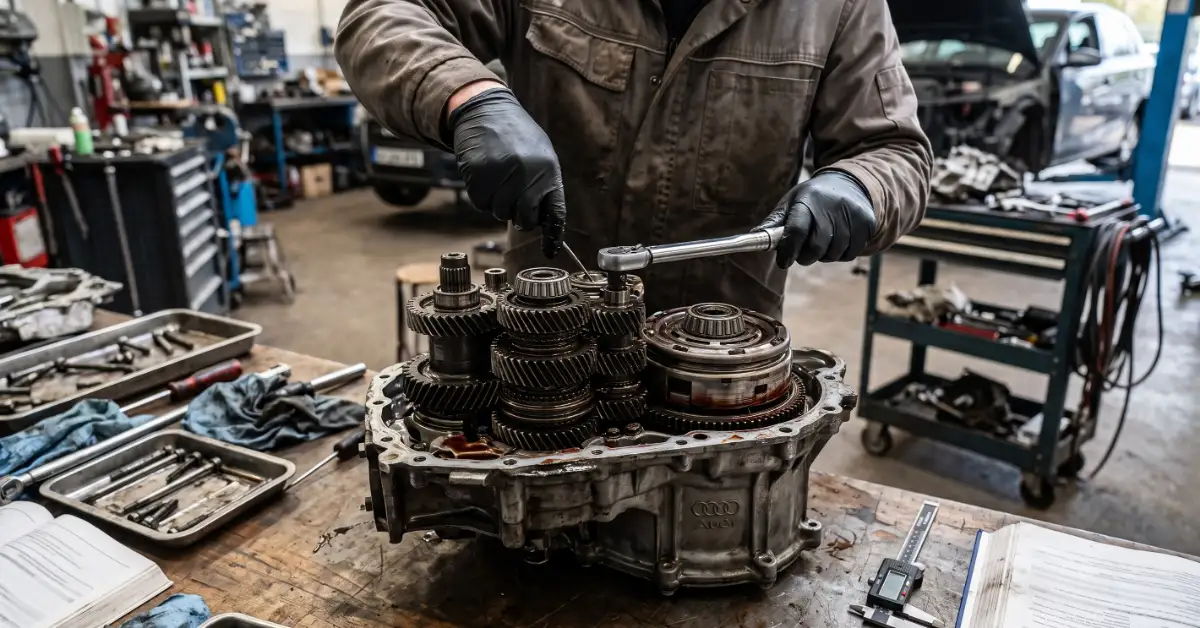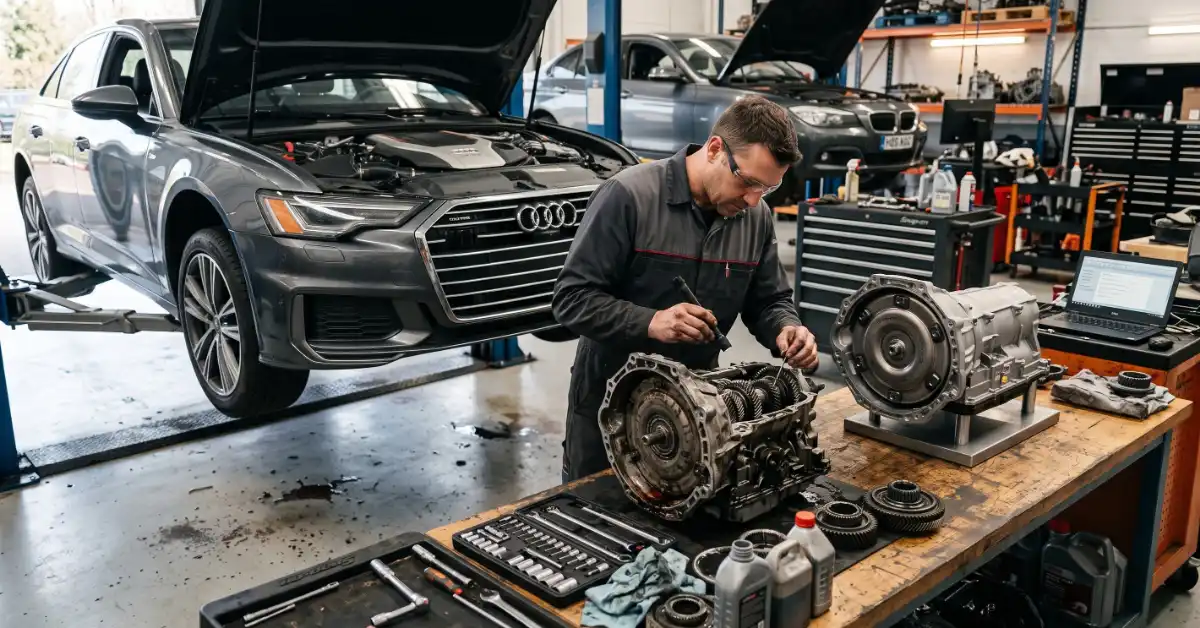
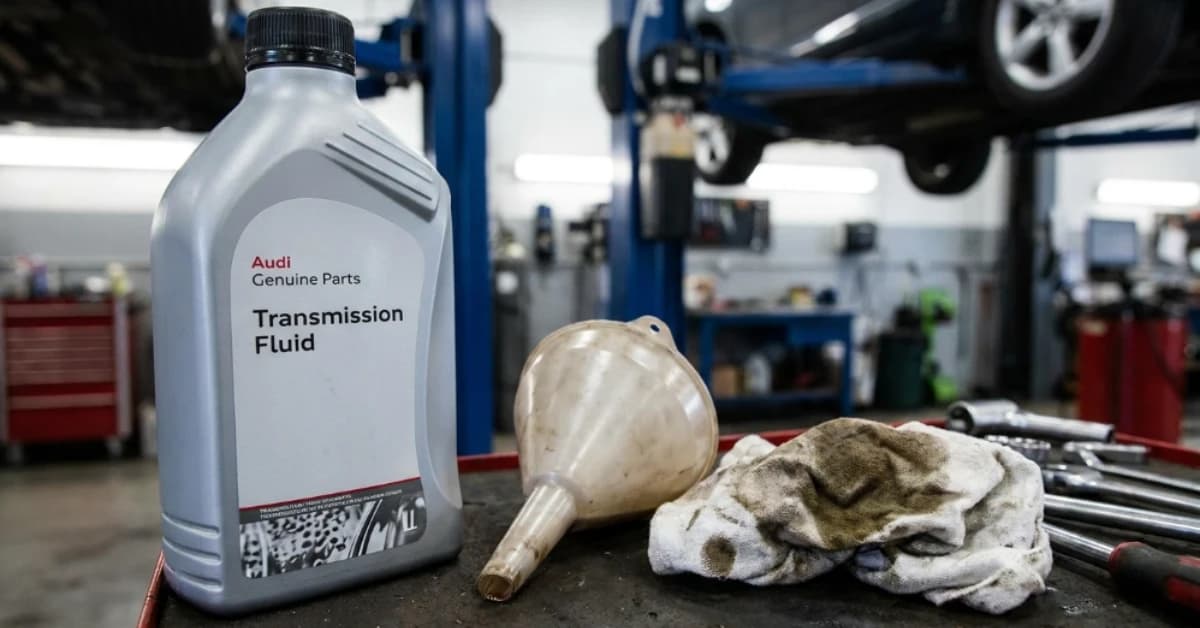
Of every fluid in an Audi, the one in the gearbox gets the least attention and causes the most expensive failures when neglected. Engine oil has a light on the dashboard and a service sticker. Transmission fluid usually has neither, and on many cars it is described as filled for life, a phrase written for a European service life, not for a car that spends its summers in Abu Dhabi.
The fluid is what decides whether a gearbox reaches 200,000 km or needs a mechatronic unit at 90,000. Understanding what it actually does makes the case for changing it far more obvious.
What the Fluid Actually Does
Automatic transmission fluid does three jobs simultaneously, and it is the only component doing any of them.
- Lubrication. It separates the moving metal inside the gearbox so components do not wear against one another.
- Hydraulic force. It is the medium that applies the clutches and operates the valve body. Shift quality is a direct function of fluid pressure and condition.
- Cooling. It carries heat away from the clutches and gears to the cooler. Nothing else performs this function.
That third job is where Abu Dhabi conditions bite. Fluid that has degraded loses its ability to carry heat, which raises operating temperature, which degrades the fluid faster. Once that loop starts it accelerates.
Why the Specification Is Not Interchangeable
Audi gearboxes are built to tight tolerances and each platform has a fluid formulated for it. The S tronic dual-clutch units, the ZF Tiptronic automatics and the Multitronic CVT all take different specifications, and they are not substitutes for one another.
A universal or multi-vehicle ATF will physically fill the gearbox. What it will not do is deliver the friction characteristics the clutch packs were designed around. The result is rough engagement, elevated temperatures, and on a CVT, belt slip that shortens the life of the whole unit. Saving a few dirhams on fluid is the most expensive economy available on these cars.
If you are not certain which specification applies to your car, the fluid specification guide lists them by platform.
How Abu Dhabi Heat Changes the Interval
ATF has a temperature band it was formulated to work in. Sustained operation above that band oxidises it, and oxidised fluid loses both its lubricating film and its heat capacity.
Three local factors push a gearbox towards the top of that band and keep it there:
- Ambient temperature. The fluid starts hot before the car has moved and never gets a cool night to recover in summer.
- Stop-start running. Short journeys across Musaffah and the surrounding industrial areas keep clutches and torque converters in their slipping phase, which is where they generate heat.
- Load and towing. Anything that increases torque through the gearbox increases the heat the fluid has to carry.
The published interval for many Audi models is 60,000 to 100,000 km. In these conditions, treat the lower figure as the target rather than the upper one, and shorter still if the car spends most of its life in traffic.
The Signs the Fluid Needs Attention
Delayed or rough shifts. Hesitation before a change, or a jolt as it lands, is usually the first symptom. Clean fluid at the correct pressure produces a shift you barely notice; degraded fluid does not.
Humming, whining or clunking. Noise during a gear change suggests the fluid is no longer maintaining its film between moving parts.
Dark or burnt-smelling fluid. Healthy ATF is pink or red with a faintly sweet smell. Dark brown fluid that smells burnt has already broken down. On models with a dipstick you can check this yourself; on sealed units it needs a workshop.
Slipping. Engine speed rising without matching road speed means the clutches are not holding. That is the point at which continuing to drive starts causing mechanical damage, and what low fluid does to a gearbox covers how quickly that escalates.
What Ignoring It Costs
The economics are not close. A fluid and filter service is a routine job. A transmission rebuild or replacement runs into thousands of dirhams, and a mechatronic unit is not far behind.
Almost every major transmission repair that arrives at the workshop has the same history: a fluid service that was postponed, then a symptom that was tolerated, then a failure. The fluid change is not the expensive part of owning an Audi; skipping it is.
When it is due, the transmission oil change service uses the OEM specification for your platform and resets the adaptation values afterwards, which matters more on dual-clutch units than most owners realise. If a symptom has already appeared, have it read at the gearbox workshop in Musaffah before booking a service, since a scan will show whether a fluid change is still enough.