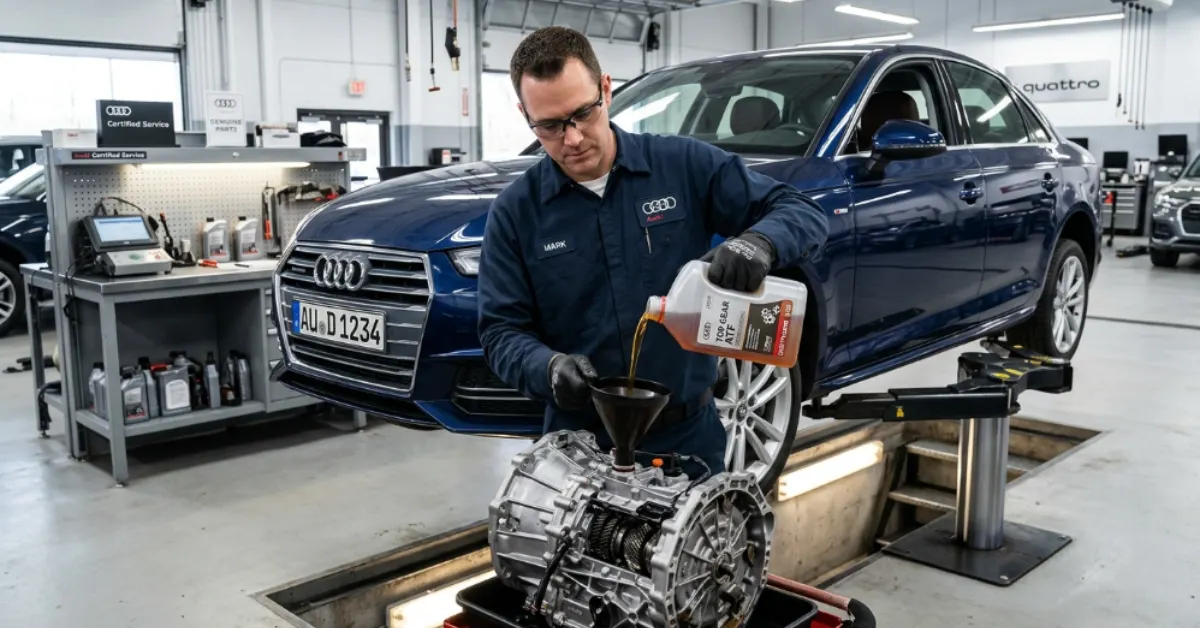
Your Audi depends heavily on its transmission system to deliver smooth gear shifts and strong performance. One of the most important parts of keeping this system healthy is using the correct transmission fluid. Without the right fluid, the gearbox can overheat, wear out faster, or start shifting roughly.
Audi vehicles use specific transmission fluid types based on gearbox systems such as DSG, Tiptronic, and CVT. Each system requires fluid that matches exact manufacturer specifications and approved VW standards. Fluid capacity also varies depending on the model and transmission type, ranging from smaller sedans to larger SUVs and performance models.
Using the correct fluid type, specification, and quantity ensures smooth gear shifting, proper hydraulic pressure, efficient cooling, better fuel economy, and longer gearbox life.
Why Transmission Fluid Matters in Audi Cars?
Transmission fluid is not just a lubricant. In Audi vehicles, it also works as a cooling agent and hydraulic medium. It helps gears shift smoothly and reduces friction between moving parts inside the gearbox.
Modern Audi transmissions, especially DSG systems, work under high pressure and heat. This makes fluid quality extremely important. If the fluid becomes old or incorrect, it can lead to slipping gears, overheating, or delayed shifting. That is why manufacturers recommend specific fluid types for each model.
Why Transmission Fluid Matters in Audi Cars?
Transmission fluid is not just a lubricant. In Audi vehicles, it also works as a cooling agent and hydraulic medium. It helps gears shift smoothly and reduces friction between moving parts inside the gearbox.
Modern Audi transmissions, especially DSG systems, work under high pressure and heat. This makes fluid quality extremely important. If the fluid becomes old or incorrect, it can lead to slipping gears, overheating, or delayed shifting. That is why manufacturers recommend specific fluid types for each model.
1. S-Tronic / DSG (Dual Clutch)
Spec / Part Number: VW G 052 182 A2 (6-speed) or VW G 055 529 A2 (7-speed)
Usage: Used in most 4-cylinder S-Tronic models such as Audi A3, A4, S3, and Q3.
S-Tronic or DSG systems use dual clutch technology for fast and smooth gear changes. These systems need specially formulated fluid to handle high pressure and quick shifting. Using the correct VW-approved fluid ensures proper clutch operation, heat control, and long gearbox life.
2. Tiptronic (Torque Converter Automatic)
Spec / Part Number: Audi G 060 162 A2 or ZF Lifeguard 8 (for 8-speed models)
Usage: Common in larger and performance models such as Audi S4, Q7, Q8, and RS6.
Tiptronic transmissions use a torque converter system, which focuses on smooth and stable gear shifting. The fluid used in these systems supports hydraulic pressure, cooling, and torque transfer. Correct fluid selection helps maintain smooth acceleration and prevents overheating under heavy driving conditions.
3. Multitronic (CVT – Continuously Variable Transmission)
Spec / Part Number: Audi G 052 180 A2
Usage: Found in older front-wheel-drive Audi models (now discontinued in newer lineups).
Multitronic systems use a CVT design that provides continuous gear ratio changes instead of fixed gears. This type of transmission requires specific fluid to maintain belt tension and smooth power delivery. Incorrect fluid can cause slipping, vibration, or early transmission wear.
4. Manual Transmissions & Differentials
Spec / Part Number: VW G 052 911 A2 or GL-4 / GL-5 75W-90 Gear Oil
Usage: Used in manual transmission Audi models and some transfer cases and differentials.
Manual transmissions rely on gear oil instead of automatic transmission fluid. This oil protects gears from wear, reduces friction, and ensures smooth gear engagement. Differential fluids also help manage load distribution and improve drivetrain durability.
Transmission Fluid Specifications for Audi
Using the correct specification is more important than just choosing the right fluid type. In Audi vehicles, transmission systems are highly sensitive and require factory-approved standards to ensure smooth performance, durability, and safety under all driving conditions.
1. Manufacturer-Approved Standards
Audi requires transmission fluids that meet strict Volkswagen Group standards such as G 052, G 055, and other model-specific approvals. These codes are not random; they define exact chemical composition, performance level, and compatibility with DSG, Tiptronic, and CVT systems.
Using non-approved fluid can lead to poor shifting, overheating, and long-term gearbox damage.
2. Viscosity Requirements
Viscosity refers to the thickness and flow behavior of transmission fluid. Audi transmissions require very specific viscosity levels to ensure smooth gear engagement and proper hydraulic pressure.
If the fluid is too thick or too thin, it can cause delayed shifting, slipping, or rough gear changes. Correct viscosity helps maintain consistent performance in both hot and cold driving conditions.
3. Heat Resistance and Thermal Stability
Audi gearboxes operate under high heat, especially in traffic, long-distance driving, and performance conditions. Transmission fluid must maintain stability at high temperatures without breaking down.
Heat-resistant fluid prevents oxidation, reduces wear, and ensures consistent lubrication. Poor thermal stability can quickly lead to fluid degradation and internal transmission damage over time.
4. Friction Characteristics and Clutch Compatibility
Modern Audi transmissions, especially DSG systems, depend on precise friction control for smooth clutch operation. The fluid must allow controlled slipping during gear changes while preventing excessive wear.
Incorrect friction properties can cause jerky shifting, clutch shudder, or early clutch failure. Proper specification ensures balanced performance between smoothness and mechanical protection.
5. Anti-Wear and Protection Additives
Approved Audi transmission fluids contain special additives that protect gears, bearings, and clutch components from wear and corrosion. These additives reduce metal-to-metal contact and extend transmission life.
Without proper anti-wear protection, internal parts can degrade faster, leading to expensive repairs. This specification is essential for long-term reliability and durability of the gearbox system.
6. Seal Compatibility and Material Safety
Transmission fluid must be compatible with internal seals, gaskets, and rubber components inside the gearbox. Poor-quality or incorrect fluid can cause seals to swell, shrink, or crack, leading to leaks.
Audi-approved fluids are designed to protect these materials and maintain proper sealing performance, preventing fluid loss and ensuring stable gearbox operation over time.
7. Oxidation Resistance and Fluid Longevity
Oxidation resistance ensures that transmission fluid does not break down quickly when exposed to heat and air over time. In Audi vehicles, long-lasting fluid performance is critical for maintaining consistent shifting quality.
Poor oxidation resistance leads to sludge formation, reduced lubrication, and internal contamination, which can significantly shorten transmission lifespan and reduce overall efficiency.
Audi Transmission Fluid Capacity Guide
Fluid capacity varies depending on the model and gearbox type. In Audi vehicles, using the correct quantity of transmission fluid is just as important as selecting the right type. Incorrect fluid levels can affect gear shifting, cooling efficiency, and long-term gearbox performance.
1. Small Sedan Models
Smaller Audi sedan models usually require around 5 to 7 liters of transmission fluid during a full service. This amount may vary slightly depending on whether it is a partial drain or full flush.
Proper fluid level ensures smooth gear engagement, correct hydraulic pressure, and stable performance in everyday driving conditions, especially in city traffic and moderate highway use.
2. SUVs and Mid-Size Models
Mid-size Audi vehicles and SUVs generally require between 7 and 9 liters of transmission fluid. These models have larger and more complex transmission systems that handle higher weight and driving loads.
The increased fluid capacity helps maintain proper cooling, lubrication, and hydraulic balance, ensuring smooth shifting even during long-distance travel, uphill driving, or heavy traffic conditions.
3. Performance Models (S/RS Series)
High-performance Audi S and RS models often use advanced DSG systems that may require 8 to 10 liters or more of transmission fluid. These systems operate under higher pressure and faster gear changes.
Correct fluid capacity is essential to support rapid shifting, maintain heat stability, and ensure consistent performance during aggressive driving and high-speed conditions.
How to Check Audi Transmission Fluid Level?
Checking transmission fluid in modern Audi vehicles is not always straightforward because many models come with sealed or electronically controlled transmission systems.
Accurate checking often requires proper tools, correct temperature conditions, and professional methods to avoid incorrect readings that can affect gearbox performance and safety.
1. Using Diagnostic Tools
Most modern Audi transmissions require advanced diagnostic scanners to check fluid level and temperature accurately. These tools ensure the transmission is at the correct operating temperature before measurements are taken.
Proper temperature control is important because fluid expands when hot. Without accurate diagnostics, readings may be incorrect, leading to overfilling or underfilling issues that can affect shifting quality and gearbox health.
2. Service Center Inspection
It is strongly recommended to check transmission fluid levels at an authorized or professional service center. Trained technicians follow manufacturer-approved procedures to ensure accuracy and safety.
They use special equipment designed for Audi gearboxes, preventing common mistakes like incorrect fluid level adjustment. This helps maintain proper hydraulic pressure, smooth gear shifting, and long-term transmission reliability without risking damage.
3. Visual Condition Check
During servicing, mechanics also inspect the condition of the transmission fluid. Healthy fluid is usually red or light pink in color and has a smooth texture. If the fluid appears dark, thick, or has a burnt smell, it indicates overheating or internal wear.
This visual check helps identify early signs of transmission problems before they develop into serious mechanical failures.
Signs You Are Using the Wrong Transmission Fluid
Using incorrect transmission fluid can quickly affect the performance and health of your Audi gearbox. It may cause early wear, poor shifting quality, and overheating issues if not corrected on time.
- Rough Gear Shifting: Incorrect fluid causes harsh gear changes, making driving uncomfortable and increasing internal transmission stress over time.
- Delayed Gear Engagement: Wrong fluid reduces hydraulic pressure, causing noticeable delay when shifting into Drive or Reverse gears.
- Unusual Transmission Noises: Grinding or whining sounds may appear due to poor lubrication caused by incompatible transmission fluid inside the gearbox.
- Overheating Issues: Incorrect fluid cannot handle heat properly, leading to increased gearbox temperature and potential internal component damage risk.
- Reduced Fuel Efficiency: Wrong fluid increases internal resistance, forcing the engine to work harder and reducing overall fuel economy noticeably.
- Poor Overall Performance After Service: If issues start after fluid change, it may indicate incompatible fluid requiring immediate inspection and correction.
Maintenance Tips for Better Transmission Health
Proper maintenance is essential to keep your transmission system in good condition for a long time in your Audi vehicle. Following correct care practices helps improve performance, prevent breakdowns, and reduce costly gearbox repairs over time.
- Follow Recommended Service Intervals: Always stick to manufacturer-recommended service schedules to ensure timely transmission checks and fluid replacement for better gearbox performance.
- Use Correct Transmission Fluid Only: Never mix different fluid types, as incompatible fluids can reduce lubrication quality and damage internal transmission components over time.
- Regular Fluid Changes: Change transmission fluid at proper intervals to maintain smooth gear shifting, stable pressure, and reduced internal friction.
- Avoid Aggressive Driving Habits: Sudden acceleration, hard braking, and high-speed driving increase stress on the gearbox and shorten its lifespan significantly.
- Do Not Carry Excessive Loads: Overloading the vehicle puts extra pressure on the transmission system, leading to overheating and faster wear of internal parts.
- Routine Transmission Inspections: Regular inspections help detect leaks, contamination, or early signs of failure before they become serious mechanical problems.
Conclusion
Understanding transmission fluid types, specifications, and capacity is essential for maintaining a healthy gearbox in your Audi vehicle. Using the correct fluid ensures smooth performance, better fuel efficiency, and longer transmission life.
Following proper guidelines helps prevent costly repairs and keeps the driving experience smooth and reliable. With the right care and correct fluid selection, your vehicle’s transmission system can perform efficiently for many years without major issues.
If you notice any transmission problems or need professional support, get reliable Audi transmission services from 800Sayara to keep your car running at its best.