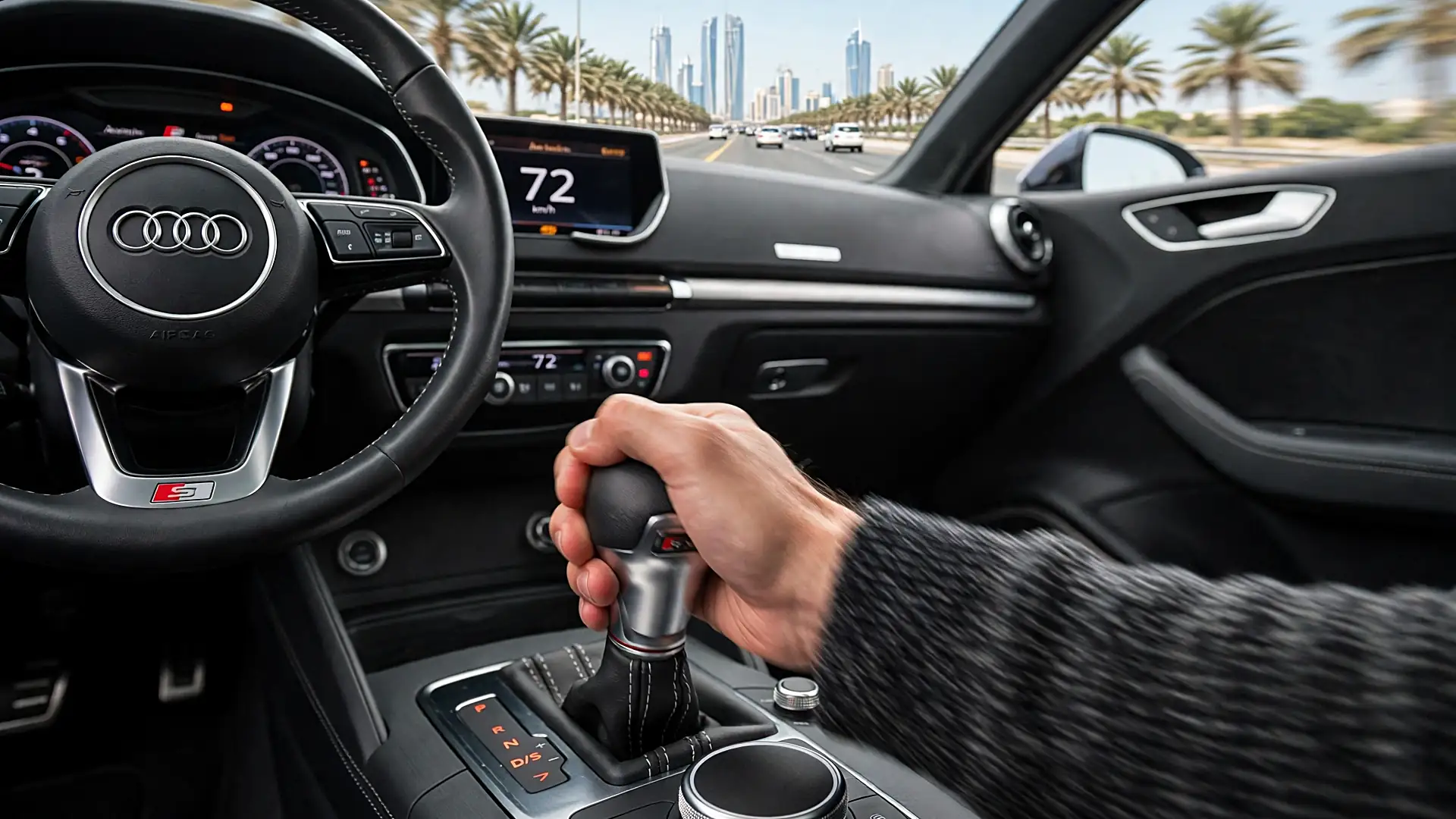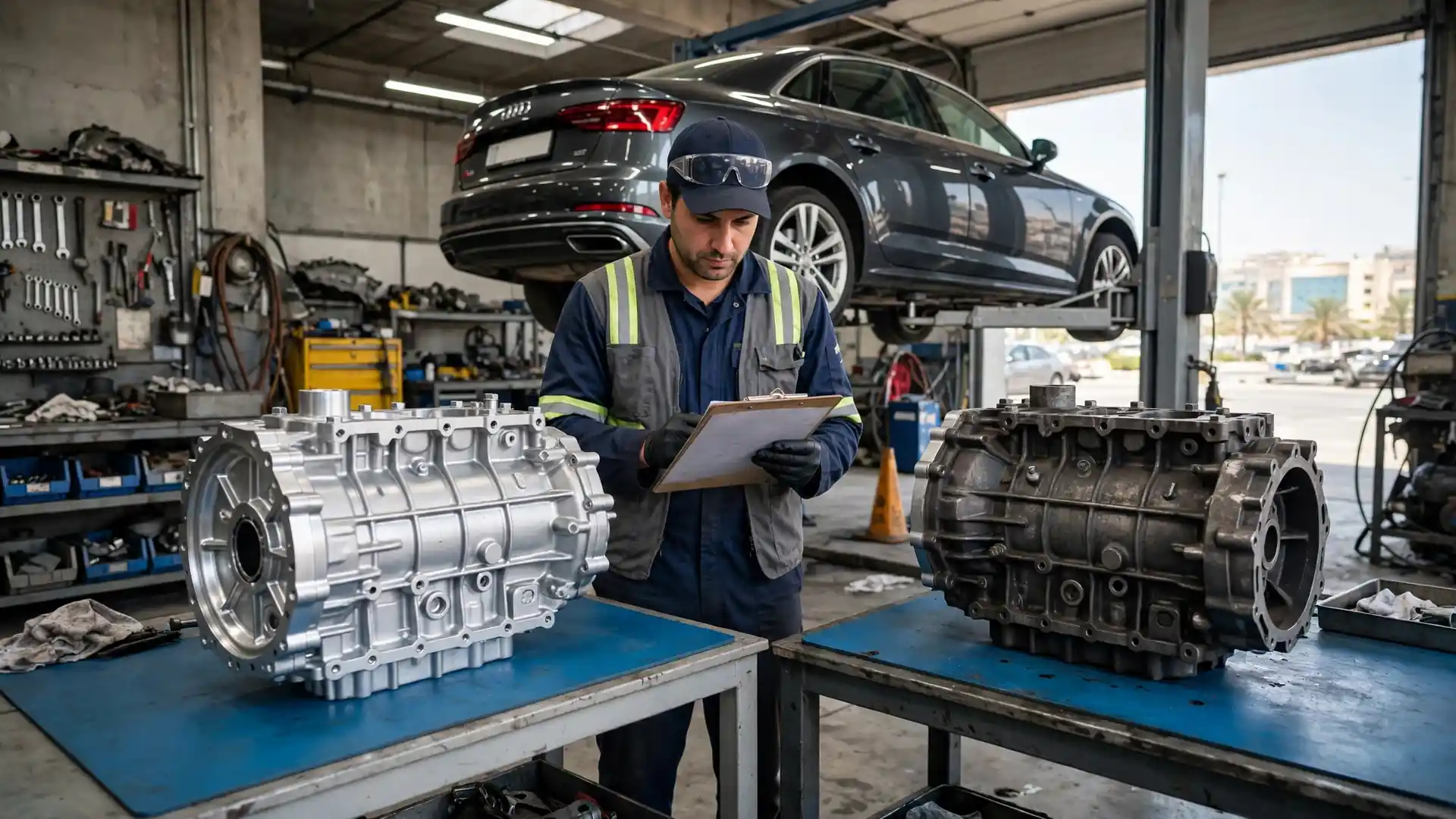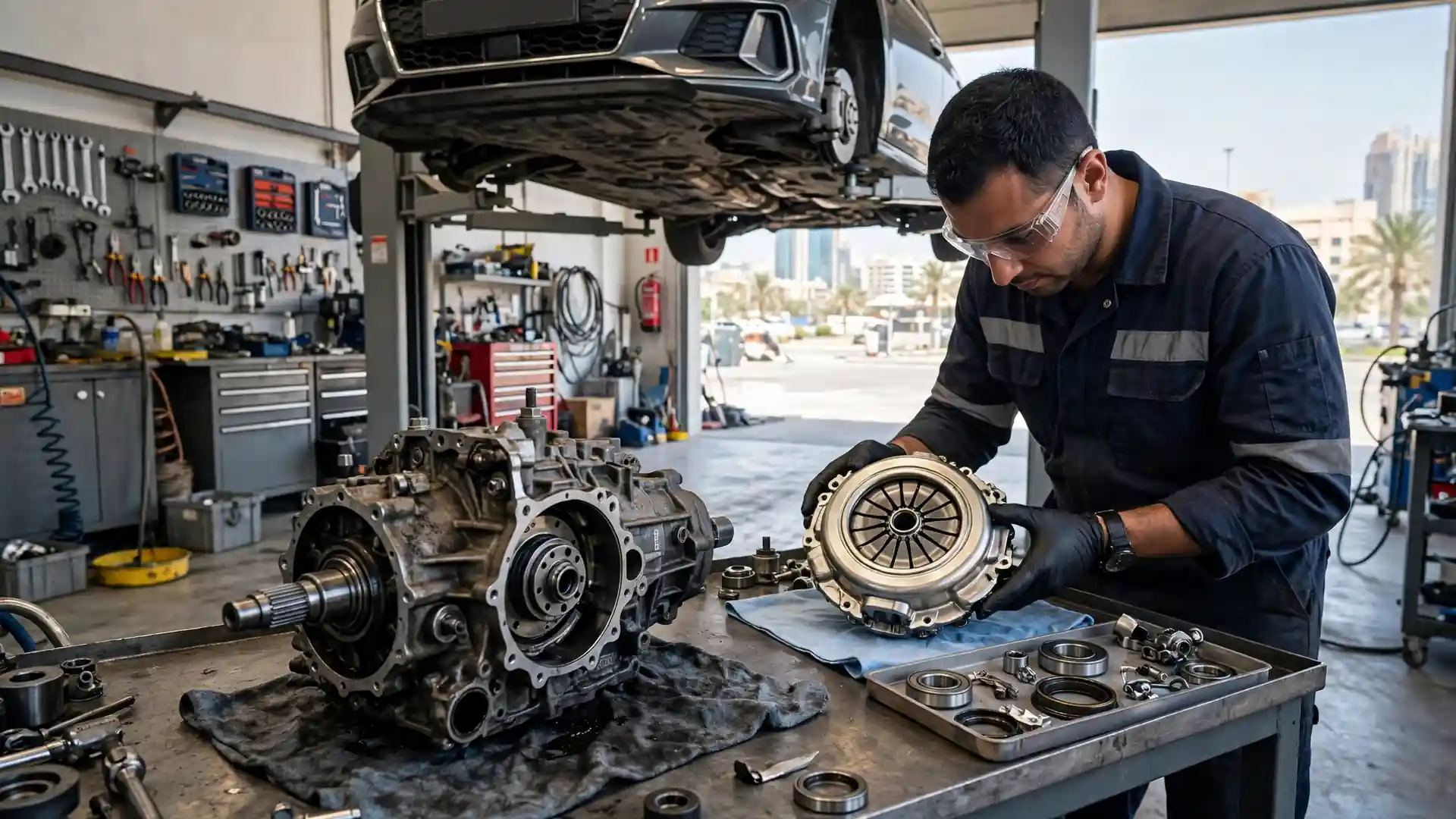
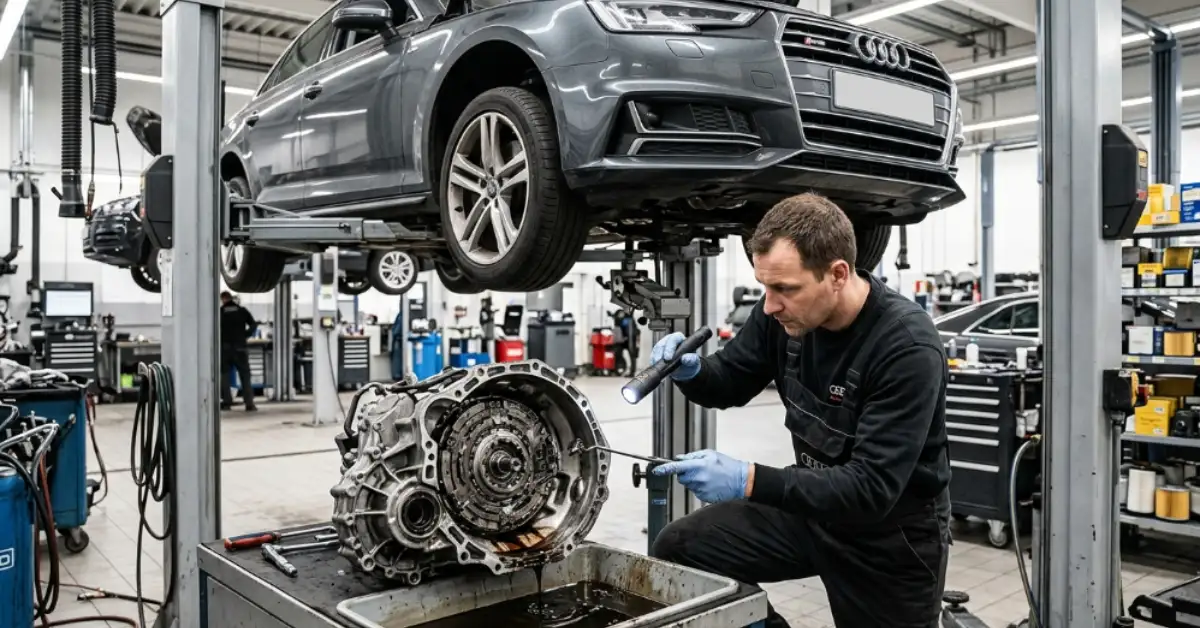
Most of what makes an Audi feel like an Audi comes from the gearbox: how power reaches the wheels, and how invisibly it changes ratio while doing it. When that starts going wrong, the car tells you through rough shifting, unfamiliar noises and reduced performance.
The common faults are a short list: fluid leaks, overheating, delayed changes and worn internal components. Knowing which symptoms belong to which fault, and how urgent each one is, is what lets an owner act at the point where the repair is still small.
What the Gearbox Does
The gearbox transfers engine power to the wheels while selecting the right ratio for the conditions. That is what allows smooth acceleration, efficient cruising and reasonable fuel economy from the same engine.
Modern Audi models use DSG and Tiptronic systems designed for fast, smooth changes. The performance is real, and so is the maintenance requirement that comes with it. These are precision systems, and they behave like precision systems when neglected.
Symptoms, Causes and Urgency at a Glance
| Gearbox issue | Common symptoms | Possible causes | Recommended solution | Severity |
|---|---|---|---|---|
| Delayed gear engagement | Delay shifting into Drive or Reverse, slow response | Low fluid, worn clutch components, hydraulic pressure issues | Inspect fluid level, run diagnostic testing, repair worn parts | Medium |
| Rough or jerky changes | Harsh shifting, sudden jerks | Old fluid, software faults, worn internal components | Change fluid, update software, inspect components | Medium |
| Gear slipping | Unexpected gear changes, loss of power, poor acceleration | Worn clutch packs, low fluid pressure, internal wear | Immediate inspection and repair of affected components | High |
| Fluid leaks | Fluid spots under the vehicle, low level, overheating risk | Damaged seals, loose fittings, worn gaskets | Repair leaks, replace seals, refill | High |
| Unusual noises | Grinding, whining, humming or clunking | Poor lubrication, worn bearings, damaged gears | Inspect internal components and replace damaged parts | High |
| Overheating | Burning smell, warning lights, reduced performance | Old fluid, cooling system issues, excessive load | Change fluid, inspect cooling system, ease off heavy driving | High |
| Burning smell | Strong burnt odour from the engine or gearbox area | Overheated or degraded fluid | Replace fluid and identify the overheating source | High |
| Dashboard warning lights | Transmission or engine warning light appears | Sensor faults, pressure issues, internal problems | Diagnostic scan and repair the logged fault codes | Medium to high |
| Shaking during shifts | Vehicle shakes during acceleration or gear changes | Worn components, pressure imbalance, mounting issues | Inspect the transmission system and replace worn parts | Medium |
| Loss of acceleration (RPM flare) | Revs rise but speed does not follow | Transmission slipping, worn clutch components | Immediate gearbox inspection and repair | High |
Reading the severity column: Low means monitor and schedule an inspection soon. Medium means repair is recommended to prevent further wear. High means immediate professional inspection to avoid major damage or failure.
The Six Faults in Detail
1. Delayed gear engagement. A noticeable pause before the car moves after selecting Drive or Reverse. Low fluid, worn clutch components or hydraulic pressure problems are behind it. It seems minor at first and does not stay minor.
2. Rough or jerky changes. Shifts should be almost imperceptible. Jerking or harsh movement between gears points to fluid condition, software faults or worn internal parts, and driving through it adds stress that accelerates the wear.
3. Gear slipping. The transmission changes gear unexpectedly or cannot hold the selected one. Power delivery drops and the car becomes unpredictable. Low fluid pressure, worn clutch packs or internal damage are the causes.
4. Fluid leaks. Red or dark fluid under the car indicates damaged seals, loose fittings or worn gaskets. Since the fluid handles both lubrication and cooling, a leak needs fixing quickly rather than topping up.
5. Unusual noises. Whining, grinding, humming or clunking during acceleration, deceleration or shifts. These almost always mean lubrication problems or damaged internal components, and they are worth investigating the first time you hear them.
6. Overheating. The leading cause of gearbox damage. Old fluid, cooling system problems or heavy driving conditions all produce it, and high temperature degrades the fluid further while wearing internal parts. Warning signs worth acting on covers how these present from the driver's seat.
What Causes Them
Poor maintenance leads the list. Fluid left beyond its interval becomes contaminated and stops protecting anything. Aggressive driving (hard acceleration, sudden braking, heavy loads) adds stress that internal components absorb until they cannot. Software issues, sensor faults and ordinary wear account for most of the rest.
Heat is the multiplier on all of them, and it is where local conditions matter. Sustained ambient temperature means the gearbox has less thermal margin before fluid reaches the top of its operating range, and the congested stop-start driving typical of runs through Musaffah and the surrounding industrial areas keeps it generating heat without shedding it. The same car maintained on the same schedule will develop these faults sooner here than in a temperate climate, which is an argument for shortening the interval rather than for accepting the outcome.
Signs That Should Never Be Ignored
- Burning smell: overheating fluid that has lost its ability to lubricate and cool
- Dashboard warning lights: the sensors have detected a fault worth scanning for
- Shaking or vibration during shifts: worn components, pressure issues or imbalance, and it worsens if untreated
- Loss of acceleration: revs rising without speed means power is not being transferred
- Delayed engagement: low fluid, worn parts or hydraulic pressure problems
- Rough or jerky changes: contaminated fluid, worn internals or software faults
- Unusual noises: internal wear or poor lubrication
- Fluid leaks: leaking seals or gaskets, leading to overheating and wear
- Gear slipping: affects vehicle control as well as performance
- Difficulty staying in gear: internal mechanical issues, and a safety matter
Model-specific patterns are worth knowing alongside the general ones, and the A6 trouble spots covers what recurs on that platform.
Preventing Gearbox Trouble
- Change the fluid on time. Clean fluid reduces friction, controls heat and keeps shifting smooth. Delaying it is the single most common cause of gearbox failure
- Drive smoothly. Avoiding hard acceleration and sudden braking meaningfully extends component life
- Address problems early. A minor symptom inspected now costs a fraction of the rebuild it becomes
- Schedule regular inspections so leaks, wear and fluid issues are found before they cause damage
What Good Maintenance Buys
A well-maintained gearbox shifts smoothly, uses less fuel, and lasts longer. It also fails less often and less expensively, which is the part that shows up in ownership costs rather than in how the car feels.
- Smoother gear changes: better comfort and responsiveness
- Longer gearbox lifespan: less wear on internal components
- Better fuel efficiency: efficient power delivery
- Lower repair costs: major failures prevented rather than fixed
- Improved reliability: fewer unexpected breakdowns
- A better car to drive: the whole point of the system working properly
Getting a Fault Identified
Understanding the symptoms, their causes and their urgency is what lets you act before a small problem becomes a large one. Regular maintenance, timely fluid changes and prompt attention to warning signs cover most of what a gearbox needs.
When something does appear, the useful first step is finding out what it actually is. gearbox diagnostics in Musaffah reads the stored fault codes and live data so the repair matches the fault rather than the guess.
Most of the faults above are preventable rather than inevitable. Making a gearbox last sets out the routine that keeps them from developing.