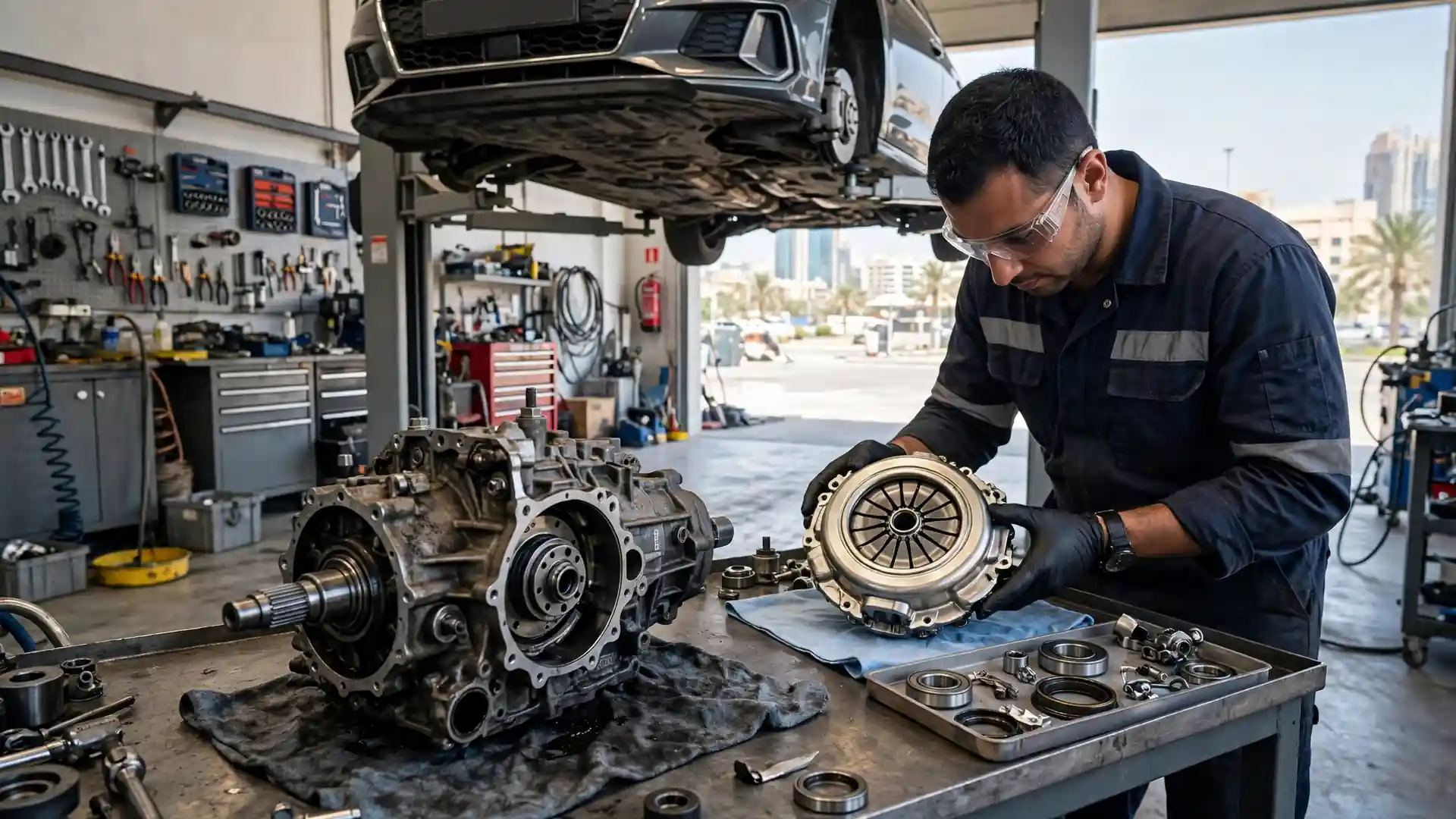
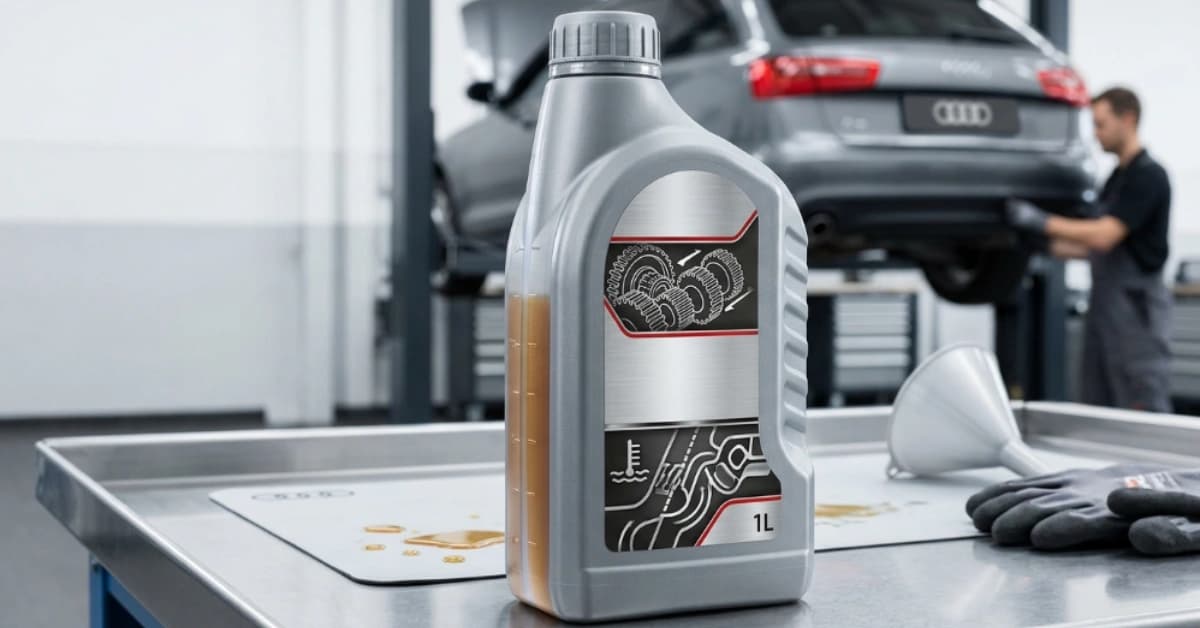
There is no single best transmission fluid for an Audi. There is only the fluid that matches the gearbox fitted to your car, and everything else is a compromise that shows up later as rough shifting or premature wear.
For most cars that means the genuine Audi or Volkswagen product specified for the platform. In practice the common answers are Genuine VW/Audi ATF for Tiptronic gearboxes, Genuine Audi DSG fluid for S tronic systems, ZF LifeguardFluid for many automatics, Pentosin FFL-2 and FFL-4 for dual-clutch units, and Genuine VW CVT fluid for Multitronic transmissions.
Getting this right matters more in Abu Dhabi than in cooler markets, because heat magnifies the consequences of a marginal choice.
Why the Choice Carries So Much Weight
Transmission fluid does far more than lubricate. It cools the gearbox, reduces friction, protects internal components from wear, and provides the hydraulic pressure that actually changes gear.
Modern Audi transmissions are built around precise fluid properties. When the fluid degrades or the wrong product goes in, the symptoms follow a familiar order: delayed shifting, then overheating, then vibration, then accelerated wear. Because Audi uses several different transmission technologies across the range, this is one of the few maintenance decisions where being approximately right is not good enough.
The specification guide covers what each approval number actually controls.
Matching Fluid to Gearbox
Tiptronic automatics. Conventional torque-converter gearboxes, many of them built by ZF. They need ATF formulated to protect the internal clutch packs: Genuine VW/Audi fluids such as VW G 060 162 A2 and VW G 055 540, or ZF LifeguardFluid, which is developed specifically for many ZF units. These provide the lubrication, temperature control and shift quality the gearbox was designed around.
S tronic and DSG. Dual-clutch systems need a dedicated product: Genuine Audi DSG fluid, or the Pentosin FFL-2 and FFL-4 range depending on the unit. The friction characteristics are what allow controlled slip during engagement; a generic ATF will not deliver them.
Multitronic CVT. A dedicated CVT fluid, and no substitutes. The belt and pulley arrangement depends on it to maintain tension. This is the platform where the wrong fluid does the most damage fastest.
Manual gearboxes. High-quality gear oils rather than ATF, with products such as Motul Gear 300 or Red Line MT-90 serving well.
How to Confirm the Right Fluid for Your Car
Two Audis with the same engine can take different fluid depending on the gearbox installed, so model year alone is not enough.
Start with the VIN. This is the reliable method. A dealership or authorised parts supplier can use it to return the exact specification the manufacturer lists for your car, which removes the guesswork entirely.
Check the transmission code. The gearbox itself carries an identifying code. Matching that to the approval number is the cross-check against a VIN lookup.
Look for service bulletin updates. Specifications are occasionally revised. A workshop that works on these platforms regularly will know which supersessions apply.
If you also need to know how much to buy, capacities by model lists the figures.
What Abu Dhabi Heat Does to Fluid Choice
Every fluid above has a thermal operating window. Sustained high ambient temperatures push a gearbox towards the top of that window and hold it there, which changes the calculation in two ways.
First, the margin for a marginally-compatible fluid disappears. A universal product that might survive in a temperate climate oxidises quickly here, and once it has, it stops carrying heat away, which raises temperature further.
Second, the interval shortens. Stop-start running between the industrial blocks around Musaffah keeps clutches and torque converters in their heat-generating phase without the sustained airflow of a longer run. The fluid ages by duty cycle, not by odometer.
The practical result: buy the approved specification, and change it towards the shorter end of the recommended interval rather than the longer one.
Signs the Fluid Needs Replacing
Some Audi transmissions were marketed as filled for life. In these conditions that phrase is best read as a warranty position rather than an engineering one. Watch for:
- Delayed gear engagement
- Rough or jerky shifting
- Slipping under load
- Whining noises
- Transmission overheating warnings
- Reduced fuel efficiency
- Dashboard warning lights
Acting on these early usually means a fluid service rather than a clutch pack. When it is due, have it filled with the correct grade and the adaptation values reset afterwards. On dual-clutch units that final step matters as much as the fluid itself.
Mistakes Worth Avoiding
Universal multi-vehicle fluids. Broad compatibility claims rarely mean the product meets Audi's exact approval. It will fill the gearbox; it will not deliver the friction characteristics the clutches were designed for.
Mixing types. Combining different fluids alters friction properties and degrades lubrication quality. If the wrong product went in, drain and refill rather than topping up over it.
Ignoring the specification number. Match the approval code, not the marketing description on the bottle.
Assuming a supplier knows the car. Confirm against the VIN or the transmission code.
The safest route is to buy the fluid through the workshop doing the work, since using an independent Audi specialist in Abu Dhabi who stocks the approved products for each platform removes the sourcing risk along with the fitting risk.