
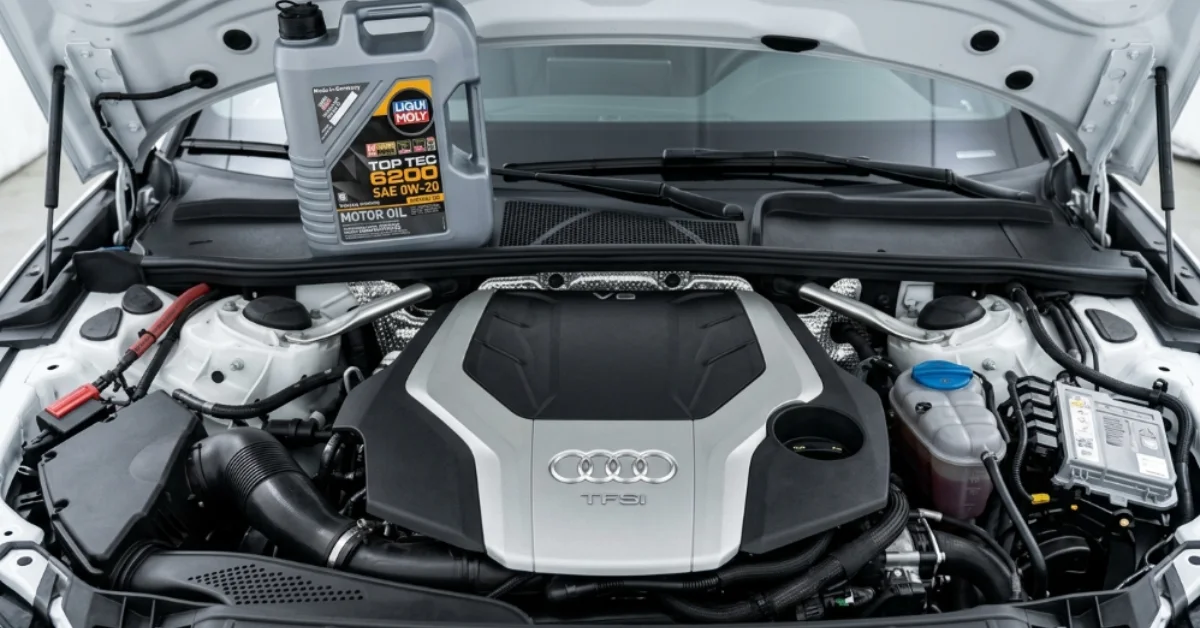
Your Audi A6 is a precision-built machine, and keeping it in top shape means paying attention to the fluids that keep it running. One fluid that often gets ignored is the transmission fluid, even though it plays a huge role in how smoothly your car shifts gears and how long your gearbox lasts.
If you drive an Audi A6 and want to protect your investment, knowing the right transmission fluid type and capacity is a must. The Audi A6 uses different types of transmission fluid depending on the model year and gearbox type.
Most modern A6 models with a 7-speed S tronic or CVT use ATF (Automatic Transmission Fluid) such as Pentosin ATF 1 LV or Audi’s own G 055 025 A2 specification. The total fluid capacity for most A6 transmissions falls between 7 and 9 liters, though the service fill amount is slightly less.
Audi recommends changing this fluid every 60,000 km under normal conditions, or sooner if the car is used in heavy traffic or extreme heat.
What Type of Transmission Fluid Does the Audi A6 Use?
The type of gearbox fluid your A6 needs depends on which transmission is fitted to your specific model. Audi has used several transmission systems in the A6 lineup over the years, including the traditional automatic, dual-clutch (DSG/S tronic), and CVT setups.
For A6 models with the 7-speed S tronic dual-clutch transmission, Audi specifies ATF fluid meeting the G 055 025 A2 standard. A popular choice that meets this spec is Pentosin ATF 1 LV.
For older A6 models using a 6-speed or 8-speed torque converter automatic, the recommended fluid is Esso LT 71141 or an equivalent that meets the ZF LifeguardFluid 6 or 8 specification.
Always cross-check your owner’s manual or the label on the transmission itself before buying fluid, as using the wrong type can cause shifting issues and long-term gearbox damage.
Audi A6 Transmission Fluid Capacity by Model Year
Different A6 generations have different fluid capacities. Below is a reference table to help you find the correct amount for your specific car.
|
Model Year |
Transmission Type |
Fluid Specification |
Total Capacity |
Service Fill |
|
2005 to 2011 (C6) |
6-Speed Tiptronic |
ZF LifeguardFluid 6 / Esso LT 71141 |
8.0 liters |
3.5 to 4.0 liters |
|
2011 to 2018 (C7) |
7-Speed S tronic |
G 055 025 A2 / Pentosin ATF 1 LV |
7.2 liters |
3.5 liters |
|
2011 to 2018 (C7) |
8-Speed Tiptronic |
ZF LifeguardFluid 8 |
8.5 liters |
4.0 liters |
|
2018 to Present (C8) |
7-Speed S tronic |
G 055 025 A2 / Pentosin ATF 1 LV |
7.5 liters |
3.5 to 4.0 liters |
|
2018 to Present (C8) |
CVT (Multitronic) |
G 052 180 A2 |
6.5 liters |
3.0 liters |
Note: The total capacity refers to how much the full system holds, including the torque converter. The service fill is the amount needed during a standard drain and refill. If you are doing a full flush, you will need the total capacity amount.
How Often Should You Change the Transmission Fluid in an Audi A6?
Audi labels the transmission fluid in some models as “lifetime fill,” but this does not mean you should never change it. In real-world driving, especially in hot climates like the UAE, gearbox oil breaks down faster due to heat and stop-and-go traffic.
Most Audi technicians and independent experts recommend changing the ATF every 60,000 to 80,000 km to keep the gearbox in good health. If your car is used for towing, driving in heavy traffic daily, or in extreme heat, a change every 40,000 to 60,000 km is a smarter choice.
Waiting too long can cause the fluid to break down, leading to rough gear shifts, transmission slipping, or even gearbox failure. A simple Audi fluid change is far cheaper than rebuilding or replacing a gearbox.
Signs That Your Audi A6 Needs a Transmission Fluid Change
Many drivers wait until something goes wrong before checking the transmission fluid. By that point, some damage may already be done. Knowing the warning signs early can save you from a costly repair.
Here are some common signs that your ATF needs attention:
- Rough or Jerky Gear Changes: You may feel sudden jolts or hard shifts, especially when the car moves from first to second gear.
- Delayed Engagement: There is a noticeable pause when you shift from Park to Drive or Reverse before the car starts moving.
- Whining or Humming Sounds: Unusual noises coming from the gearbox area often point to low fluid levels or degraded lubrication inside.
- Burning Smell from the Gearbox: A sharp, burnt odor usually means the fluid is old, broken down, and causing excess heat inside the transmission.
- Transmission Warning Light: When this light appears on your dashboard, the system has already detected a problem that needs immediate professional attention.
- Slipping Gears: The car may feel like it loses power or hesitates during acceleration, which often means the gearbox is not holding the gear properly.
If you notice any of these, it is a good idea to have the fluid level and condition checked as soon as possible.
How to Check Transmission Fluid Level on an Audi A6?
Unlike older cars, the Audi A6 does not always have a traditional dipstick for checking the gearbox fluid level. On many C7 and C8 generation models, the transmission is a sealed unit, which means checking the fluid level requires lifting the car and using a special fill plug procedure.
Sealed Transmission Fluid Check Process
For sealed Audi transmissions, the process generally works like this:
- The car must be at operating temperature (around 35 to 45 degrees Celsius for the fluid itself, often checked with a diagnostic tool)
- A technician removes the overflow plug on the side of the gearbox
- If fluid drips out, the level is correct. If no fluid comes out, more needs to be added
- The plug is then reinstalled and torqued to the correct specification
This process requires professional tools, so it is best left to a trained Audi technician. Trying to do this without the right equipment can lead to overfilling or underfilling, both of which cause transmission problems.
Choosing the Right Transmission Fluid for Your Audi A6
Not all ATF fluids are the same, and using the wrong one can damage the seals, clutch packs, or valve body inside the gearbox. Audi specifies exact fluid standards for each transmission, and it is important to stick to those specifications.
OEM vs. Aftermarket Fluids
Audi OEM fluid (sold through dealerships) is the safest option because it is made to exact factory standards. However, there are quality aftermarket options that meet the same specifications at a lower cost.
Some trusted brands and their compatible specs include:
- Pentosin ATF 1 LV: Meets G 055 025 A2, suitable for 7-speed S tronic
- Liqui-Moly ATF Top Tec 1200: Compatible with ZF LifeguardFluid 6
- Castrol Transmax ATF DEX/MERC: Suitable for some older A6 Tiptronic models
- Shell ATF 134 FE: Meets ZF LifeguardFluid 8 spec for 8-speed units
Always check the product label or manufacturer’s data sheet to confirm compatibility before using any aftermarket fluid. Using a fluid that looks similar but does not meet the Audi spec can void your warranty and damage the gearbox over time.
Can You Mix Different Transmission Fluids in an Audi A6?
This is a question many car owners ask, and the answer is simple: do not mix transmission fluids. Even if two fluids look the same or both claim to be ATF, mixing different brands or specifications can cause chemical reactions that reduce lubrication, damage seals, and create foam inside the gearbox.
If you are topping up, use only the same fluid that is already in the transmission. If you are unsure what fluid is currently in the car, especially after buying a used vehicle, it is safer to do a complete drain and refill with fresh, correct-spec fluid.
What Happens If You Ignore Transmission Fluid Maintenance?
Neglecting the gearbox oil is one of the most common reasons for early transmission failure. Old or degraded fluid loses its viscosity and can no longer protect the moving parts inside the gearbox.
This leads to increased friction, heat build-up, and wear on components like the clutch packs, bearings, and valve body. In extreme cases, a lack of proper fluid maintenance can cause complete gearbox failure.
Replacing or rebuilding an Audi A6 transmission can cost thousands of dirhams, making regular fluid changes one of the best preventive maintenance steps you can take. A basic transmission service is a small cost compared to a full gearbox replacement.
Audi A6 Transmission Fluid Change: DIY vs. Professional Service
Some experienced car owners prefer doing their own fluid changes to save money. For the Audi A6, this is more complex than a standard oil change due to the sealed transmission design.
You need a vehicle lift, a torque wrench, a fluid pump, and a diagnostic tool to monitor the fluid temperature. For most owners, a professional service is the better choice.
A trained technician can check for leaks, inspect the transmission pan for metal shavings (a sign of internal wear), and ensure the correct fluid level is achieved. Getting this done at a trusted workshop gives you peace of mind and protects your car’s long-term performance.
Conclusion
Keeping up with Audi A6 transmission fluid maintenance is one of the simplest ways to extend the life of your gearbox and enjoy smooth, reliable driving. The right fluid type, whether it is G 055 025 A2 for the S tronic or ZF LifeguardFluid 8 for the Tiptronic, makes a big difference in how well the transmission performs. Most A6 models need between 7 and 9 liters total, with a service fill of around 3.5 to 4 liters depending on the generation.
Changing the ATF every 60,000 to 80,000 km, or sooner in hot climates, keeps the gearbox healthy and avoids costly repairs. Sticking to the correct fluid spec, watching for early warning signs, and getting professional help when needed will keep your A6 shifting smoothly for years to come.
If your Audi A6 is due for a transmission fluid change, or if you have noticed rough shifting or other gearbox issues, the team at 800Sayara can help.
With trained Audi specialists and the right equipment to handle sealed transmissions, 800Sayara offers professional and reliable Audi transmission repair service to keep your car running at its best. Book your transmission service today and drive with confidence.