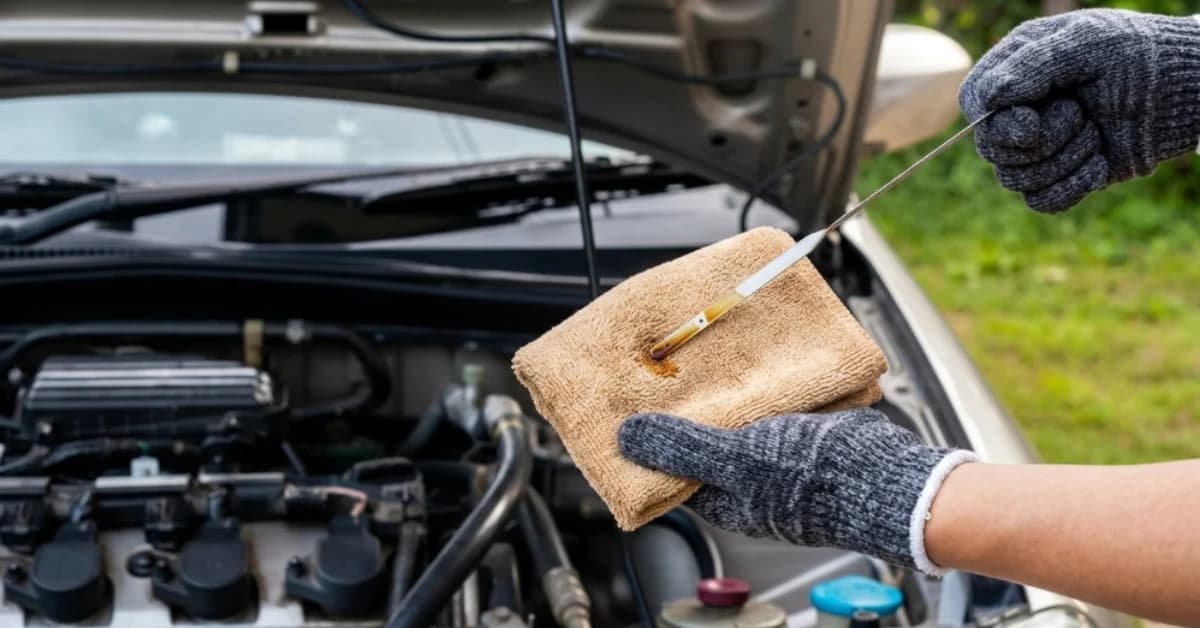
Low transmission fluid is one of the few faults that gets dramatically more expensive the longer it is left. It does not fail gracefully. Every kilometre driven with the level down adds heat and friction to components that were never designed to run dry.
In Abu Dhabi the margin is thinner than elsewhere. The fluid is already working at the top of its temperature range in summer, so a level that would be survivable in a cooler climate becomes damaging much sooner here.
What Low Fluid Does, in Order
The failure follows a predictable sequence.
- Pressure drops. The fluid is the hydraulic medium that applies the clutches. Less fluid means lower pressure, and lower pressure means the clutches do not clamp fully.
- The clutches slip. A partially applied clutch slips against its mating surface. That is the jerk or hesitation you feel on a shift.
- Slipping generates heat. Friction from slipping goes straight into the fluid, which is already reduced in volume and therefore has less capacity to absorb it.
- The fluid degrades faster. Overheated fluid oxidises, loses its film strength and its cooling ability, and the cycle tightens.
- Components fail. Clutch plates glaze and wear, the valve body suffers, and eventually the gearbox will not hold drive at all.
The important point is that stages one and two are cheap to fix and stages four and five are not.
Why an Audi Gearbox Is Particularly Sensitive
Audi's automatic and S tronic dual-clutch units depend on fluid doing three things at once: lubricating the moving metal, providing the hydraulic force that changes gear, and carrying heat away from the internals.
Drop the level and all three degrade together. There is no partial-function mode. This is different from engine oil, where a low level primarily affects lubrication; in a gearbox it also directly affects whether the car can change gear correctly at all.
What the fluid does in normal operation is worth reading alongside this, because the failure modes are simply those functions being lost one at a time.
The Warning Signs
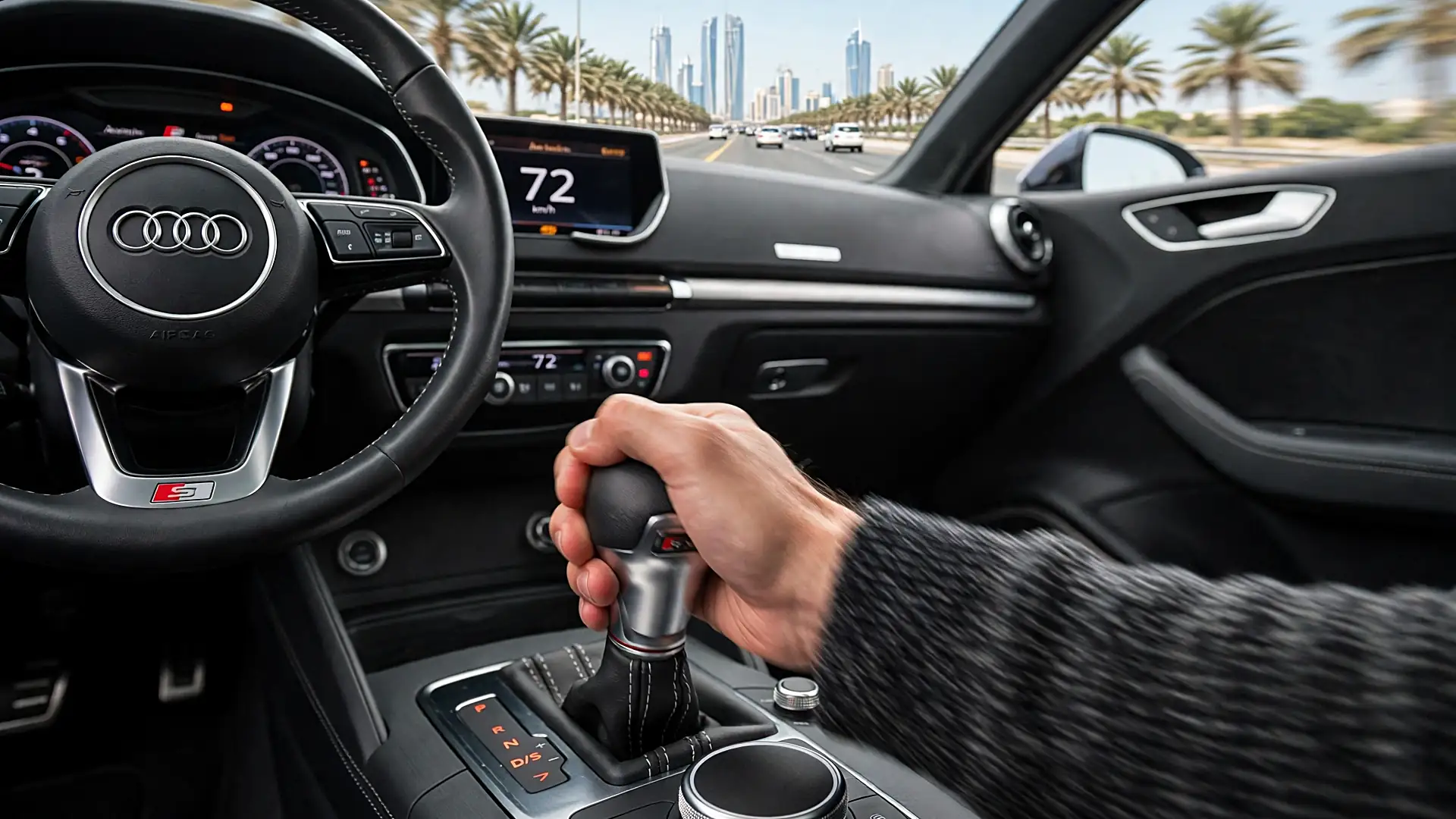
Gear slipping. Engine speed rises but the car does not accelerate in proportion. The clearest sign, and the one that should prompt a booking rather than a wait.
Delayed engagement. A pause of more than a second or two between selecting Drive or Reverse and the car actually taking up drive, especially on a cold start.
Jerking or hesitation on shifts. Particularly between the lower gears where the gearbox works hardest in traffic.
Overheating warnings. A transmission temperature message on the MMI display is a late-stage signal, not an early one.
A burning smell. Overheated fluid has a distinct acrid smell, quite different from the sweet smell of healthy ATF.
Visible leaks. Red or brown fluid under the car at the pan or the driveshaft seals. A gearbox is a sealed system. It does not consume fluid, so a low level means it has gone somewhere.
Several of these overlap with other faults. The wider symptom guide helps separate a fluid problem from a mechanical one.
Why It Happens Faster in Musaffah Traffic
Two local realities accelerate every stage above.
The first is ambient heat. The fluid never gets a cool start in summer, so it spends its whole working life near the top of its designed range. Any additional heat from slipping goes on top of an already high baseline.
The second is duty cycle. Short journeys between industrial blocks mean constant low-speed engagement (the phase where clutches and torque converters generate the most heat) without the sustained airflow that a longer run provides to cool things down.
Together they mean a marginal fluid level shows symptoms sooner here, and does damage sooner too.
What to Do About It
If the car is slipping or losing drive, stop driving it. Continuing turns a fluid problem into a clutch and valve body problem, and the cost difference between those two repairs is substantial.
If the symptoms are milder, with slightly delayed engagement or an occasional rough shift, the car needs a level and condition check plus a scan for stored fault codes. That distinguishes a simple top-up or leak repair from a gearbox that has already taken damage.
Where the fluid is old rather than low, a full fluid service with the correct OEM specification usually resolves the shift quality complaint outright. Where the level has dropped, the leak has to be found first, because topping up without fixing the cause simply repeats the failure. Either way it is worth having have the level checked properly rather than judged from a dipstick reading taken at the wrong temperature, which is a common source of false confidence.
Before assuming the level is low, confirm it. Checking the level yourself covers the procedure on both dipstick and sealed gearboxes.