The gearbox is the component most owners think about least and pay the most to fix. Transmission fluid is what keeps it cool and lubricated, and unlike engine oil it rarely gets checked until something already feels wrong.
A proper fluid change is a defined sequence: drain the old fluid, clean the pan of dirt and metal particles, refill to the correct level with the right specification, then verify the system for leaks and shift quality. Done on schedule it protects the gearbox, improves how the car drives, and adds years to the transmission's life. Done late, it becomes damage control.
What the Fluid Does in an Audi Gearbox
Transmission fluid behaves like oil but carries two extra responsibilities: it manages heat and it transmits hydraulic pressure. Audi's gear systems are sensitive to both.
It keeps gears moving smoothly and prevents metal surfaces from contacting each other directly. Without fluid in good condition, the transmission runs hot and wears fast. In automatic and semi-automatic systems it is also what makes each shift happen at all: the pressure that engages a clutch pack comes from the fluid.
This is why the specification matters as much as the level. Fluid that does not meet the factory standard will fill the gearbox and still fail to deliver the friction characteristics it was designed around. Clean, correct fluid means better economy, smoother driving and a longer-lived gearbox.
When the Change Is Actually Due
Timing is where most owners get it wrong, usually by waiting for a symptom. These are the situations that call for a change:
1. High mileage (40,000–60,000 km and above). Past this point the fluid starts losing its strength. Heat and friction break it down, and it stops lubricating properly. Changing it here restores shift quality and prevents early wear. In Abu Dhabi the lower end of that range is the realistic one: ambient heat ages fluid by duty cycle rather than distance, and a car doing short congested runs around Musaffah accumulates thermal stress far faster than the odometer suggests.
2. Rough or delayed shifting. Dirty or weakened fluid cannot build proper hydraulic pressure, which shows up as jerks or a slow response when the gearbox is asked to change.
3. Unusual noise. Humming, whining or clunking from the gearbox usually means internal parts are not being lubricated properly. Fresh fluid reduces the friction causing it.
4. Overheating. If the car shows signs of running hot on long drives or in heavy traffic, the fluid may no longer be controlling temperature. That is a self-reinforcing problem: hotter fluid degrades faster, which makes it hotter still.
5. A burning smell around the gearbox. This is serious. It means the fluid is breaking down under heat and has lost its protective qualities. Change it immediately rather than at the next service.
6. Slipping or jerky movement. If the car feels like it is slipping between gears, the fluid is no longer maintaining proper engagement between components.
When the interval falls due covers how to judge the schedule for a specific car and driving pattern.
Why It Matters More Than It Looks
The transmission works under high pressure and high heat, and the fluid is simultaneously a lubricant, a coolant and a hydraulic medium. When it degrades it loses all three functions together, which is why the symptoms tend to arrive as a cluster rather than one at a time.
It protects against wear. The fluid maintains a thin film between metal surfaces inside the gearbox. As it breaks down that film thins, and direct contact starts wearing components that were never meant to touch.
It keeps shifting smooth. DSG and Tiptronic systems depend on precise hydraulic pressure. Clean fluid holds that pressure; old fluid does not, and shifting turns rough or delayed.
It controls heat. The gearbox generates significant heat on long drives and in traffic. Fluid absorbs and carries it away. Old fluid cannot, and internal parts run hotter than they were designed to.
It affects efficiency. A gearbox shifting cleanly asks less of the engine. Degraded fluid adds internal resistance, which costs fuel and blunts acceleration.
It prevents the expensive outcome. Neglect leads to gearbox failure, and replacing a transmission costs many multiples of a fluid service. This is one of the highest-return maintenance items on the car, and common fault patterns shows how many of the recurring failures trace back to fluid that was left too long.
How the Job Is Done
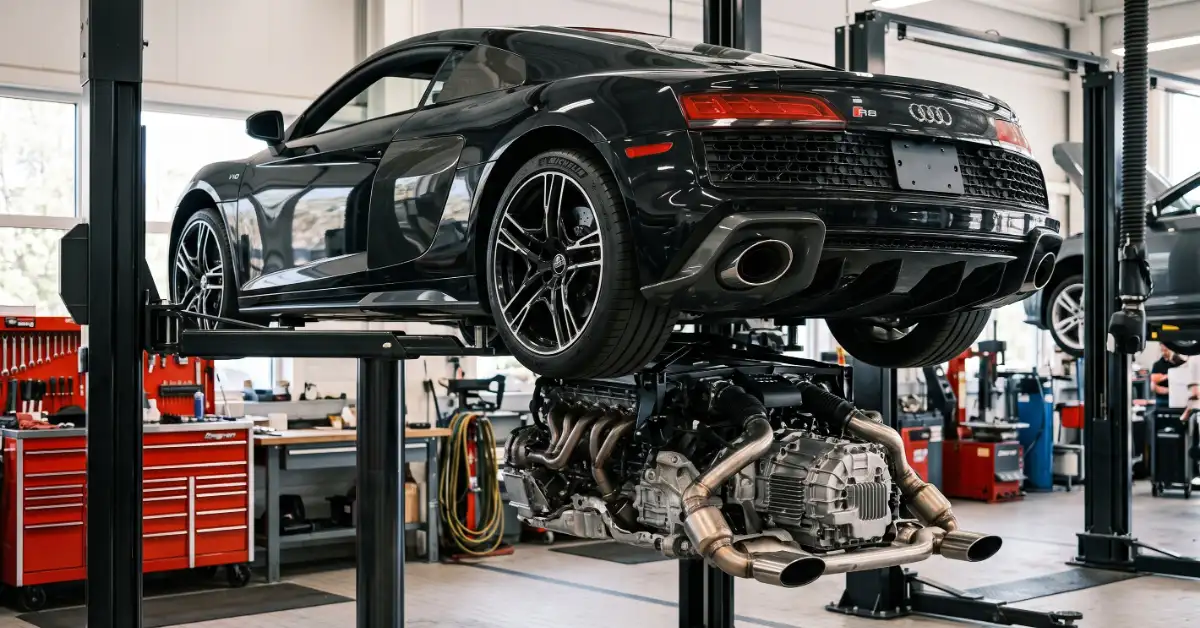
Step 1: Lift the vehicle and prepare. The car is raised safely on a lift or hydraulic jack to give access to the transmission underneath. The engine is allowed to cool first for safety.
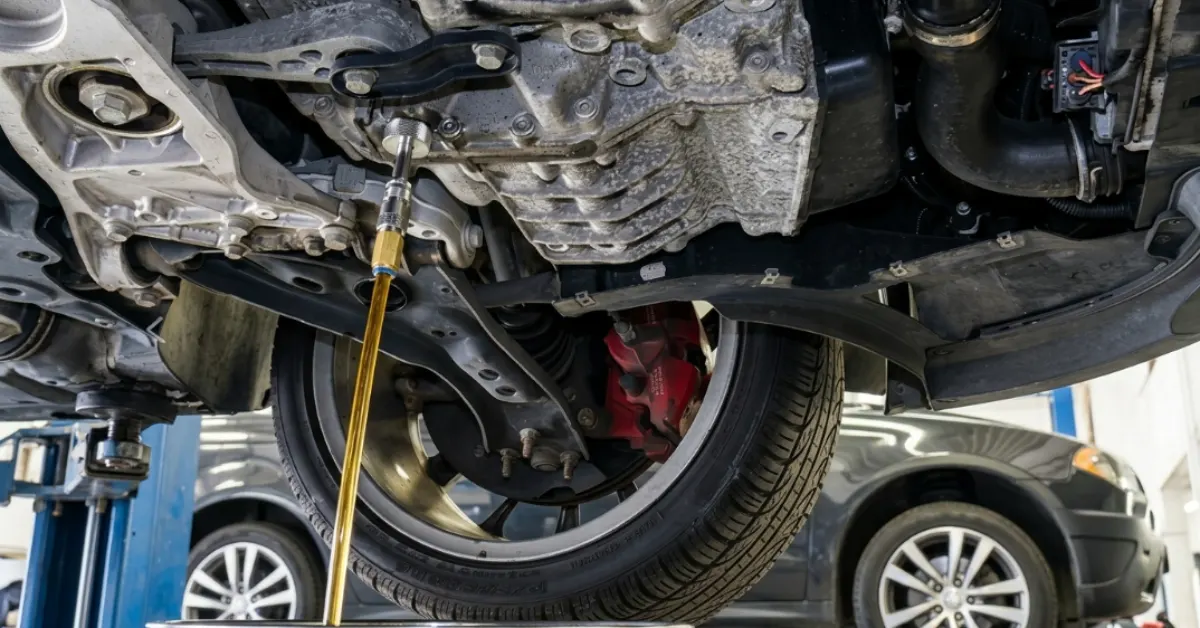
Step 2: Drain the old fluid. The old fluid comes out completely. It is usually dark and dirty, carrying heat damage and metal particles. Removing all of it matters, because what stays behind contaminates what goes in.
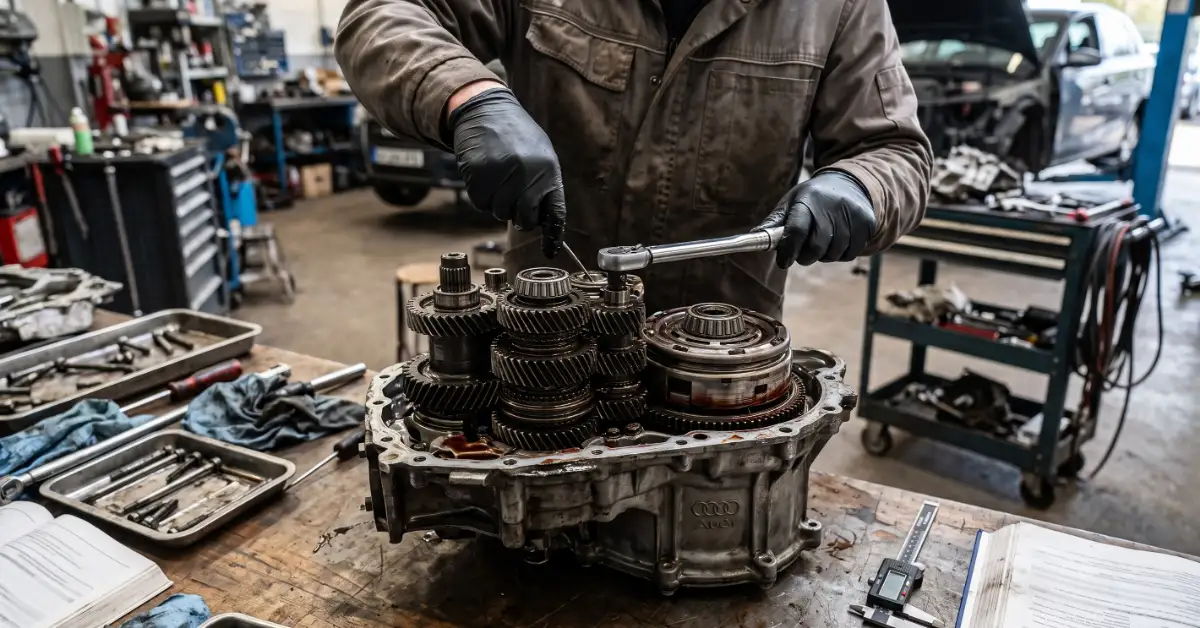
Step 3: Clean the pan and check the filter. The pan is removed and cleaned carefully. Metal chips and debris collect here, and the pan magnets tell you a lot about the gearbox's internal condition. The filter is inspected and replaced if needed.
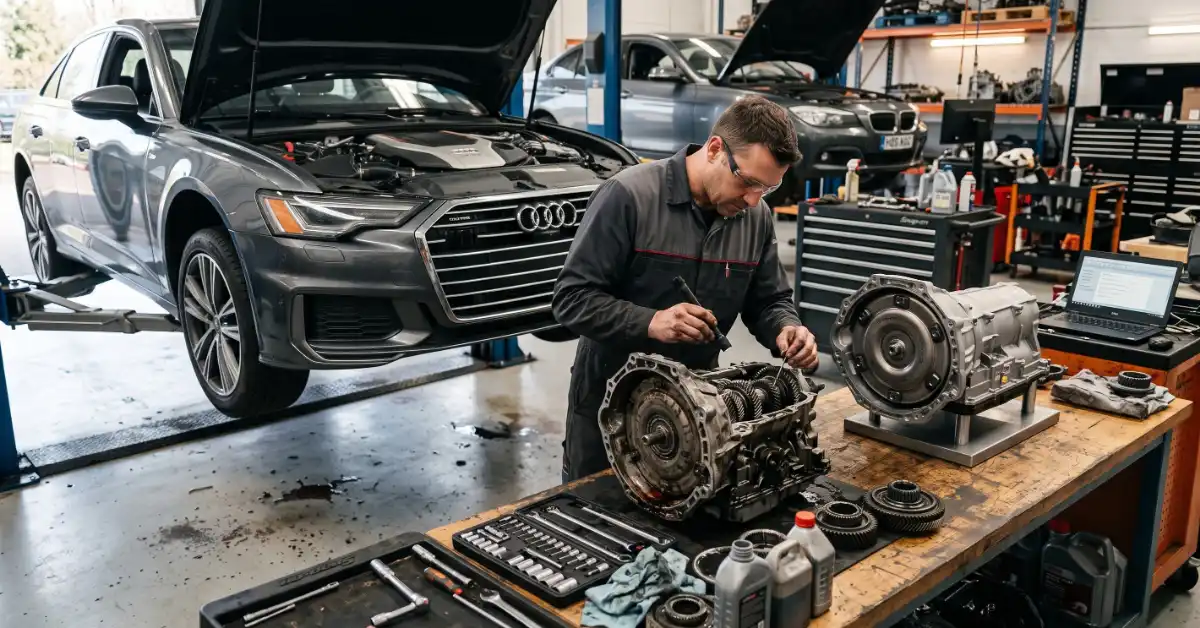
Step 4: Refill with the correct fluid. Fresh fluid goes in to Audi specification. Fluid type is critical for DSG and Tiptronic units, and the correct volume is what maintains the pressure balance the gearbox needs.
Step 5: Test and inspect for leaks. The engine is started and the gears cycled through one by one to circulate the new fluid. The technician then checks for leaks and confirms shifting is smooth and consistent.
That is the sequence our transmission oil change in Musaffah follows, with the final level set against a live temperature reading on sealed gearboxes.
What Regular Changes Buy You
- Smooth gear operation: no jerks, delays or rough shifts
- Reduced friction: less wear on the moving metal inside the gearbox
- Better fuel efficiency: the engine works less to move the car
- Longer gearbox life: the single biggest factor in how long a transmission lasts
- More comfortable driving: most noticeable in traffic, where shifts are constant
- Lower breakdown risk: fewer sudden failures and fewer roadside surprises
What It Costs and How to Get Value From It
The price depends on the model, the fluid required and the labour involved. DSG systems cost more because they need specific fluid and filters, and there is no economising on either.
Two practical points. First, never delay once symptoms appear. The cost curve between a fluid service and a clutch pack replacement is steep, and every additional month of driving on degraded fluid moves you along it. Second, check the service history. Cars bought used often have no record of a transmission service ever being done, and in that case a full drain and refill with correct-specification fluid is the safe starting point regardless of mileage.
Habits That Extend Transmission Life
- Avoid aggressive driving. Sudden acceleration and hard braking load the gearbox and shorten its life.
- Let the car warm before driving hard. Fluid needs to circulate before it can protect anything.
- Follow the service schedule, adjusted for local conditions rather than taken at face value.
- Inspect regularly. Small issues found early rarely become large ones.
- Use the correct fluid. Specification, not brand, is what matters.
- Combine both. Careful driving and timely servicing together do far more than either alone.
Getting It Looked At
A healthy transmission delivers smooth shifts, better economy and dependable driving in conditions that are hard on every other part of the car. Regular maintenance, catching problems early, and using the right fluid are what keep it there.
If the car is due, or if any of the symptoms above sound familiar, the Audi workshop at M9 can scan the gearbox and confirm whether a fluid service is enough before anything larger is discussed.