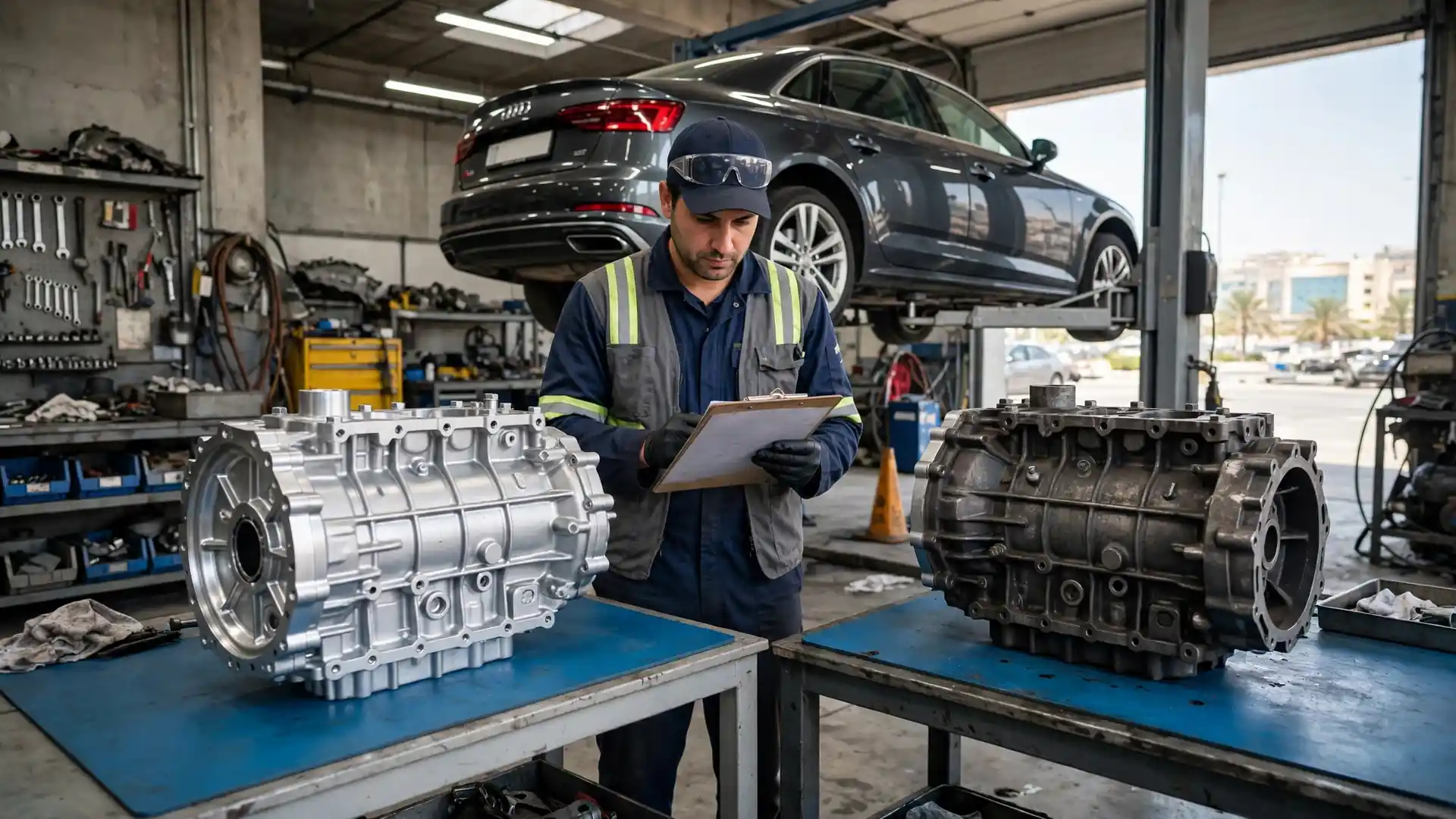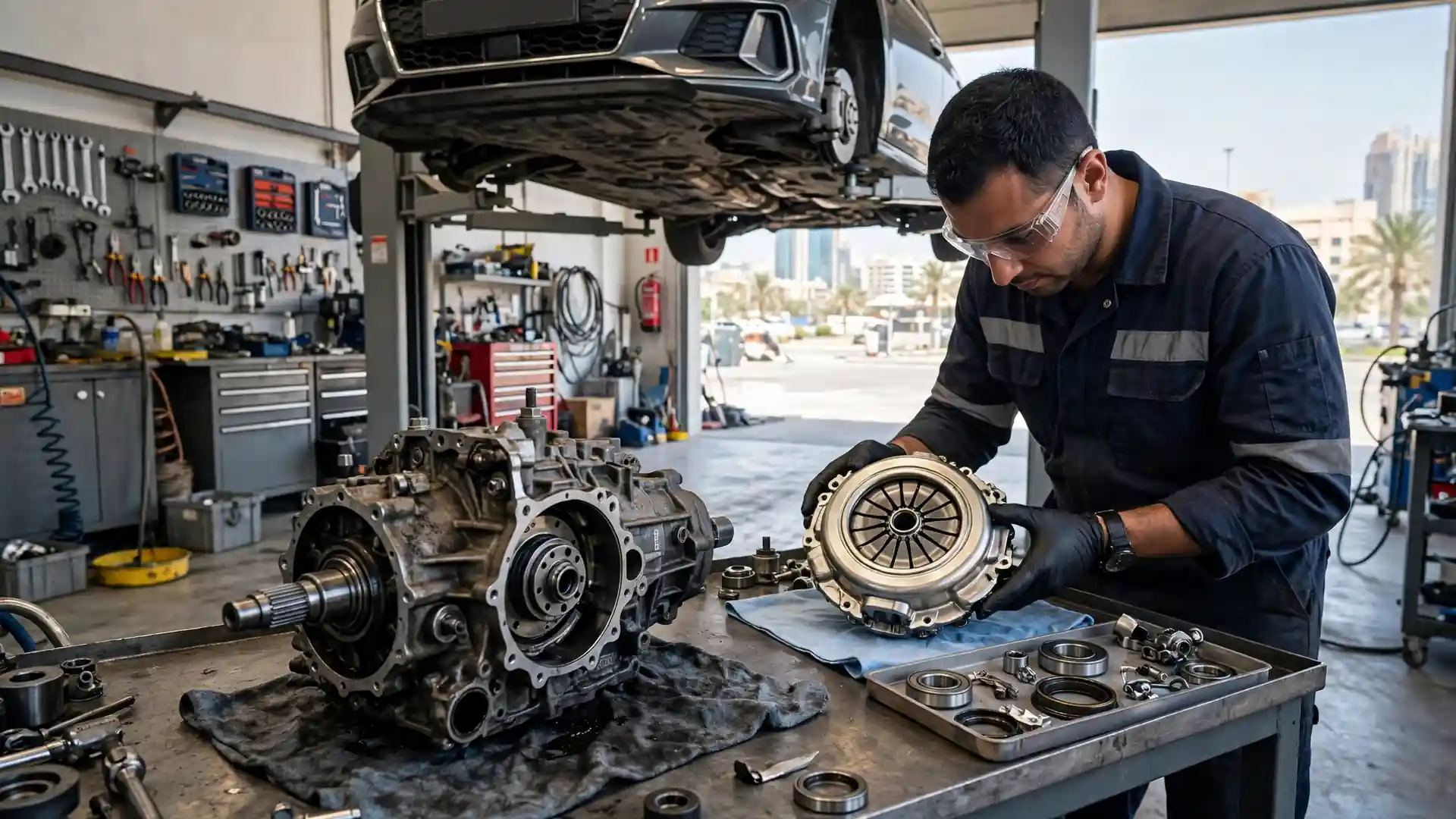
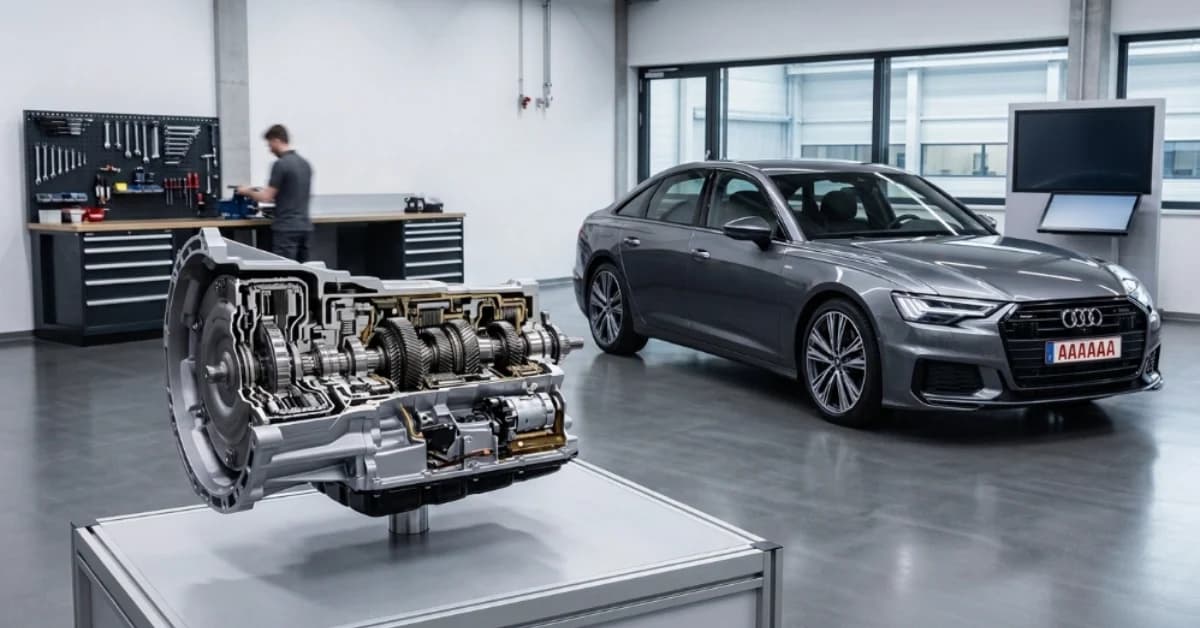
The A6 is a car that hides its problems well until it doesn't. Transmission faults tend to announce themselves gradually (a delayed shift here, a slight jerk there) and then arrive properly as slipping, warning lights or limp mode.
The recurring issues are delayed gear shifts, slipping, rough shifting, warning lights, fluid leaks, overheating, unusual noises and outright gearbox failure. Behind them sit worn clutch packs, low fluid, valve body faults, mechatronic unit problems, damaged torque converters and ordinary wear. The distinction that matters is which of those you have, because the repair costs differ by an order of magnitude.
Why the A6 Gearbox Develops Faults
The A6 uses advanced automatic and dual-clutch systems that deliver genuinely good performance, and like any mechanical system they wear with use. Heat, poor maintenance, contaminated fluid and heavy traffic all accelerate that wear, and some model years carry known electronic faults in the transmission control system.
Traffic and heat are the two factors most owners here cannot avoid. An A6 doing short congested runs around Musaffah and the industrial districts in summer subjects its gearbox to the two conditions that age fluid fastest, simultaneously and daily. Regular servicing with the correct fluid is what offsets that, and it is the single largest determinant of whether an A6 gearbox reaches high mileage intact.
Common Problems at a Glance
| Problem | Common symptoms | Possible cause | Possible fix |
|---|---|---|---|
| Delayed gear shifting | Slow response when changing gear | Low fluid, worn clutch | Fluid service or clutch repair |
| Transmission slipping | Revs rise but speed does not | Worn clutch packs | Internal transmission repair |
| Rough gear changes | Hard shifts and jerking | Valve body issue | Valve body repair or replacement |
| Fluid leaks | Red fluid under the vehicle | Damaged seals or pan gasket | Replace the leaking seals |
| Warning light | Transmission warning on the dashboard | Sensor or electronic fault | Computer diagnosis and repair |
| Overheating | Burning smell, reduced performance | Low fluid or cooling issue | Repair the cooling system, replace fluid |
| Strange noises | Grinding, whining, humming | Bearing or gear wear | Internal inspection and repair |
| Limp mode | Limited gears and power | Electronic protection mode | Diagnose the fault codes and repair |
The Eight Problems in Detail
1. Delayed gear shifting. Usually the first sign. You press the accelerator and the car takes a few seconds to change gear, most noticeably on cold starts or in traffic. Low or dirty fluid, worn clutch packs, or a faulty valve body cause it. Replacing the fluid, repairing damaged parts and updating the transmission software often restores normal shifting before anything serious develops.
2. Slipping. Engine speed rises without matching acceleration; the gearbox changes gear unexpectedly or cannot hold one. Worn friction plates, damaged clutch packs, low hydraulic pressure or internal wear are behind it. Ignoring slipping damages other components quickly, and an inspection establishes whether a fluid service is enough or a rebuild is required.
3. Rough or hard gear changes. Many A6 owners report the car jerking during shifts, and it worsens over time. A faulty valve body, damaged solenoids, contaminated fluid or software issues all interrupt smooth engagement. A diagnostic scan finds the electronic faults; replacing worn hydraulic components handles the rest.
4. Fluid leaks. Losing fluid means losing hydraulic pressure, and the gearbox cannot operate correctly without it. Red or dark fluid appears under the car after parking. The common leak points are the pan gasket, axle seals, cooler lines and the transmission housing. Repair promptly and refill with manufacturer-approved fluid.
5. Transmission warning light. The A6 monitors its transmission continuously through electronic sensors. The light means something specific has been detected: faulty sensors, wiring problems, control module issues or internal faults. A scan tool reads the trouble codes and identifies which. Ignoring it is how a small problem becomes a major repair.
6. Overheating. Excessive heat breaks down the fluid, which then stops lubricating properly, which produces more heat. Burning smell, slow shifting, warning messages and reduced performance are the symptoms. Low fluid, blocked cooling lines, towing and cooling system failures are the causes, and in this climate the ambient temperature does part of the work on its own.
7. Strange noises. Grinding, whining, humming or clunking indicates worn bearings, damaged gears or low fluid, and typically gets louder under acceleration or during shifts. Continuing to drive causes severe internal damage; an inspection at this stage locates the worn component while replacing it is still an option.
8. Limp mode. The control system has detected a serious problem and limited speed and gear selection to protect the gearbox. Sensor failures, low fluid pressure, overheating or electrical faults all trigger it. A full diagnostic test is required before normal driving resumes. Limp mode is a symptom of something specific, not a fault in itself. Q3 maintenance and faults covers how the same protection strategy behaves on a smaller platform.
The Underlying Causes
- Low or contaminated fluid: reduces lubrication, raises heat, degrades shifting and accelerates internal wear
- Worn clutch packs: lose friction over time, causing slipping and delayed engagement
- Faulty valve body: disrupts hydraulic pressure, producing rough and inconsistent shifts
- Mechatronic unit failure: affects both electronic and hydraulic control, causing shifting errors, warning lights and limp mode
- Damaged torque converter: vibration, poor acceleration, overheating and inefficient power transfer
- Blocked transmission cooler: restricts fluid flow and raises operating temperature
- Software calibration issues: outdated software creates shifting delays and rough engagement
- Failed sensors: incorrect data to the control module, producing warning lights and shift problems
- Internal gear wear: grinding noises, poor engagement, and eventually severe damage
- Poor maintenance history: the factor that turns every item above from possible into likely
Knowing which gearbox is fitted narrows the list considerably, and which gearbox your car uses covers how to identify it.
Symptoms That Need Attention Now
- Slow or delayed gear changes
- Gear slipping while driving
- Hard or jerky shifting
- Burning smell
- Red fluid leaks
- Grinding or whining noises
- Transmission warning light
- The car stuck in one gear
- Poor acceleration
- Vibration during driving
One of these justifies an inspection. Several together justify one immediately.
How the Fault Is Actually Found
Modern Audi transmissions need proper diagnostic equipment, and the sequence matters as much as the tooling.
A technician starts by scanning for fault codes stored in the Transmission Control Module. Fluid level and condition are checked next for contamination or burning. A road test then identifies how the problem behaves under different loads and speeds, which often distinguishes an electronic fault from a mechanical one. Hydraulic pressure tests, solenoid checks and mechatronic inspections follow where the earlier steps point to them.
The purpose of working through all of it is to make the correct repair rather than replacing parts speculatively, which on an A6 gearbox is an expensive way to guess.
Repair Options
What the fix involves depends entirely on what the inspection found. In rough order of cost:
- Replace the fluid and filter
- Repair fluid leaks
- Replace damaged seals and gaskets
- Repair or replace the valve body
- Replace faulty solenoids
- Update the transmission software
- Repair or replace the mechatronic unit
- Replace the torque converter
- Rebuild the transmission
- Install a replacement gearbox where damage is severe
Preventing the Next One
Good maintenance is what extends transmission life, and most expensive repairs trace back to a service that was skipped or a warning that was ignored. Regular inspections let a technician find leaks, worn parts and electronic faults early. Gentle driving reduces stress. Keeping the cooling system healthy prevents overheating, which is the leading cause of transmission failure.
- Replace the fluid at the recommended intervals, shortened for local conditions
- Use only manufacturer-approved fluid
- Repair leaks immediately
- Avoid aggressive acceleration
- Do not overload the vehicle
- Let the engine warm before driving hard
- Service the transmission cooling system regularly
- Never ignore warning lights
Are Some Model Years Worse Than Others?
Some A6 model years have attracted more owner complaints, usually tied to a specific transmission design or a software revision. Earlier cars with continuously variable transmissions saw more reliability concerns; some dual-clutch and automatic models reported mechatronic and valve body issues.
That said, not every car develops these faults. Driving style, maintenance history, mileage and the quality of past servicing have more influence on outcomes than the model year does. A well-maintained A6 delivers many years of dependable performance regardless of which generation it belongs to.
Repair or Replace?
Not every problem requires a new gearbox. Fluid leaks, software issues, faulty sensors, worn solenoids and valve body problems can usually be repaired at moderate cost. Severe internal damage (broken gears, destroyed clutch packs, heavy metal contamination) is what pushes a car towards a rebuild or a replacement unit.
The decision needs the diagnosis first, which is why a scan and inspection is worth doing before any quote is taken seriously.
Getting Yours Assessed
A6 transmission problems almost always start small: a delayed shift, a rough change, a light that comes on and goes off. Acting at that point is what keeps them from becoming gearbox repairs.
If your car is showing any of the symptoms above, an Audi workshop that knows the A6 can run the full diagnostic sequence (fault codes, fluid condition, road test and pressure testing) and tell you which of the repairs above your car actually needs.
The A6 shares its gearbox families with most of the range, but not all of it. The R8 gearbox options covers the three units Audi fitted to the car that sits furthest from the rest.