An Audi gearbox helps your car change gears smoothly and transfer engine power to the wheels. When it develops a serious fault, choosing the right replacement can save you money and prevent a repeat of typical gearbox trouble. However, a new gearbox can cost much more than a reconditioned one.
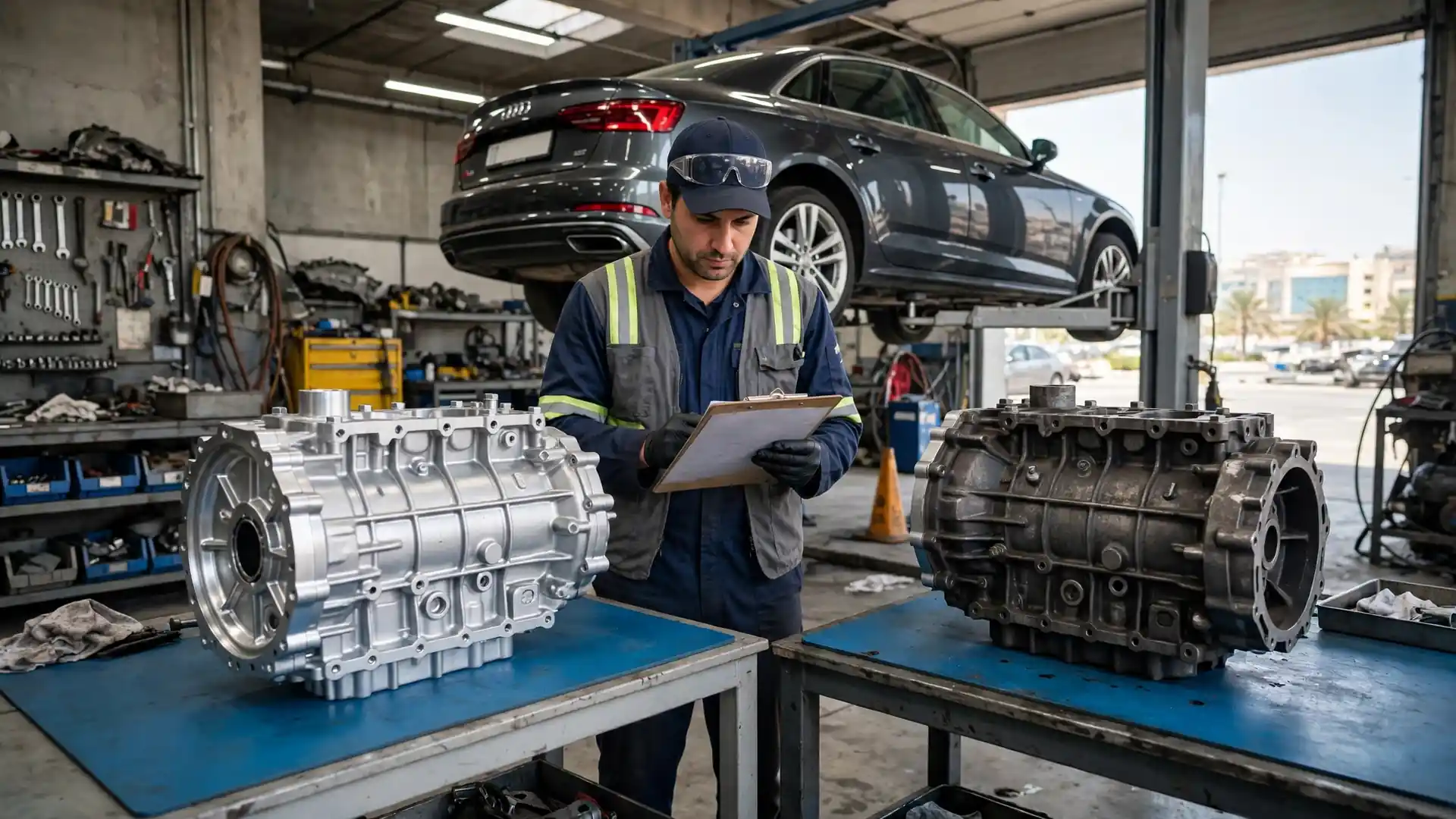
A new Audi gearbox is often the better choice for long-term ownership, while a reconditioned gearbox can be a more affordable option if it has been rebuilt and tested properly.
The right choice depends on your Audi model, the type of damage, your budget, and the warranty offered. Comparing the two options carefully will help you decide whether paying more for a new unit is worth it or whether a reconditioned gearbox can meet your needs.
What Is a New Audi Gearbox?
A new Audi gearbox is a brand-new transmission unit that has not been used in another vehicle. It is supplied through the manufacturer or a parts supplier and is designed to match the required vehicle specifications.
Since its internal parts have not experienced previous driving wear, it can be a suitable choice when the original gearbox has severe damage. A new gearbox usually costs more than a reconditioned unit. The final price depends on the Audi model, gearbox type, and parts availability.
Before buying one, confirm that the gearbox matches your car's engine, production year, drivetrain, and transmission code. You should also check the warranty and whether installation, fluids, and electronic setup are included.
What Is a Reconditioned Audi Gearbox?
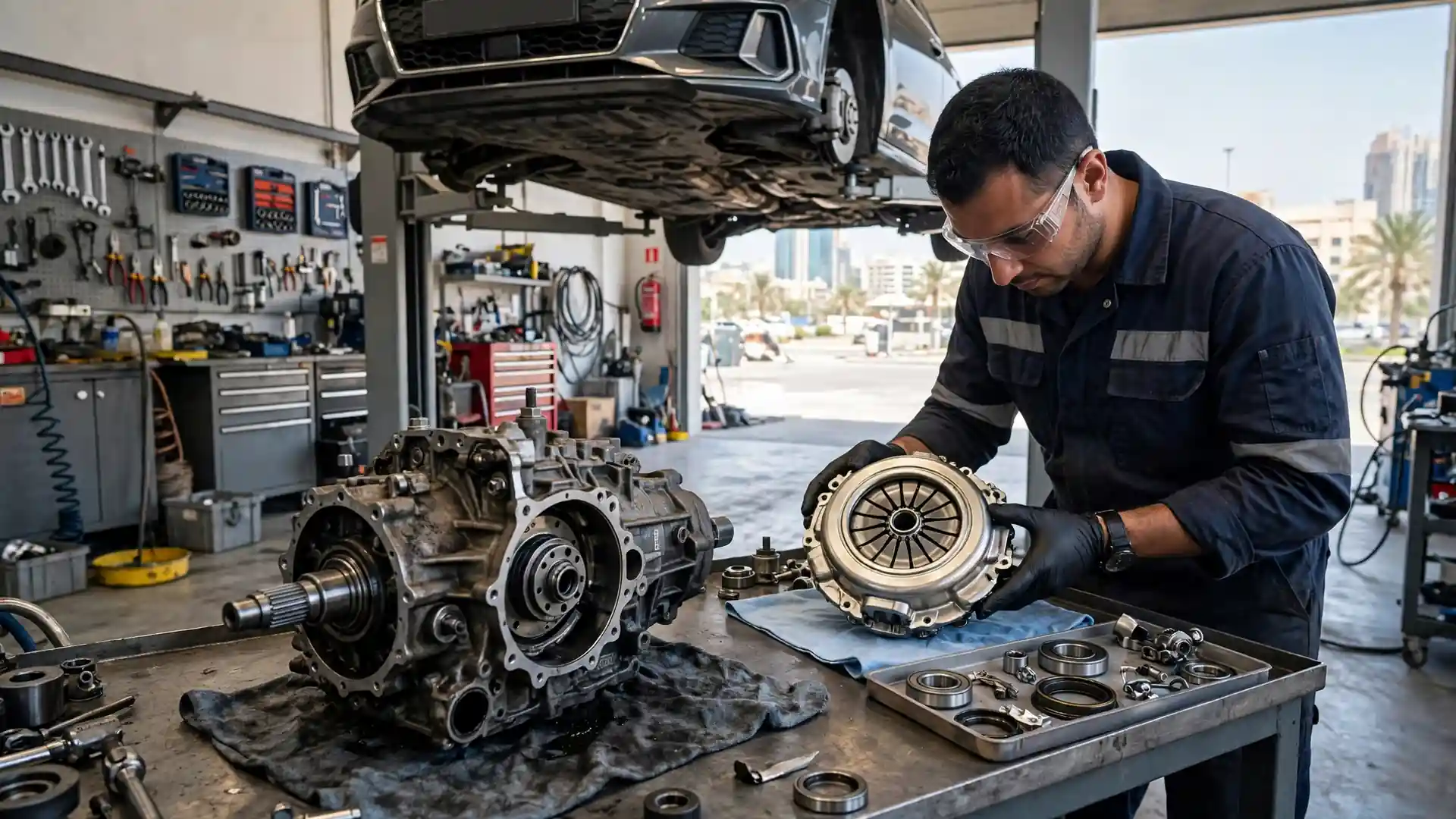
A reconditioned Audi gearbox is a previously used transmission that has been inspected and repaired. Depending on its condition, a specialist may replace worn clutch plates, bearings, seals, or other damaged parts before assembling and testing the unit.
However, the level of repair can vary between suppliers. Some units receive a full rebuild, while others only have selected parts replaced. This is why you should ask for a written repair report rather than relying on the word "reconditioned" alone, and why choosing replacement parts matters as much as choosing the unit.
A properly rebuilt gearbox can offer good value and reliable performance. The key is to understand which parts were replaced, which parts were reused, what tests were completed, and how much warranty coverage you will receive.
New vs. Reconditioned Audi Gearbox: Complete Comparison Table
The following table compares the main factors to consider before choosing a replacement gearbox.
| Comparison factor | New Audi gearbox | Reconditioned Audi gearbox |
|---|---|---|
| Condition | Brand-new unit with unused internal parts | Previously used unit that has been inspected and repaired |
| Purchase price | Usually more expensive | Usually more affordable |
| Previous wear | No wear from previous driving | Some original parts may have previous wear |
| Reliability | Generally predictable when correctly fitted | Depends on the rebuild quality and testing |
| Expected lifespan | Can provide long service when maintained correctly | Can also provide long service if rebuilt properly |
| Warranty | Depends on the manufacturer or supplier's terms | Depends on the rebuilder's written warranty |
| Internal parts | New parts supplied as part of the unit | May contain new, repaired, or reused parts |
| Gear-shifting performance | Designed to meet the unit's intended operating standards | Can perform smoothly when repaired and calibrated correctly |
| Availability | May require ordering, especially for older models | May be available sooner if a compatible unit is in stock |
| Installation cost | Labour and fitting costs may be extra | Labour and fitting costs may be extra |
| Transmission fluid | May need to be purchased separately | May need to be purchased separately |
| Coding and adaptation | May be required after installation | May be required after installation |
| Risk of repeat repairs | Lower risk from previous wear, but defects are still possible | May carry greater risk if worn parts were missed during rebuilding |
| Compatibility | Must match the exact Audi model and gearbox specifications | Must match the exact Audi model and gearbox specifications |
| Environmental impact | Requires the production of a new unit | Reuses the main housing and suitable components |
| Best for | Newer cars and owners planning long-term use | Budget-conscious repairs and suitable older cars |
| Main advantage | New internal components and a predictable starting condition | Lower initial purchase cost |
| Main disadvantage | Higher purchase price | Quality can vary between rebuilders |
| Long-term value | Can be worthwhile for a valuable car kept for many years | Can offer excellent value if repair quality is high |
| Best buying advice | Confirm the part number, warranty, and complete fitted cost | Request a repair report, test results, and written warranty |
Important: A reconditioned gearbox is not the same as a used gearbox. A used unit may be installed with little or no internal repair, while a reconditioned unit should have documented inspection and repair work.
How Much Does a New or Reconditioned Audi Gearbox Cost?
The price depends on the Audi model, gearbox design, damage, and parts availability. An S tronic dual-clutch gearbox may have different replacement costs from a Tiptronic automatic gearbox. Larger or more powerful models may also require more expensive parts.
As a broad planning estimate in the UAE, a complete gearbox replacement can range from around AED 10,000 to AED 45,000 or more for certain models and new units. Reconditioned options may cost less, but the actual price depends on the condition of the unit and the work included.
| Cost item | New gearbox | Reconditioned gearbox |
|---|---|---|
| Gearbox unit | Usually higher purchase cost | Usually lower purchase cost |
| Labour | May be charged separately | May be charged separately |
| Transmission fluid | May be extra | May be extra |
| Seals and fittings | May be extra | May be extra |
| Coding and adaptation | May be required | May be required |
| Additional repairs | Depends on inspection findings | Depends on inspection findings |
| Warranty | Confirm coverage and exclusions | Confirm coverage and exclusions |
| Total fitted cost | Usually higher | Usually lower, but not always |
These figures are general estimates, not fixed quotes. Ask the workshop for a complete price that includes the gearbox, installation, required fluids, electronic setup, and warranty.
Which Gearbox Is More Reliable?
A new gearbox offers a more predictable starting point because its internal components have not experienced previous driving wear. This makes it attractive for newer Audis and cars that will be kept for many years.
However, a reconditioned gearbox can also be reliable when a skilled specialist inspects it carefully, replaces worn components, and tests it before installation. The quality of the repair matters more than the label alone.
Before choosing a reconditioned unit, ask which parts were replaced, whether the clutch packs and bearings were checked where applicable, and whether the gearbox was tested under suitable conditions. A detailed repair report and written warranty provide more confidence than a low price without supporting information.
Which Option Offers Better Value for Money?
The cheapest gearbox is not always the most affordable option in the long run. A reconditioned unit may save money at the time of purchase, but poor repair work can lead to further faults and additional labour costs. A new gearbox requires more money upfront but may be worthwhile if you plan to keep your Audi for many years.
Compare the total cost, not just the price of the unit. Include installation, fluids, seals, coding, and warranty coverage. You should also consider the value and condition of the car itself.
For an older Audi with high mileage, a properly rebuilt gearbox may make more financial sense. For a newer model in excellent condition, a new unit may offer better long-term value. For what individual gearbox jobs cost locally, see the price ranges by job.
Abu Dhabi adds one more question to ask. A reconditioned unit goes back into the same summer heat, regularly above 45C, and the same stop-start traffic around Musaffah and ICAD that wore the original out. Ask whether the rebuild replaced the clutch packs, seals and solenoids that heat ages, not only the part that failed, because a unit rebuilt to the minimum meets those conditions with half-worn parts.
When Should You Choose a New Audi Gearbox?
A new gearbox is worth considering when the original unit has major internal damage, the car is relatively new, or you want a replacement with no previous driving wear. It may also be the better choice if a suitable reconditioned unit is unavailable or the available rebuilds do not come with a clear warranty.
Choose a new unit when:
- You plan to keep the car for several more years.
- The Audi has a high market value.
- The original gearbox has severe internal damage.
- A suitable reconditioned unit cannot be found.
- The new unit's warranty and total price suit your budget.
Before making a decision, compare the replacement cost with the car's current market value and check whether other major repairs are likely to be needed.
Conclusion
A new Audi gearbox is generally the better choice if you want a brand-new unit and plan to keep your car for many years. A reconditioned gearbox can offer better value when it has been rebuilt properly, tested, and supplied with a clear warranty.
The right option depends on your Audi's condition, the extent of the damage, and your budget. Before replacing the gearbox, make sure a specialist has confirmed the cause of the fault. Some transmission problems can be fixed without replacing the entire unit, so check when replacement makes sense before ordering one.
If your Audi has rough gear changes, slipping, or unusual gearbox noises, book a gearbox assessment at the Musaffah workshop. A qualified technician can inspect the transmission, explain the available options, and provide a clear estimate to help you choose the right solution.