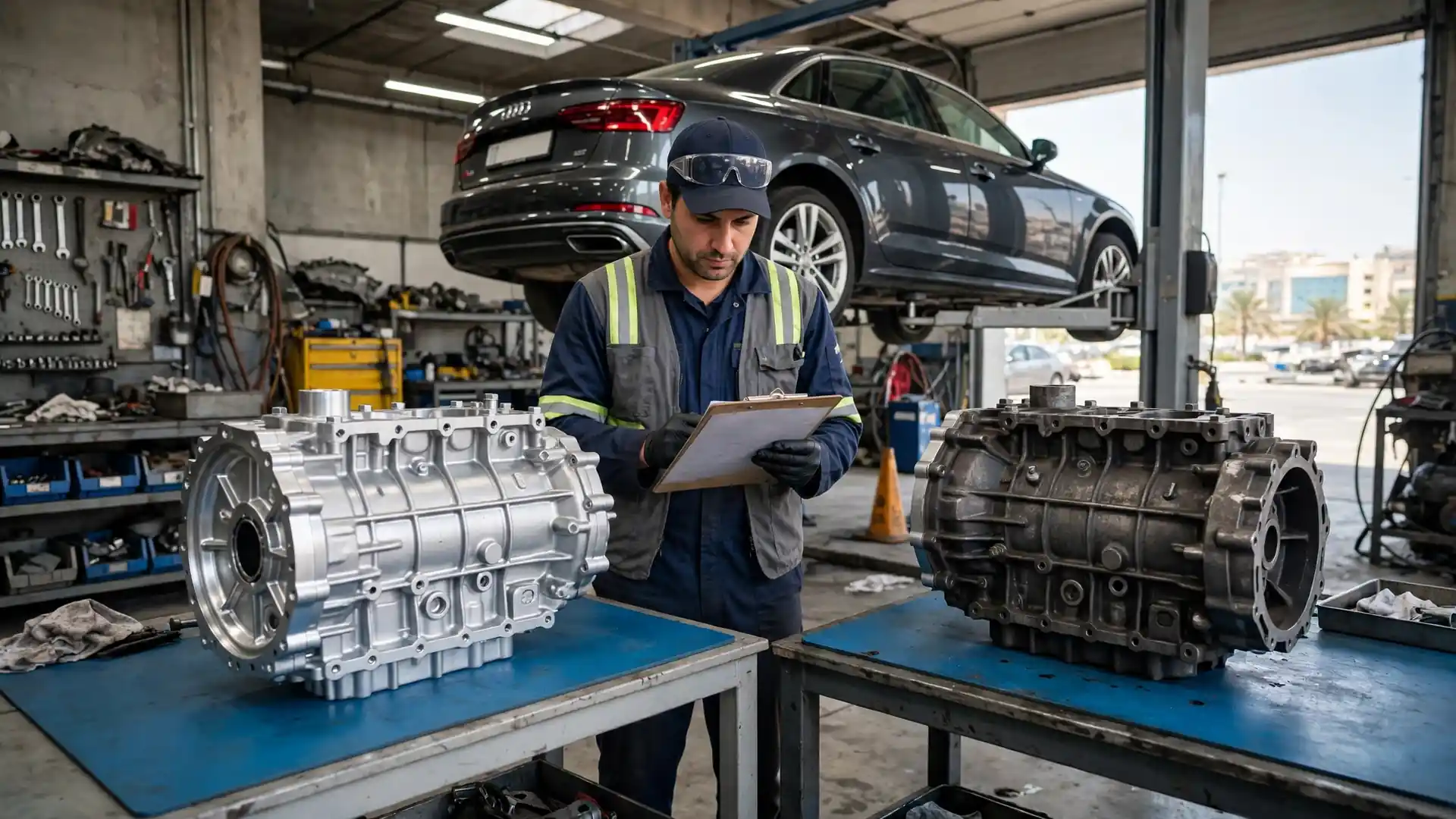

An Audi should change gears smoothly, whether you are driving through busy city roads or cruising on the highway. If your car suddenly jerks, shakes, or moves forward with a hard push during a gear change, it can make driving uncomfortable and unsafe. These signs may start small but can become worse if you ignore them.
The most common reason an Audi jerks when shifting gears is a problem with the transmission system. Low or dirty transmission fluid can affect how the gears change. Worn clutch parts, faulty engine or gearbox mounts, and damaged transmission parts can also cause sudden movements.
In some cases, a faulty sensor or software issue may stop the transmission from changing gears at the right time. Finding the exact cause early can help prevent costly repairs and protect other parts of your car.
7 Reasons Your Audi Jerks When Shifting Gears
1. Low or Dirty Transmission Fluid
Transmission fluid helps the gearbox work smoothly by reducing friction, carrying heat away from moving parts, and helping control gear changes. When the fluid level drops or the fluid becomes dirty, the transmission may struggle to move from one gear to another.
You may notice a sudden jerk when moving from first to second gear or when shifting from reverse to drive. In some cases, the car may hesitate before moving. Checking the fluid level and condition is an important first step when investigating rough gear changes, and running a gearbox low explains what a dropping level does to the shift.
How Does Transmission Fluid Cause Jerking?
Low fluid levels can reduce the pressure needed to operate parts inside an automatic gearbox. This may cause delayed shifts, slipping, or sudden gear changes. Old fluid can lose some of its ability to protect moving parts and carry heat away from them.
Watch for these signs:
- Delayed movement after selecting drive or reverse.
- Rough or hard gear changes.
- A burning smell near the car.
- Fluid leaks under the vehicle.
- Unusual whining sounds from the transmission.
Audi models use different transmission designs and fluid types, so the correct fluid and checking method depend on the model and gearbox. Never add a random transmission fluid because the wrong type can damage internal parts. If the fluid is due, a correct-specification fluid service is the safer route.
In Abu Dhabi the fluid starts every journey warm, because summer temperatures exceed 45C, so it has less headroom before it degrades. The published interval for your gearbox was written for a cooler climate. Take the lower end of it, and have the fluid checked sooner if gear changes start to feel harsh.
2. Worn or Damaged Clutch Parts
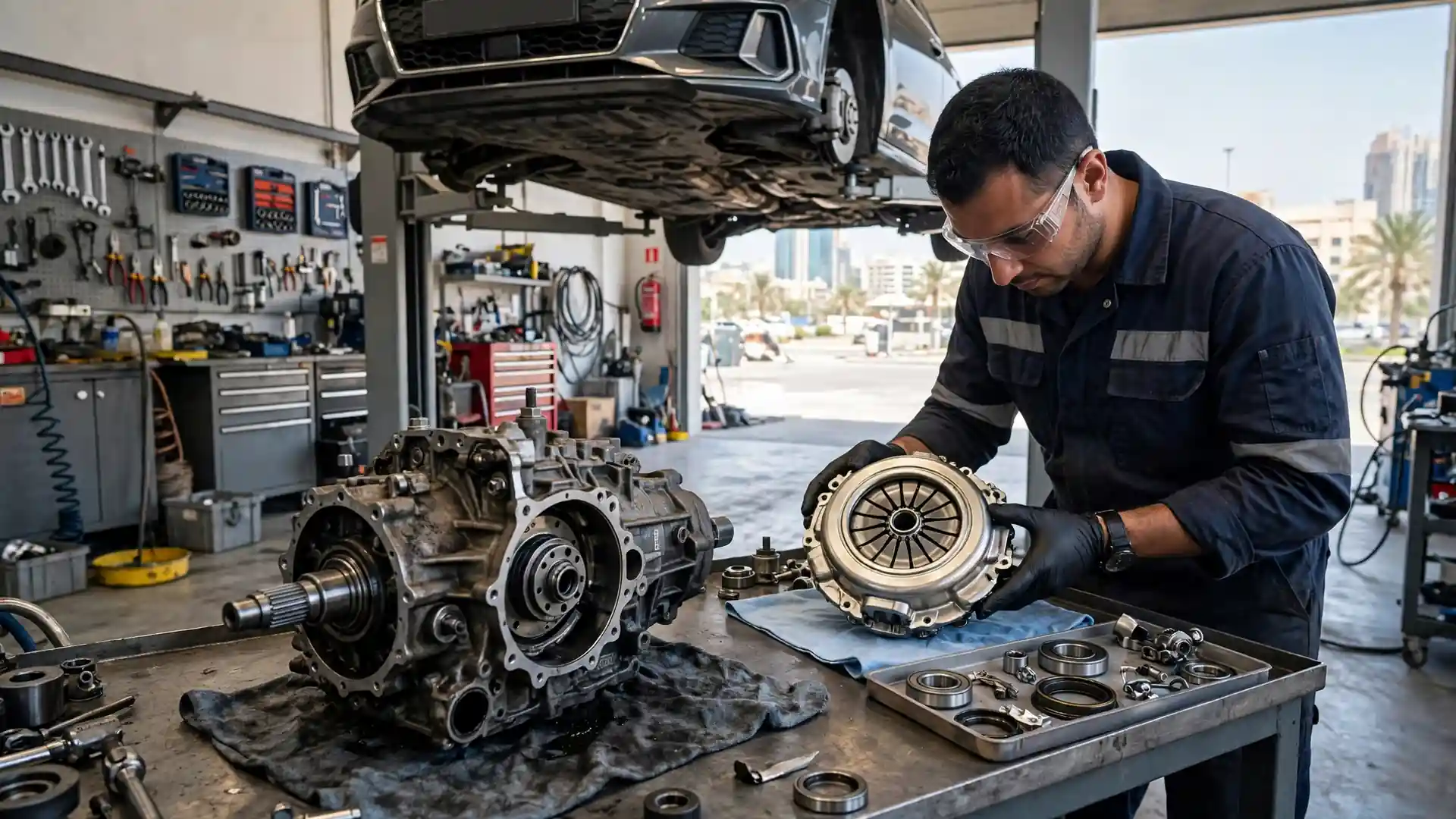
Some Audi models use a manual gearbox, while others have automatic transmissions with a clutch system inside. Audi's S tronic dual-clutch transmission, for example, uses two clutches to manage different sets of gears.
Over time, clutch plates can wear down, overheat, or fail to engage smoothly. This may cause the car to jerk during acceleration, gear changes, or slow movement in traffic. A worn clutch may also cause slipping, where the engine speed rises but the car does not gain speed as expected.
Signs of Clutch Wear in an Audi
Clutch problems can feel different depending on the gearbox type. In a manual Audi, you may notice shaking as you release the clutch pedal. In an S tronic model, you may feel shuddering when moving away from a stop or changing gears at low speed.
Other signs include:
- A delay when pulling away.
- Engine revs rising without a matching increase in speed.
- A burning smell after heavy traffic.
- Repeated shaking when moving slowly.
- Rough changes between certain gears.
A technician can check clutch wear, gearbox fault codes, and clutch engagement values where the system supports these checks. Replacing worn parts early may prevent further damage to the transmission. On an S tronic, what a clutch replacement costs depends mostly on whether the unit uses a dry or wet clutch.
3. Faulty Engine or Gearbox Mounts
Engine and gearbox mounts hold these parts in place while reducing the vibration that reaches the cabin. They usually contain rubber or other materials that absorb movement. When a mount cracks, breaks, or becomes weak, the engine and transmission may move more than they should during acceleration or gear changes.
This movement can feel like a sudden kick, especially when shifting from park to drive or changing between reverse and drive. The gearbox may not be the main cause, even if the jerk happens during a gear change.
How Can You Identify a Bad Mount?
A damaged mount may cause a heavy thud when you press the accelerator or release it. You may also feel more vibration while the car is stopped with the engine running. In some cases, the movement becomes stronger when shifting between drive and reverse.
A mechanic can inspect the mounts for cracks, loose bolts, worn rubber, or signs of fluid leakage on fluid-filled mounts. The technician may also check how much the engine moves under controlled conditions.
Replacing a faulty mount can reduce unwanted movement and improve driving comfort. However, the mount should be tested before replacement because similar symptoms can come from other transmission or engine faults.
4. Problems With the Mechatronic Unit
Many Audi S tronic gearboxes use a mechatronic unit to control gear changes. This unit combines electronic controls with hydraulic parts that move the clutches and select gears, and how the shift is commanded covers that process in more detail. If the unit develops a fault, it may not control gear changes correctly.
As a result, the car may jerk, hesitate, slip, or refuse to select a gear. Some drivers may notice the problem only after the gearbox becomes warm, while others may experience it from the start of a drive.
Common Signs of a Mechatronic Fault
A mechatronic problem can affect one gear or several gears. The transmission may change gears too hard, remain in one gear, or display a warning on the dashboard. In more serious cases, the gearbox may enter a safety mode called limp mode, which limits performance to reduce the risk of further damage.
A specialist can scan the transmission control module for fault codes and check its operating data. Depending on the fault, the repair may involve wiring, sensors, hydraulic parts, software updates, or the mechatronic unit itself. Replacing the complete unit without testing it first can lead to unnecessary costs. A proper diagnosis helps identify the part that has failed.
5. Faulty Transmission Sensors
Modern Audi transmissions depend on sensors to measure speed, temperature, gear position, and other operating conditions. The transmission control module uses this information to decide when and how to change gears.
If a sensor sends incorrect readings or stops working, the gearbox may shift at the wrong time. This can cause harsh gear changes, delays, or unexpected changes in engine speed. A damaged wire, loose connection, or corroded plug can create similar symptoms, even when the sensor itself is still working.
Which Sensors Can Affect Gear Changes?
Depending on the Audi model and gearbox, input and output speed sensors help the control system track how fast different parts of the transmission are turning. Temperature sensors help it respond to heat, while gear-position signals help confirm the selected gear.
When these signals are incorrect, the control module may struggle to manage clutch pressure or gear selection.
A diagnostic scan can reveal sensor-related fault codes, but the codes do not always prove that a sensor needs replacement. A technician should test the wiring, connectors, power supply, and live sensor readings before deciding on a repair.
6. Transmission Software or Control Module Issues
Audi gearboxes use electronic control systems to manage shift timing and pressure. Sometimes, the software may need an update or the transmission control module may develop a fault.
This can lead to hard shifts, hesitation, or jerking at certain speeds. Some drivers notice the issue after the car has been serviced, the battery has been replaced, or the transmission control system has been reset. However, a software problem should not be assumed until mechanical and fluid-related causes have been checked.
Can a Software Update Fix Gearbox Jerking?
In some cases, the manufacturer may have released a software update that improves shift behaviour or corrects a known control issue. A qualified technician can check whether an update applies to your specific Audi model and transmission.
A gearbox adaptation or basic setting may also be needed after certain repairs. These procedures help the control system adjust to the parts and operating conditions of the transmission.
They must be performed according to the correct service instructions. A software update will not repair worn clutch plates, damaged gears, or low fluid levels. Testing the system first helps avoid spending money on a fix that will not solve the problem.
7. Worn Internal Transmission Parts
The inside of an automatic gearbox contains gears, bearings, clutch packs, valves, and other parts that work together to change speed and deliver power to the wheels. With age, heat, poor maintenance, or heavy use, some of these parts can wear out.
When that happens, the transmission may jerk during shifts, slip out of gear, make grinding or whining sounds, or struggle to transfer power smoothly. Internal damage can be more serious than a simple sensor fault, so early testing is important.
Signs of Internal Gearbox Damage
Internal wear may cause repeated problems that do not go away after a fluid check or basic adjustment. The symptoms may become more noticeable under acceleration or when the gearbox is hot. Metal particles in the transmission fluid can sometimes point to wear, although the fluid and its condition must be checked using the correct procedure.
A workshop may need to inspect the transmission pan, check fluid samples, measure operating pressure, or carry out more detailed tests. Depending on the findings, the gearbox may need a targeted repair, a rebuild, or replacement. A proper assessment can help you compare repair costs and understand whether the transmission can be repaired safely.
How Much Does It Cost to Fix Audi Gear Shifting Problems?
The cost depends on the cause, model, transmission type, and parts required. A sensor fault or loose electrical connection may cost less to repair than a worn clutch or damaged mechatronic unit. Internal gearbox damage can be more expensive because the transmission may need to be opened, rebuilt, or replaced. Labour costs and the need for specialist diagnostic tools can also affect the final bill.
Common Repairs and Their Cost Factors
| Type of repair | What affects the cost? |
|---|---|
| Transmission fluid service | Correct fluid type, quantity, filter, and service method |
| Sensor or wiring repair | Sensor type, wiring damage, and access to the part |
| Engine or gearbox mount replacement | Number of damaged mounts and labour time |
| Clutch repair | Gearbox design, clutch wear, and required adaptation |
| Mechatronic repair | Fault type, parts needed, coding, and testing |
| Internal gearbox repair | Level of damage, parts availability, and labour |
These are repair categories rather than fixed prices. Ask the workshop to explain the fault, list the parts and labour, and provide a written estimate before approving major work. This makes it easier to compare repair options and avoid replacing parts that are still in good condition.
Conclusion
If your Audi jerks when shifting gears, the cause may be low or dirty transmission fluid, worn clutch parts, damaged engine mounts, faulty sensors, or a problem with the mechatronic unit.
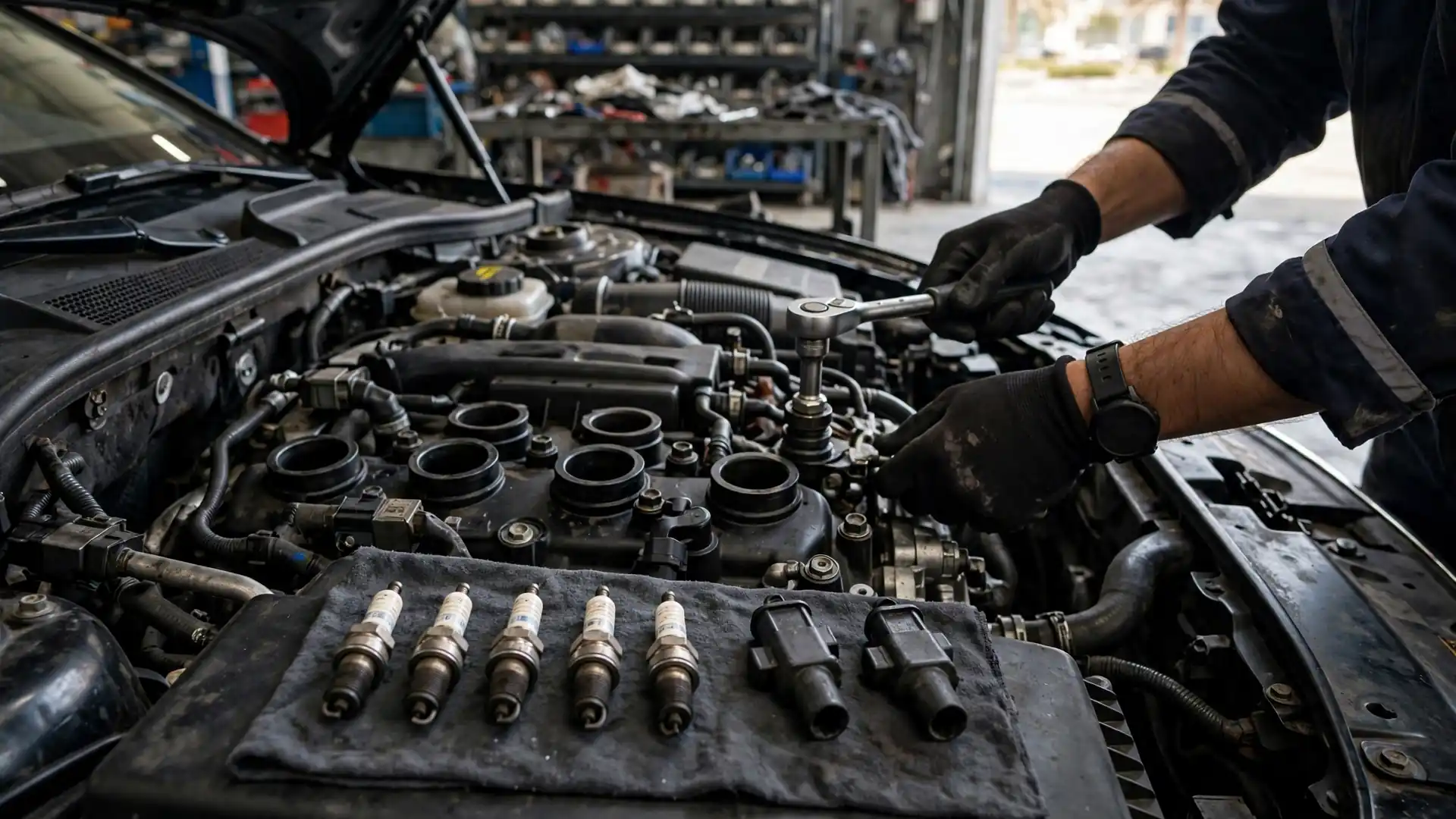
Engine misfires and transmission overheating can create similar symptoms, and vibration under acceleration has its own set of causes worth ruling out. The best way to find the real cause is to inspect the engine and gearbox, scan for fault codes, and test the parts linked to the problem.
Do not ignore repeated jerking, delayed gear changes, slipping, or unusual gearbox noises. Early diagnosis can help prevent further damage and may reduce the total repair bill. Following the correct maintenance schedule and using the right transmission fluid can help keep your Audi running smoothly.
If your car needs expert attention, book a shift-quality diagnosis in Musaffah. A professional workshop can diagnose the fault, explain the repair options, and help restore smooth gear changes before the problem becomes more serious.