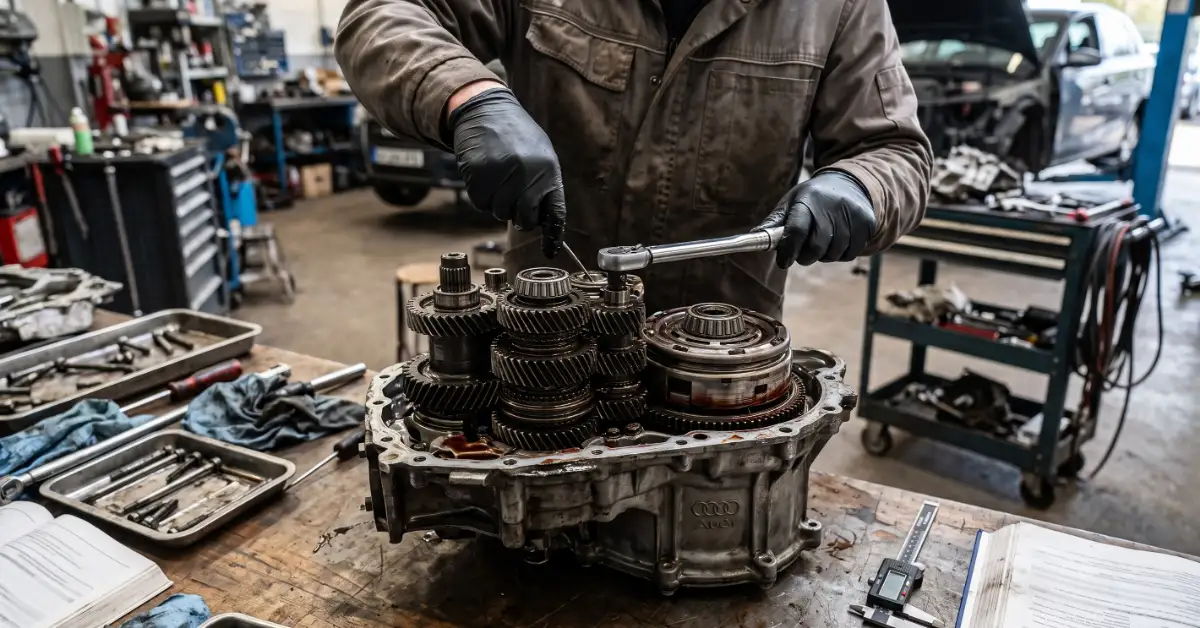
Checking the transmission fluid level is important for smooth shifting and gearbox protection. However, most modern Audi models do not have a traditional transmission dipstick under the hood.
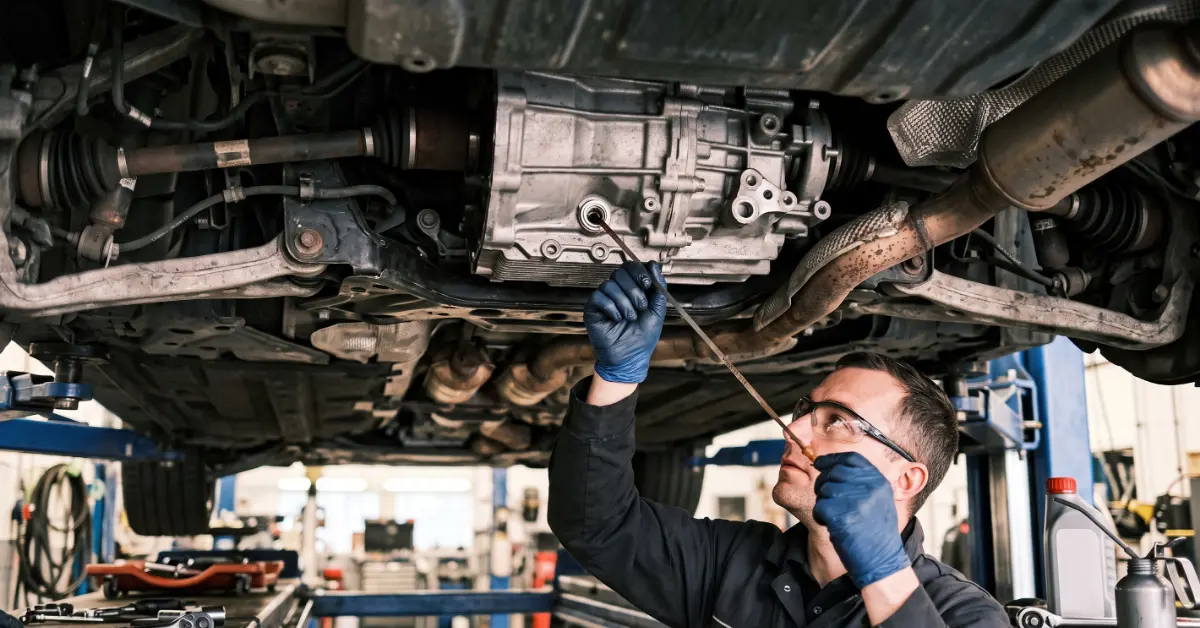
Instead, the fluid level is checked from underneath the vehicle through a fill or overflow plug while the transmission fluid is within a specific temperature range.
For many Audi gearboxes, this range is around 30 - 45°C. The vehicle must also be completely level, and the engine usually needs to remain running during the check. Because this process needs special tools and safety equipment, professional inspection is often the safer choice.
Why Checking Audi Transmission Fluid Level Matters?
Audi transmission fluid does more than lubricate the gearbox. It also helps control hydraulic pressure, reduce friction, cool internal parts, and support smooth gear changes. If the fluid level is too low, the transmission may not receive enough lubrication or hydraulic pressure.
This can increase heat and wear inside the gearbox. A high fluid level can also cause problems because excess fluid may foam or create pressure changes.
Both conditions can affect shifting and transmission performance. Checking the level correctly helps ensure the gearbox has the right amount of fluid for normal operation.
Does an Audi Have a Transmission Dipstick?
Most modern Audi models do not use a traditional under-hood transmission dipstick. Their automatic gearboxes are designed as sealed systems, so the fluid level is checked through a service opening underneath the transmission.
The exact checking method depends on the gearbox fitted to the vehicle. Audi has used different systems, including S-tronic, DSG, Tiptronic, and Multitronic on various models and model years.
Each gearbox can have different fluid specifications and temperature requirements. Always confirm the correct procedure for the specific Audi before opening the transmission fill or check plug.
Steps To Check the Audi Transmission Fluid Level
What You Need Before Checking the Fluid
An accurate fluid-level check requires more equipment than a normal engine oil check. The vehicle needs to remain completely level while the transmission temperature is monitored.
You may need:
- OBDII diagnostic scanner: Used to read the live transmission fluid temperature.
- Vehicle lift or secure jack stands: Needed to access the transmission from underneath.
- Correct transmission fluid: The fluid must meet the specification for the Audi gearbox.
- Fluid pump: Used to add fluid if the level is low.
- Protective equipment: Gloves and other safety gear help reduce the risk of burns.
- Torque wrench: Used to tighten the check or fill plug correctly.
Step 1: Park the Audi on a Level Surface
The first step is to place the Audi on a completely flat surface. The vehicle must remain level during the inspection because the fluid level is often determined by the height of fluid inside the transmission housing.
A professional workshop normally uses a vehicle lift that keeps all four wheels at the correct height. If a lift is not available, suitable jack stands may be required, but the vehicle must still remain completely level.
Engage the parking brake before starting work. Never rely on a basic jack alone when working underneath a running vehicle.
Step 2: Connect a Diagnostic Scanner
The transmission fluid temperature is an important part of the level-checking process. Connect an OBDII diagnostic scanner to the vehicle and select the transmission control system or relevant live data.
Tools such as manufacturer-level diagnostic equipment can show the current transmission oil temperature. For many Audi gearboxes, the fluid should be within approximately 30°C to 45°C when the level is checked.
Checking the fluid when it is too cold or too hot can produce an incorrect result. The exact temperature range should always be confirmed for the specific gearbox.
Step 3: Start the Engine and Cycle the Gears
Start the engine and allow it to idle. Keep your foot firmly on the brake and carefully move the selector through the available gear positions.
Cycle through P, R, N, and D, pausing for a few seconds in each position. This allows transmission fluid to move through the hydraulic system and clutch circuits.
After cycling the gears, return the selector to the position specified for the particular gearbox, often Park or Neutral, while keeping the engine running. The correct gear position can vary, so follow the Audi gearbox service procedure for the vehicle.
Step 4: Check the Transmission Overflow Plug
Once the transmission reaches the correct temperature, the fluid level can be checked from underneath the vehicle. Locate the transmission fill or overflow plug according to the gearbox service procedure.
With the engine still running, the plug is carefully removed. If the fluid level is correct, a small steady stream or slow drip may come from the opening.
This indicates that the fluid has reached the required level at the specified temperature. If no fluid comes out, the transmission may be low. The correct fluid can then be pumped in until it begins to flow from the inspection opening.
What Does the Fluid Flow Tell You?
The amount of fluid coming from the check opening helps show whether the transmission has the correct level. A small drip or slow flow at the correct temperature generally indicates that the fluid level is within the required range.
If there is no fluid coming from the opening, the level may be too low. Low fluid can reduce lubrication and affect hydraulic pressure inside the gearbox.
However, the technician should confirm the gearbox procedure before adding fluid because different Audi transmissions use different methods. Adding too much fluid can also cause problems, so the level should never be guessed.
How to Identify Low Transmission Fluid?
Low transmission fluid can sometimes cause noticeable changes in driving performance. These symptoms may appear gradually, especially when the gearbox is exposed to heavy traffic or high temperatures.
Common signs include:
- Delayed Gear Engagement: A delay when moving from Park to Drive or Reverse may indicate a fluid or hydraulic pressure issue.
- Harsh Shifting: Sudden or rough gear changes can occur when fluid levels or transmission pressure are incorrect.
- Gear Slipping: Unexpected RPM increases without normal acceleration may point to a transmission problem.
- Transmission Warning Light: A warning message can indicate a detected fault within the gearbox or control system.
- Unusual Noises: Whining, humming, or grinding sounds may indicate internal transmission wear or low lubrication.
- Fluid Leaks: Fluid underneath the Audi can cause the transmission level to drop over time.
What low fluid does covers what happens if the level is left low, which is worth reading before deciding a small drop can wait.
What Does Bad Transmission Fluid Look Like?
Fluid condition can provide useful information about the health of the gearbox. However, appearance alone should not be used to decide whether the transmission needs a service.
Old or overheated fluid may become darker and develop a burnt smell. Some fluid can also contain fine particles caused by normal wear, while large amounts of metal debris can indicate a more serious internal problem.
The correct fluid colour can vary between transmission types, so it is better to compare the fluid against the manufacturer's specification rather than relying only on colour.
Why UAE Heat Makes Fluid Checks Important?
UAE driving conditions can place extra heat stress on an automatic transmission. Summer temperatures can rise above 45°C, while heavy city traffic can keep the vehicle moving slowly for long periods. This can increase transmission operating temperatures.
Correct fluid level is especially important because transmission fluid helps transfer heat away from internal components. Low, old, or degraded fluid may reduce the gearbox's ability to manage heat and lubrication.
Regular inspections can help identify leaks, poor fluid condition, or other issues before they develop into major transmission problems.
The heat argument is stronger here than the general UAE case suggests. A gearbox that spends its week on short runs between Musaffah and the city never settles at a stable temperature, so both the level and the fluid condition drift faster than the service book anticipates.
Should You Check Audi Transmission Fluid Yourself?
Checking an Audi transmission fluid level is not as simple as checking engine oil. The vehicle needs to be raised safely, remain level, and have its transmission temperature monitored accurately. The engine may also need to stay running while the check plug is removed.
There is also a risk of burns from hot transmission fluid and a risk of gearbox damage if the wrong fluid or incorrect filling method is used.
For these reasons, owners without the correct lift, diagnostic scanner, fluid pump, and technical knowledge should have the level checked by a qualified Audi or European car specialist.
When Should Audi Transmission Fluid Be Checked?
The fluid level should be checked whenever there are signs of a leak, unusual shifting, or transmission problems. It can also be inspected during scheduled transmission maintenance.
A level check is especially useful after transmission work or when a gearbox has been serviced. If fluid has been removed during a repair, it must be refilled using the correct procedure.
Audi transmission service intervals vary by gearbox and model, so the recommended maintenance schedule should be followed rather than using one interval for every Audi.
Final Takeaway
Checking the Audi transmission fluid level requires more care than checking engine oil because most modern Audi gearboxes do not have a normal dipstick.
The vehicle needs to be level, the engine may need to remain running, and the fluid temperature should be monitored with a diagnostic scanner. For many systems, the check is performed around 30°C to 45°C, but the exact range depends on the gearbox.
If your Audi shows harsh shifting, delayed engagement, slipping, warning lights, or signs of a fluid leak, have the transmission inspected before continuing to drive. For professional fluid checks, Audi transmission service, and other car care needs, contact Zenfo Auto Services for assistance.
On a sealed gearbox the temperature window is the whole job, and it is the step a driveway check cannot do. Have the level set properly if the reading looks wrong, or book have the level set at temperature as part of a wider inspection.