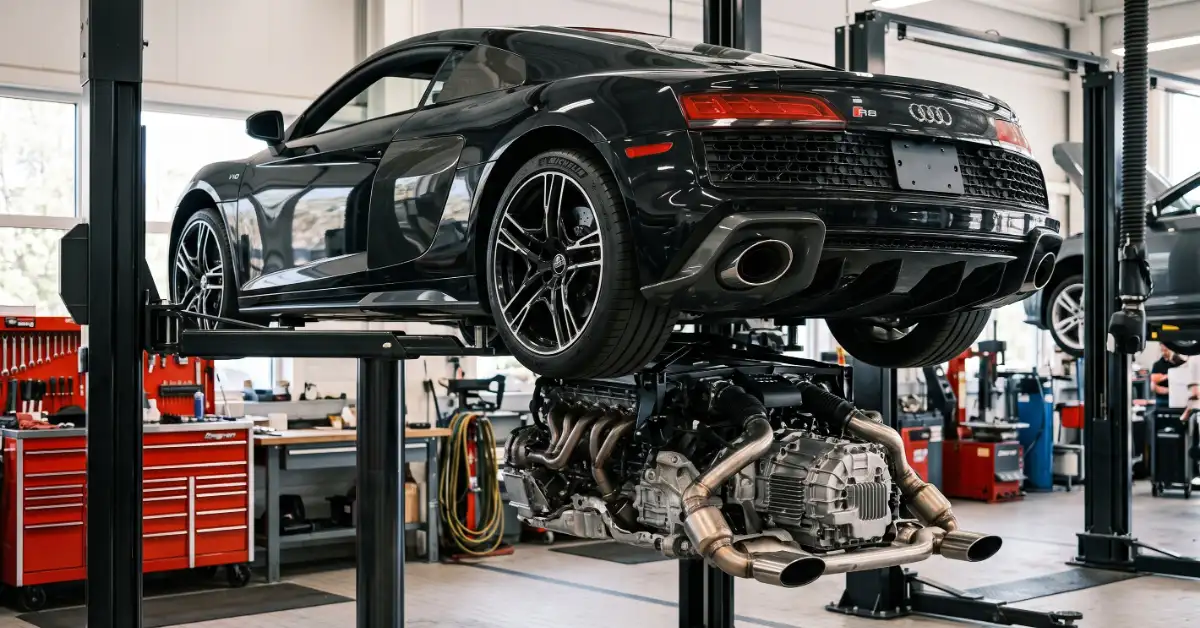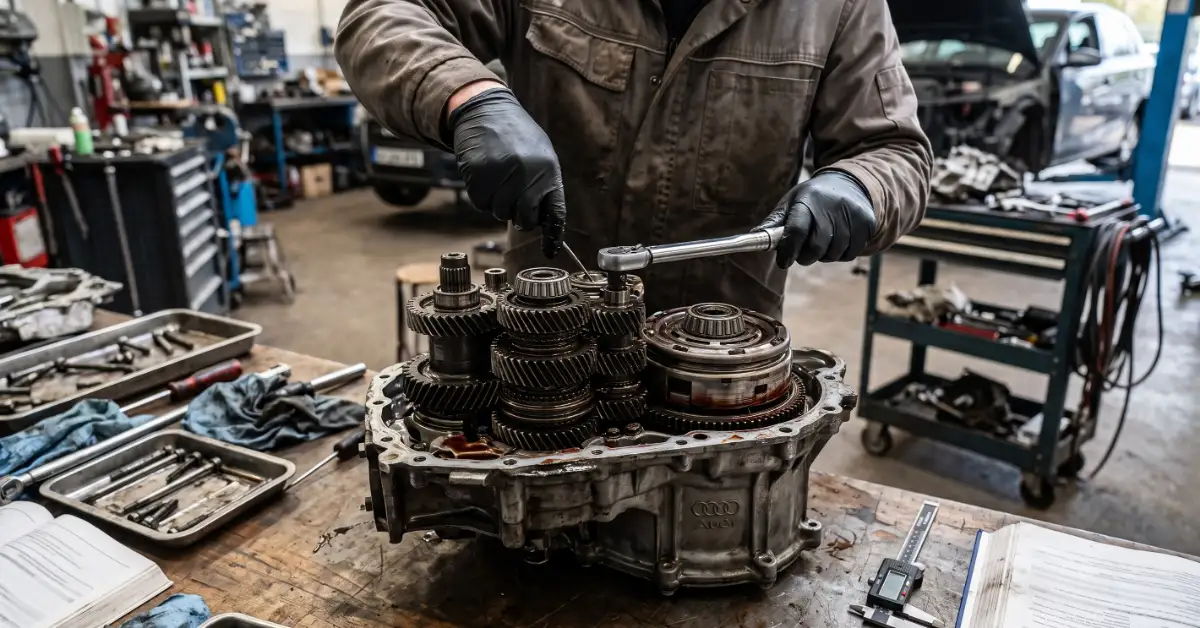
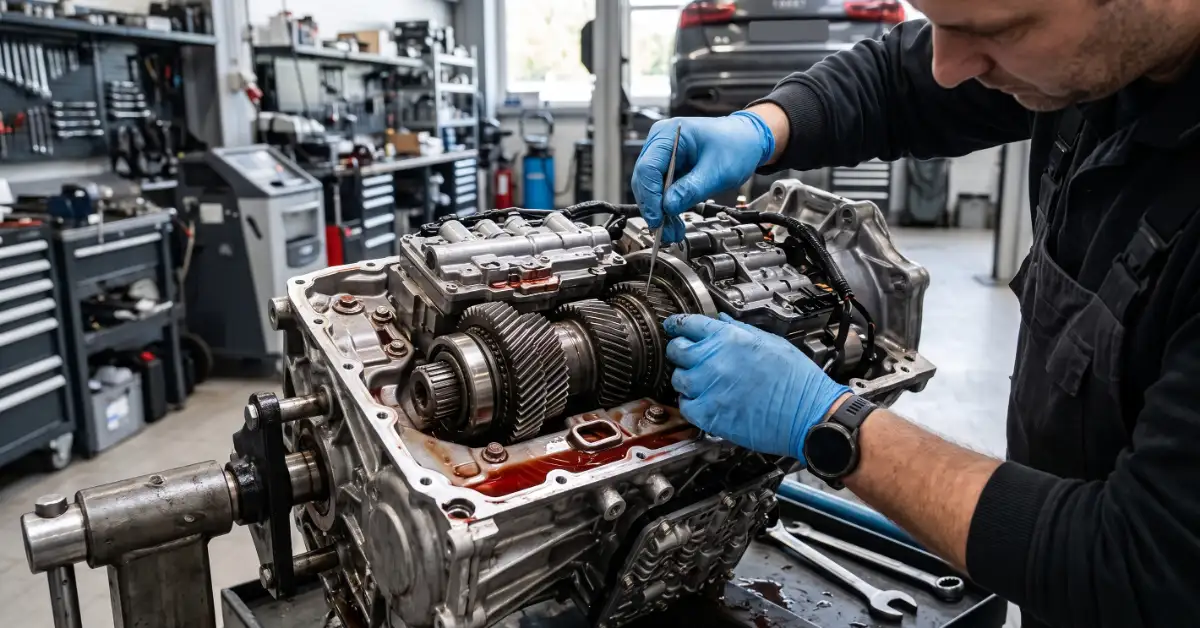
An Audi transmission can provide smooth shifts and strong performance for many years when it receives the right care. However, UAE heat, busy roads, and frequent stop-and-go driving can place extra stress on the gearbox.
Regular fluid service, correct driving habits, cooling system care, and early diagnosis are key to extending the lifespan of an Audi transmission. For many Audi models, S-Tronic fluid and filters should be serviced around every 60,000 km.
Tiptronic units may need fluid service around 60,000 to 80,000 km. The exact interval depends on the gearbox type and manufacturer requirements. Using the correct fluid and avoiding harsh driving also helps protect internal components.
Why Audi Transmission Care Matters in the UAE?
The UAE climate creates demanding conditions for automatic transmissions. Summer temperatures can rise above 45°C, while daily traffic can keep the gearbox working for long periods at low speeds.
Heat causes transmission fluid to lose its protective properties over time, while repeated acceleration and stopping increase clutch and torque converter activity. This can place extra stress on the mechatronic unit, clutch packs, bearings, and hydraulic system.
A good maintenance plan helps control heat and keeps the fluid, cooling system, electronics, and mechanical parts working correctly. Regular checks are especially important for cars driven mainly in busy cities.
Two local factors decide how long a gearbox lasts here. The first is ambient heat, which leaves less margin before the fluid reaches the top of its operating range. The second is duty cycle: the congested industrial-area runs that make up most local mileage keep clutches slipping through engagement without the airflow to cool them.
Professional Tips To Maintain Your Audi Transmission for Longevity
1. Follow the Right Transmission Fluid Schedule
Transmission fluid does more than lubricate gears. It also helps transfer heat, control hydraulic pressure, and protect clutch and valve components. For this reason, waiting until the fluid looks badly worn is not a good maintenance plan in the UAE.
Many Audi owners can use 60,000 km as a useful service point for S-Tronic fluid and filters, while Tiptronic service may fall around 60,000 to 80,000 km.
The exact interval depends on the model, gearbox code, usage, and manufacturer instructions. Heavy traffic and extreme heat may justify earlier service.
Audi Transmission Service IntervalsDifferent Audi drivetrains have different maintenance needs. The correct interval should always be confirmed using the vehicle's exact model, transmission type, and service information. A general UAE maintenance guide is:
| Audi System | Common Service Range | Main Service |
|---|---|---|
| S-Tronic | Around 60,000 km | Fluid and filter replacement |
| Tiptronic | Around 60,000 to 80,000 km | Fluid service and inspection |
| Quattro differential | Around 80,000 km | Gear oil replacement |
| Quattro transfer case | Around 80,000 km | Gear oil replacement |
These are useful service ranges, not universal rules. Some Audi models have different requirements, so the correct specification should always come first.
2. Use the Correct Audi Transmission Fluid
Using the wrong transmission fluid can cause serious problems even when the fluid appears clean. Audi gearboxes are designed around specific fluid properties, including viscosity, friction behavior, and temperature performance.
S-Tronic and Tiptronic systems do not necessarily use the same fluid. Always check the exact gearbox specification before service and use an approved fluid that meets the required standard.
The correct fluid helps maintain clutch operation, hydraulic pressure, lubrication, and heat control. A professional workshop should also check the fluid level and condition rather than simply adding fluid without finding why the level is low.
3. Replace Filters During the Service
Transmission filters help remove dirt and small particles from the fluid before they reach sensitive internal components. As the filter becomes restricted, fluid flow and hydraulic performance can be affected.
During a scheduled service, the filter should be replaced when the gearbox design and service procedure require it. This is particularly important for dual-clutch systems where clean fluid supports clutch and mechatronic operation.
A technician can also inspect the old fluid for unusual metal particles or debris. Finding excess material during service may provide an early warning of clutch, gear, bearing, or other internal wear.
4. Keep the Cooling System in Good Condition
Transmission temperature is closely linked to the vehicle's cooling system. Audi models may use a heat exchanger or cooler to help control transmission fluid temperature.
If the radiator is blocked with dust and debris, coolant flow is poor, or a cooling component fails, transmission temperatures can rise. UAE roads expose vehicles to large amounts of dust and sand, making cooling system inspection even more important.
Check the coolant level and condition during regular maintenance, and inspect the radiator, water pump, hoses, and cooling components when needed. Good cooling helps protect fluid and internal gearbox parts.
5. Drive Gently During Heavy Traffic
Bumper-to-bumper traffic creates repeated clutch engagement, braking, and acceleration. Aggressive throttle use during these conditions can create rapid heat build-up inside the transmission.
Instead, use smooth acceleration and allow enough space to move without repeated hard launches. Avoid constantly balancing the accelerator and brake to make the car creep forward.
If traffic comes to a complete stop for an extended period, use the brake and follow the gearbox manufacturer's recommended operating method. The goal is to reduce unnecessary clutch slip and heat. Gentle driving is one of the easiest ways to reduce daily transmission stress.
6. Warm Up Before Hard Acceleration
Transmission fluid needs time to reach its normal operating range. When the car has been sitting overnight, avoid using heavy throttle immediately after starting. Let the vehicle settle briefly and drive smoothly during the first few kilometres.
This gives the fluid and drivetrain time to warm up while keeping load moderate. You do not need a long stationary warm-up. Normal gentle driving is usually a better way to bring the vehicle toward operating temperature.
Once the gearbox has warmed up, normal acceleration places less stress on cold fluid and internal hydraulic components.
7. Come to a Complete Stop Before Changing Direction
Changing directly from Reverse to Drive while the car is still moving can create sudden loads inside the drivetrain. The same applies when shifting from Drive to Reverse before the vehicle has stopped.
Always allow the Audi to come to a complete stop, keep your foot on the brake, and then select the new direction. This simple habit reduces shock loads on clutch packs, gears, shafts, and other transmission components.
It is especially useful during parking because repeated direction changes happen often. Taking an extra moment can help reduce unnecessary wear over the vehicle's lifetime.
8. Use the Parking Brake on Inclines
Parking on a steep slope can place the vehicle's weight against the transmission's parking mechanism. To reduce this load, keep the brake pedal pressed and engage the electronic parking brake before selecting Park.
The parking brake can then hold the vehicle while the transmission remains less stressed. After the parking brake is applied, select Park and switch off the car.
This method can also make it easier to move the gear selector from Park when leaving the parking space. It is a small habit, but it can reduce unnecessary load on the parking pawl.
9. Check Transmission Software and Electronics
Modern Audi transmissions rely heavily on electronic controls. The Transmission Control Unit, or TCU, manages clutch pressure, gear changes, hydraulic functions, and other operations. Software updates may improve shift control or address known operating issues.
During regular servicing, ask the workshop to check whether suitable transmission software updates are available for your vehicle. A proper diagnostic scan can also identify stored fault codes before they become obvious driving problems.
Brand-specific equipment such as ODIS or suitable VCDS tools can help technicians examine transmission data and separate electronic faults from mechanical problems.
10. Inspect Fluid Leaks Without Delay
A small leak can slowly reduce transmission fluid levels and create bigger problems. Low fluid can affect lubrication, hydraulic pressure, clutch operation, and cooling. Check the area where the Audi is normally parked for unusual oil spots.
Transmission fluid color can vary by fluid type and age, so it is better not to rely on color alone. If you notice a leak, arrange an inspection rather than simply adding fluid.
The technician should identify the source, which may include a seal, gasket, cooler connection, drain plug, or transmission housing. Fixing a leak early can prevent avoidable transmission damage.
11. Give Quattro Components Proper Attention
Audi Quattro vehicles have additional drivetrain components that also need maintenance. The differential and transfer case use gear oil to lubricate gears and bearings while transferring power between the wheels.
These oils can also become contaminated or lose performance over time. A general service range of around 80,000 km may be used for some Quattro components, but the exact requirement varies by model and system.
During transmission servicing, ask the technician to check the Quattro drivetrain as well. Maintaining these components helps support smooth power delivery and reduces unnecessary wear across the complete drivetrain.
12. Build a Long-Term Audi Transmission Maintenance Routine
Long transmission life is usually the result of many small maintenance decisions rather than one major repair. Keep a record of fluid services, filter replacements, diagnostic checks, and cooling system work.
Follow the correct service schedule for the exact gearbox instead of relying on a general interval. Use approved fluids and quality parts, and avoid aggressive driving when the transmission is cold or operating in extreme heat.
Most importantly, respond quickly to changes in shifting behavior. A well-maintained gearbox can provide smoother performance, better reliability, and lower risk of expensive repairs over time.
A scheduled fluid service covers the part of this routine that needs a ramp and a diagnostic scanner, including setting the final level inside the specified temperature window.
Watch for Early Audi Transmission Warning Signs
A transmission problem rarely becomes serious without showing some warning first. Changes in shift quality, strange noises, or fluid leaks should be checked instead of ignored.
Early diagnosis may identify a fluid issue, sensor fault, solenoid problem, clutch concern, or mechatronic fault before more components become damaged. Watch for these signs:
- Delayed engagement: The car takes longer than normal to move after selecting Drive or Reverse.
- Transmission shudder: The vehicle shakes or vibrates during slow acceleration or gear changes.
- RPM spikes: Engine speed rises without a matching increase in vehicle speed.
- Fluid leaks: Oil spots under the vehicle may indicate a damaged seal, gasket, or transmission component.
- Warning messages: A gearbox warning on the dashboard requires professional diagnostic testing.
Common Audi Transmission Problems and Fixes
Knowing common problems can help owners react before a small issue becomes a major repair. Symptoms alone cannot confirm the exact fault, so a proper inspection is necessary.
A technician may check fluid condition, hydraulic pressure, fault codes, clutch adaptation values, electrical connections, and mechanical components. The table below provides a simple overview of problems that Audi owners may encounter.
| Transmission Problem | Common Symptoms | Possible Repair |
|---|---|---|
| Degraded fluid | Rough shifts, heat, delayed response | Correct fluid service |
| Low fluid level | Delayed engagement, slipping | Find leak and correct fluid level |
| Worn clutch pack | Shuddering, slipping, poor take-off | Clutch inspection or replacement |
| Mechatronic fault | Gear selection problems, warning light | Diagnostic testing and mechatronic repair |
| Solenoid problem | Harsh or delayed shifts | Solenoid or valve body inspection |
| Cooling problem | Overheating, poor shifting | Cooling system inspection |
| Software fault | Incorrect or unusual shift behavior | TCU diagnosis or software update |
| Fluid leak | Oil spots and low fluid | Seal, gasket, or housing repair |
Gearbox faults explained ranks those problems by urgency, which is useful when more than one appears at once.
Conclusion
Maintaining an Audi transmission for a long life requires regular service, correct fluids, good cooling, and careful driving. In the UAE, heat and heavy traffic make these habits even more important.
S-Tronic fluid and filters are commonly serviced around 60,000 km, while Tiptronic units may require service around 60,000 to 80,000 km, depending on the vehicle. Quattro oils may also need periodic replacement.
Avoid hard launches, stop fully before changing direction, use the parking brake on slopes, and inspect leaks or shifting problems early. Consistent care can help keep your Audi transmission smooth and reliable for longer.
If your Audi has delayed shifting, shuddering, fluid leaks, warning lights, or other transmission concerns, do not wait for the problem to become worse.
Zenfo Auto Services can help with vehicle diagnostics, Audi transmission service, and repair support. Contact Zenfo Auto Services to arrange the right inspection and maintenance for your Audi and keep it performing reliably on UAE roads.
Maintenance only pays if it is actually done. An Audi maintenance plan for local conditions starts with a scan and a fluid condition check rather than a generic schedule.