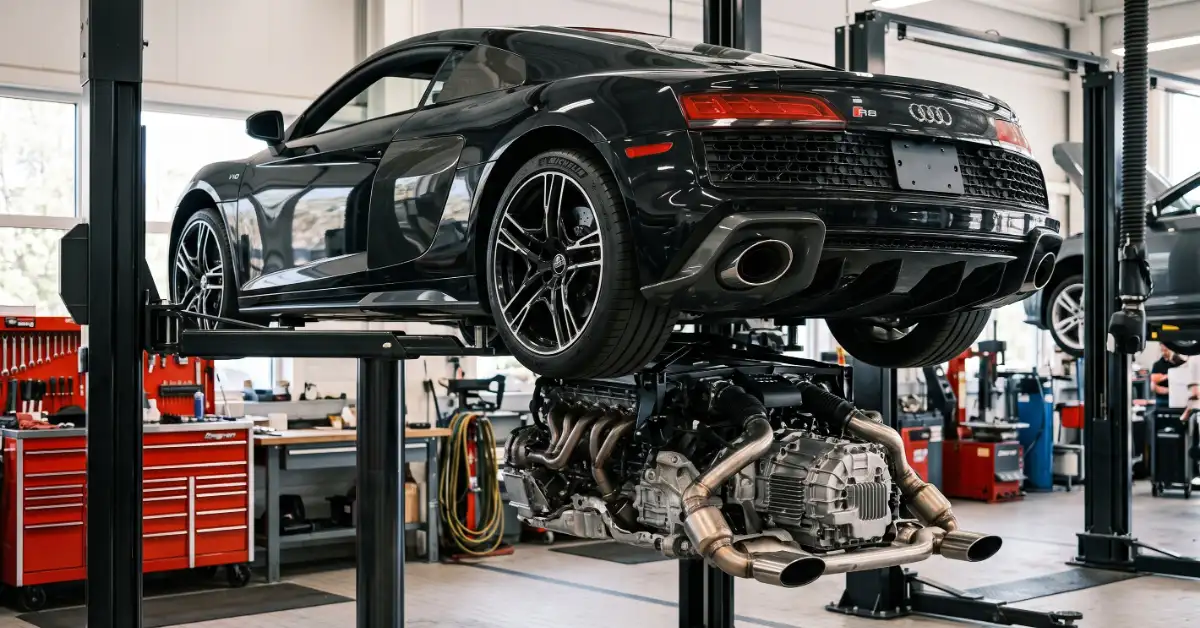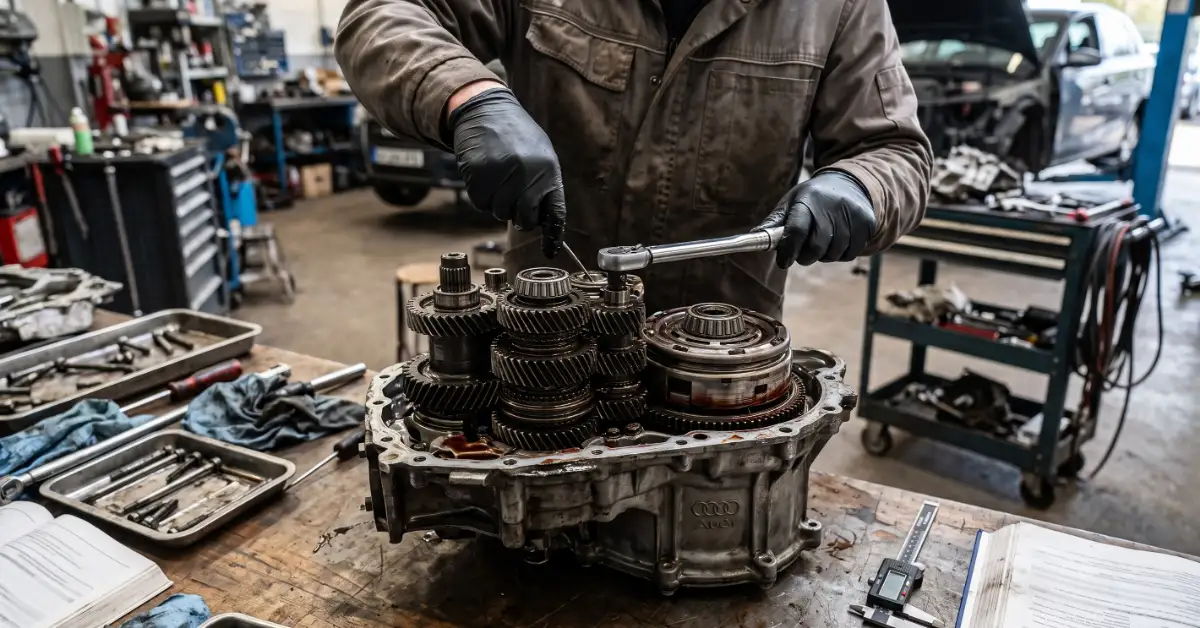
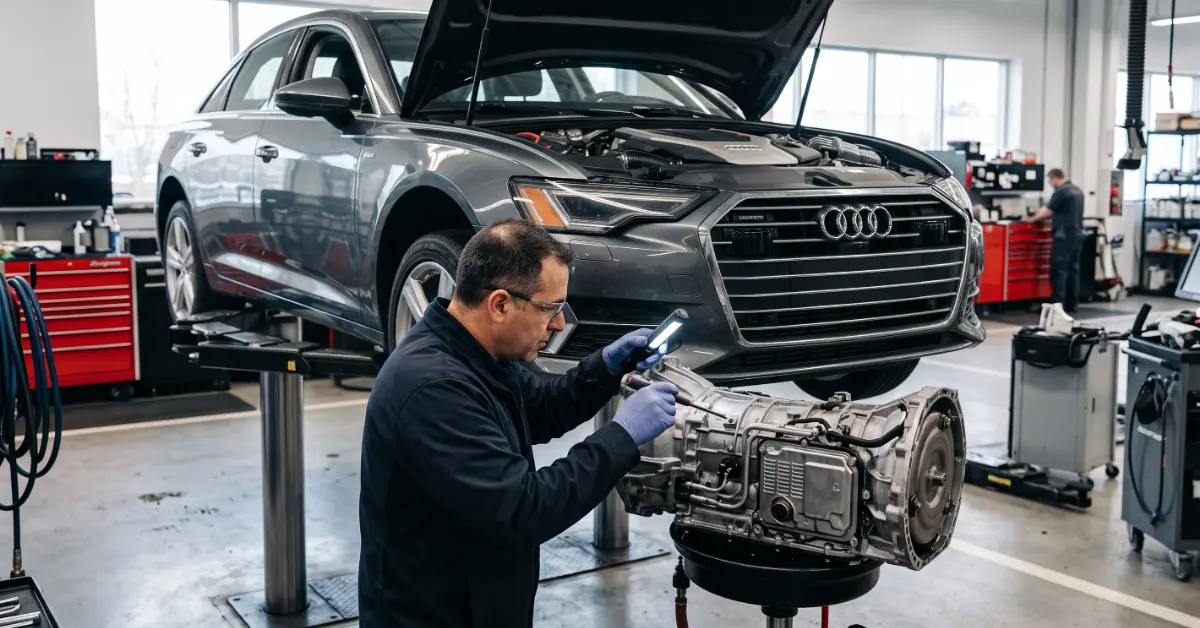
Audi transmissions are built for smooth shifting and strong performance, but UAE driving conditions can put them under heavy stress. High summer heat, traffic jams, short trips, and repeated stop-and-go driving can increase gearbox temperature and wear.
Preventing Audi transmission failure starts with regular fluid service, careful driving, and early checks when something feels wrong.
Change the transmission fluid around every 40,000 to 60,000 km, with 40,000 km being a better target for heavy city use. Drive smoothly, avoid repeated hard launches, stop fully before changing direction, and maintain the cooling system.
Why UAE Heat Is Hard on Audi Transmissions?
UAE temperatures can rise above 45°C during summer, creating a tough environment for automatic transmissions. The gearbox already produces heat through clutch operation, hydraulic pressure, and gear movement.
High outside temperatures make it harder for the transmission cooling system to remove that heat. Excess heat can speed up fluid breakdown and reduce its ability to protect clutch packs, bearings, valves, and gears.
Audi S-Tronic, Tiptronic, and Multitronic systems can all suffer when heat is not controlled. Keeping the radiator, coolant system, and transmission cooling system in good condition helps reduce thermal stress.
Expert Tips To Prevent Audi Transmission Failure?
1. Follow a Shorter Transmission Fluid Service Interval
Some Audi maintenance schedules may describe transmission fluid as a long-life or lifetime fluid, but severe UAE conditions deserve a more careful approach. A practical service range is 40,000 to 60,000 km, depending on the gearbox type, vehicle, traffic conditions, and driving habits.
Cars that spend many hours in Abu Dhabi traffic should stay closer to the 40,000 km mark. Old fluid can lose important lubrication and cooling properties.
During service, the mechanic should check the fluid condition, level, filter, seals, and signs of contamination. Using the correct fluid specification is also essential.
2. Use the Correct Fluid and Service Method
Audi uses different transmission systems and fluid requirements, so one fluid cannot safely be used for every model. The correct ATF or transmission fluid should match the gearbox code and the manufacturer's specifications.
S-Tronic, Tiptronic, and Multitronic units can have different service needs. A normal drain-and-fill method is generally preferred when recommended for the specific transmission. High-pressure machine flushing should not be used without checking the gearbox manufacturer's procedure.
An incorrect fluid or service method can affect hydraulic pressure, clutch operation, seals, and shifting quality. Always confirm the required specification before adding fluid.
3. Avoid Creeping in Heavy Traffic
Stop-and-go traffic is one of the biggest challenges for an Audi transmission in the UAE. Slowly moving forward for long periods while balancing the accelerator and brake can keep parts of a dual-clutch transmission partially engaged.
This creates friction and extra heat, especially in an S-Tronic system. When traffic stops, allow the car to stop instead of constantly creeping forward. When there is enough space, move normally and then stop again.
This simple change can reduce unnecessary clutch activity. It also helps lower heat build-up during long traffic jams on busy roads.
4. Drive Smoothly After Starting the Car
An Audi transmission works best when its fluid reaches the correct operating temperature. You do not need to let the engine idle for a long time, but giving the car a few seconds after startup and driving gently at first is useful.
Avoid hard acceleration immediately after starting, especially during cooler mornings or after the car has been parked overnight. For the first few kilometres, use smooth throttle inputs and normal gear changes.
Once the transmission reaches its normal operating range, stronger acceleration is less stressful than when the fluid is still cold.
5. Stop Fully Before Changing Between Drive and Reverse
Changing from Drive to Reverse, or Reverse to Drive, before the car has completely stopped can create strong loads inside the transmission. The sudden change in direction can stress clutch packs, gears, shafts, and other drivetrain parts.
Always bring the Audi to a complete stop before selecting another direction. Keep your foot firmly on the brake and allow the transmission to engage before applying the accelerator.
This habit is especially important when moving in tight parking areas. A few extra seconds can help prevent unnecessary shock loads and reduce long-term transmission wear.
6. Use the Correct Parking Method on Slopes
Parking on an incline can place the vehicle's weight against the transmission's parking mechanism if the correct sequence is not followed. On a slope, keep your foot on the brake and apply the electronic parking brake before shifting fully into Park.
This allows the brakes to hold the vehicle instead of placing most of its weight on the internal parking pawl. After the parking brake is secure, select Park and switch off the vehicle.
Using this method can make shifting out of Park easier later and reduce unnecessary stress on transmission components.
7. Keep the Engine and Cooling System Healthy
The transmission depends on the vehicle's cooling system to help control operating temperature. A dirty radiator, low coolant level, damaged cooling parts, or poor airflow can increase heat across the drivetrain.
UAE roads can expose the front of the car to dust, sand, and debris, which may reduce airflow through the radiator and cooling system. Check coolant levels during regular maintenance and inspect the radiator and related components when needed.
A healthy cooling system helps the transmission stay within a safer temperature range. This is especially important during long summer drives and heavy traffic.
8. Avoid Repeated Hard Launches
Strong acceleration can be part of the Audi driving experience, but repeated hard launches can create high clutch and drivetrain loads. The risk becomes greater when the vehicle is stuck in traffic or driven aggressively during very hot weather.
Avoid repeated launches from a complete stop, especially when the gearbox is already running hot. Let the transmission engage properly before applying heavy throttle.
Smooth acceleration is usually enough for daily driving and creates less stress on the clutch packs and drivetrain. Occasional spirited driving is different from repeatedly abusing the transmission during everyday use.
9. Watch for Early Audi Transmission Problems
Small transmission symptoms should not be ignored because early diagnosis can prevent a minor issue from becoming a major repair.
Changes in shifting behavior can point to problems with fluid condition, clutch wear, sensors, solenoids, or the mechatronic unit. Pay attention to symptoms such as:
- Low-speed jerking or shuddering
- Delayed engagement when selecting Drive or Reverse
- Rough or sudden gear changes
- Unusual humming or vibration
- Transmission warning messages
- Difficulty selecting certain gears
- Burning smells or visible fluid leaks
A professional scan can help identify stored fault codes before the problem becomes more serious.
10. Use Proper Diagnostic Checks When Warning Lights Appear
A gearbox warning light should never be treated as a minor issue. Audi transmissions use electronic control systems that monitor pressure, temperature, clutch operation, and gear selection.
A fault may come from a sensor or wiring problem, but it can also indicate a mechatronic or mechanical issue. Professional diagnostic equipment can read transmission fault codes and provide useful live data.
If the warning is accompanied by severe jerking, loss of drive, or unusual noise, stop in a safe place and arrange an inspection. Early testing can reduce the chance of further component damage.
Audi Transmission Problems and Possible Fixes
Different symptoms can come from different transmission parts, so proper diagnosis is important. A jerking gearbox does not always mean the complete transmission needs replacement.
Fault codes, fluid condition, adaptation values, clutch performance, and mechanical components should be checked before deciding on a repair.
Audi specialists can use brand-specific diagnostic equipment such as ODIS or compatible VCDS tools to find electronic and mechanical faults.
The table below shows common problems and the type of inspection or repair that may be needed.
| Audi Transmission Problem | Common Signs | Possible Fix |
|---|---|---|
| Old or degraded fluid | Rough shifts, heat, delayed response | Correct fluid service |
| Low fluid level | Slipping, delayed engagement | Leak check and fluid correction |
| Worn clutch packs | Shuddering, slipping, poor take-off | Clutch inspection or replacement |
| Mechatronic fault | Gear selection issues, warning light | Diagnostic testing and repair |
| Faulty solenoid | Harsh or delayed shifts | Solenoid or valve body inspection |
| Transmission overheating | Warning message, poor shifting | Cooling system and fluid inspection |
| Fluid leak | Low level, visible oil marks | Seal or gasket repair |
| Sensor or wiring fault | Warning light, incorrect shifting | Electrical diagnosis and repair |
How Short Trips Can Affect Transmission Health?
- Limit repeated short journeys: Frequent short drives may prevent the transmission fluid from reaching a stable operating temperature.
- Combine nearby trips: Grouping several short errands into one journey can reduce repeated cold starts and unnecessary thermal cycles.
- Take occasional longer drives: A steady longer drive allows the drivetrain to operate closer to its normal temperature.
- Avoid unnecessary stop-and-go driving: Heavy traffic creates repeated starts, stops, and clutch activity that can increase transmission heat.
- Drive smoothly during short trips: Gentle acceleration and steady driving reduce unnecessary stress while the transmission is warming up.
- Continue regular servicing: Short-trip vehicles still need scheduled transmission maintenance even when yearly mileage remains relatively low.
Short trips are the local default rather than the exception. A run across Musaffah to ICAD never lets the gearbox reach and hold a settled operating temperature, so the fluid ages by duty cycle rather than by distance. Judge the service interval by how the car is used, not by the odometer.
Maintenance Habits That Help Extend Gearbox Life
- Follow the correct service interval: Regular fluid servicing helps maintain lubrication, cooling, and smooth operation inside the Audi transmission.
- Use approved transmission fluid: The correct fluid specification protects internal components and supports proper hydraulic pressure and clutch operation.
- Keep the cooling system healthy: Clean radiators and proper coolant levels help control transmission temperatures during demanding UAE driving conditions.
- Avoid creeping in traffic: Repeated slow movement can increase clutch activity, friction, and heat inside dual-clutch transmission systems.
- Avoid aggressive launches: Repeated hard acceleration from a stop places additional load on clutch packs and drivetrain components.
- Stop before changing direction: Always stop completely before switching between Drive and Reverse to reduce shock loads inside transmission components.
- Check unusual shifting early: Prompt diagnosis of jerking or delays can prevent minor fluid, sensor, clutch, or mechatronic problems from worsening.
- Prepare before summer: Inspect cooling components and transmission condition before extreme heat increases thermal stress during daily driving.
The single highest-return habit on that list is the fluid change. The fluid service that prevents it replaces the oil and filter and sets the level at temperature, which is the part a driveway service cannot do.
Conclusion
Preventing Audi transmission failure comes down to controlling heat, following the right service schedule, and using better driving habits. In UAE conditions, servicing the transmission around every 40,000 to 60,000 km can provide better protection than waiting for long-life intervals, especially for cars used in heavy traffic.
Avoid creeping, aggressive launches, and shifting between Drive and Reverse while moving. Keep the cooling system healthy and act quickly when jerking, delayed engagement, warning lights, or unusual noises appear. Regular inspection and proper care can help your Audi gearbox deliver smooth and reliable performance for longer.
If your Audi is showing shifting problems, transmission warning lights, delayed engagement, or unusual vibration, professional inspection can help find the cause before the damage becomes more serious.
Zenfo Auto Services provides automotive service support, including car diagnostics and repair assistance. Contact Zenfo Auto Services to arrange the right Audi transmission service in the UAE to keep your transmission operating safely.
Late-stage warning signs covers what it looks like when prevention has been left too late. If any of them sound familiar, book an Audi service inspection in Musaffah rather than waiting for the next service.