Transmissions rarely fail without warning. They fail after a period of telling you clearly that something is wrong, and the cost of the repair scales almost exactly with how long that period was ignored.
The gearbox controls gear selection and power delivery, so when it starts to go the car becomes rough, then unsafe, then expensive. Strange noises, delayed shifts, unusual vibration, and struggling acceleration are the signals that arrive first. This is what each of them means and what it takes to put right.
Why It Matters on These Cars Specifically
Audi transmissions are sophisticated by design. They connect engine output to the wheels and manage gear changes with a precision that defines how the car feels to drive, which is also why a fault is so noticeable when one develops.
Modern models use DSG and Tiptronic systems that depend on stable hydraulic pressure and clean fluid. Both are precision-dependent rather than tolerance-dependent: a small deviation does not produce a small symptom, it produces a fault. That is why catching problems at the early-warning stage matters more on an Audi than on a simpler drivetrain.
Warning Signs, Causes and Fixes at a Glance
| Warning sign | Possible cause | Possible solution |
|---|---|---|
| Delayed or rough gear shifting | Old or low fluid, worn internal parts, weak hydraulic pressure | Check and replace fluid, inspect gearbox, reset transmission adaptation if needed |
| Slipping gears while driving | Low fluid pressure, worn clutch packs, damaged bands | Immediate inspection, fluid level check, possible clutch or component replacement |
| Whining, grinding or humming | Lack of lubrication, worn bearings, damaged gears | Replace fluid, inspect internal components, repair damaged parts |
| Burning smell from the engine area | Overheated fluid or excessive internal friction | Stop driving, allow to cool, change fluid, investigate the overheating cause |
| Transmission fluid leaks | Damaged seals, loose pan bolts, cracked housing | Replace seals, tighten components, repair the leak source, refill |
| Warning light on the dashboard | Sensor detection of pressure, temperature or internal fault | Run an OBD diagnostic scan, identify the codes, fix the underlying issue |
| Poor acceleration or power loss | Slipping transmission or poor power transfer | Inspect the clutch system, check fluid condition, repair internal parts |
| Hard jerky shift from Park to Drive or Reverse | Low hydraulic pressure or degraded fluid | Replace fluid, reset the system, inspect the valve body |
| Transmission overheating warning | Heavy load, poor fluid, cooling system failure | Allow cooling, change fluid, inspect the transmission cooler |
| Burnt or dark fluid | High heat exposure and fluid breakdown | Full flush and refill with manufacturer-approved fluid |
| Shaking or vibration during gear changes | Worn mounts, internal wear, uneven pressure distribution | Inspect mounts and gearbox components, replace damaged parts |
| Revs rise with no speed gain (RPM flare) | Clutch slipping or internal pressure loss | Immediate inspection, clutch pack replacement if needed |
The Twelve Signs in Detail
1. Delayed or rough gear shifting. Shifts should feel natural and quick. When the car takes time to change gear or feels harsh doing it, the fluid is usually weak or internal components are worn. The gearbox is working harder to do the same job, and that extra effort accelerates the wear that caused it.
2. Slipping gears. The car changes gear unexpectedly or loses drive while moving. Low hydraulic pressure or worn clutch components are the usual causes. This one is genuinely unsafe at speed or in traffic, and it deteriorates quickly once it starts.
3. Unusual noises from the gearbox. Grinding, whining or humming means internal parts are not being lubricated properly. Fluid is what keeps metal from contacting metal; when it is old or low, the noise is what you hear instead. Sounds that grow louder under acceleration or during shifts need attention immediately.
4. Burning smell. A burnt odour from the engine or gearbox area means fluid is overheating or breaking down, and it has stopped protecting anything. It is most noticeable after long drives or heavy traffic, which in this climate describes most journeys.
5. Fluid leaks. Red, dark or oily spots under the car mean fluid is escaping. A low level reduces both lubrication and cooling, so wear and heat rise together. Small leaks become large problems faster than most owners expect.
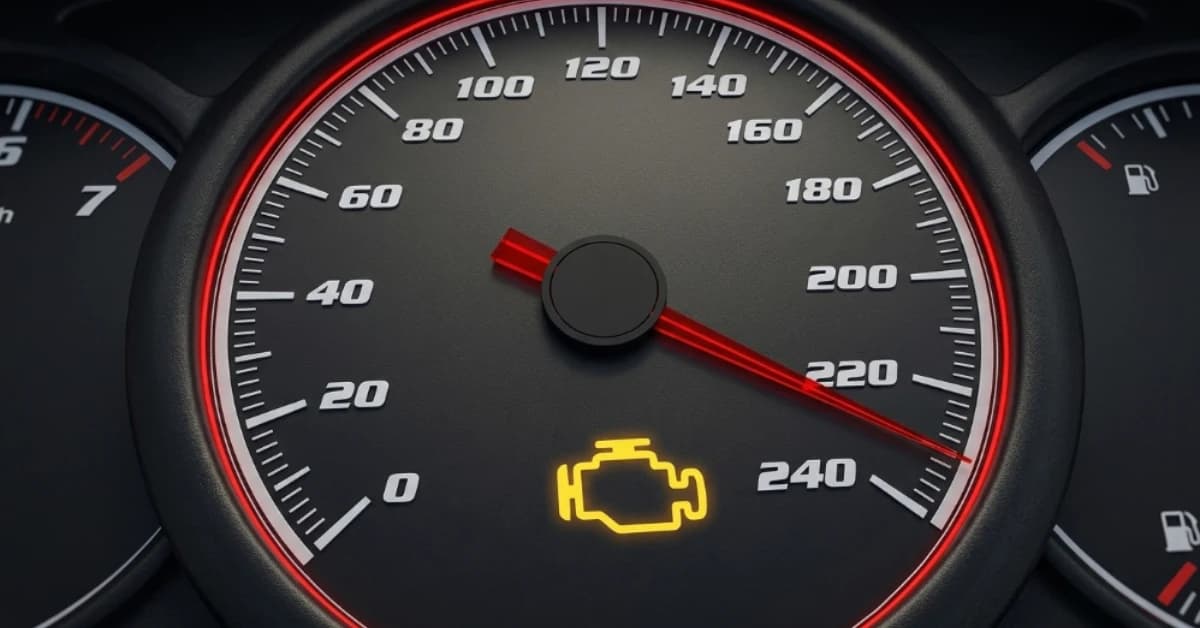
6. Dashboard warning lights. Audi's sensors detect pressure, temperature and internal faults early. A transmission or engine warning light means the system found something specific, and a diagnostic scan is what turns that into an actionable answer rather than a guess.
7. Poor acceleration or power loss. If the engine sounds normal but the car does not respond, the transmission is not transferring power properly. Worn internal parts or weak fluid pressure are the usual reasons.
8. Hard engagement from Park to Drive or Reverse. A pronounced jerk when selecting a gear points to unstable hydraulic pressure or degraded fluid. Left alone it damages clutch packs and mounts, converting a fluid problem into a mechanical one.
9. Overheating warning. The gearbox temperature has exceeded its normal range through heavy load, poor fluid, or a cooling system problem. Heat is what destroys transmissions, so this warning is not one to drive through.
10. Burnt or dark fluid. Healthy ATF is bright red or light pink. Dark fluid that smells burnt has lost its cooling and lubricating ability entirely, and every kilometre driven on it wears internal components faster.
11. Shaking or vibration during shifts. Worn components or unstable fluid pressure. It usually starts mild and increases, particularly under acceleration.
12. RPM flare. Revs rise but the car does not accelerate, because the transmission is slipping and power is not reaching the wheels. Worn clutch parts or lost hydraulic pressure are behind it, and this is one of the last warnings before complete failure. Why a gearbox slips covers the mechanism in detail.
What Actually Causes Failure
Transmissions rarely fail suddenly. They fail through accumulation: poor maintenance, and driving habits that load them harder than they were designed for.
Low or dirty fluid is the leading cause, because it reduces lubrication and raises internal friction. Overheating, aggressive driving and skipped service intervals do the rest. On sophisticated systems like Audi's, small neglect compounds into expensive repairs faster than it would on a simpler gearbox.
Local conditions accelerate every one of those factors. Ambient heat keeps fluid near the top of its thermal range, congested industrial-area traffic keeps the gearbox generating heat without shedding it, and loaded vehicles add to both. A car maintained on a European schedule but driven in Abu Dhabi is, in practice, being under-maintained. Faults seen on the Q7 shows how that plays out on a heavy vehicle in particular.
What to Do When You See These Signs
Stop ignoring them, and get a full transmission inspection at a workshop equipped to scan the gearbox properly. A diagnostic scan identifies the fault quickly, and when a problem is caught early it can often be resolved with a fluid change or a minor repair.
Continuing to drive a failing transmission makes the damage worse and the repair more expensive, in that order. There is no version of this problem that improves with time.
Preventing It Instead
- Service regularly. Keep to the schedule so faults are found before they develop
- Use the correct fluid. The wrong or low-quality product reduces lubrication, raises heat and damages internal parts
- Avoid sudden acceleration. Hard driving loads the gearbox and shortens its life
- Avoid heavy loads. Excess weight or towing beyond the rated limit overloads and overheats the transmission
- Inspect routinely. Leaks and fluid problems are cheap to find and expensive to miss
- Drive smoothly. Gentle acceleration and steady shifts reduce stress and extend service life
Getting It Assessed
A failing transmission becomes a serious and costly problem only when the early symptoms are left alone. Rough shifting, slipping and unfamiliar noises are all recoverable positions if they are acted on while they are still symptoms rather than damage.
If your car is showing any of the twelve signs above, Audi transmission repair in Mussafah starts with a full diagnostic scan so the actual fault is identified before any parts are quoted.
Knowing which symptom to act on is one half of it. Why these gearboxes fail covers the other half, the underlying causes that produce them.