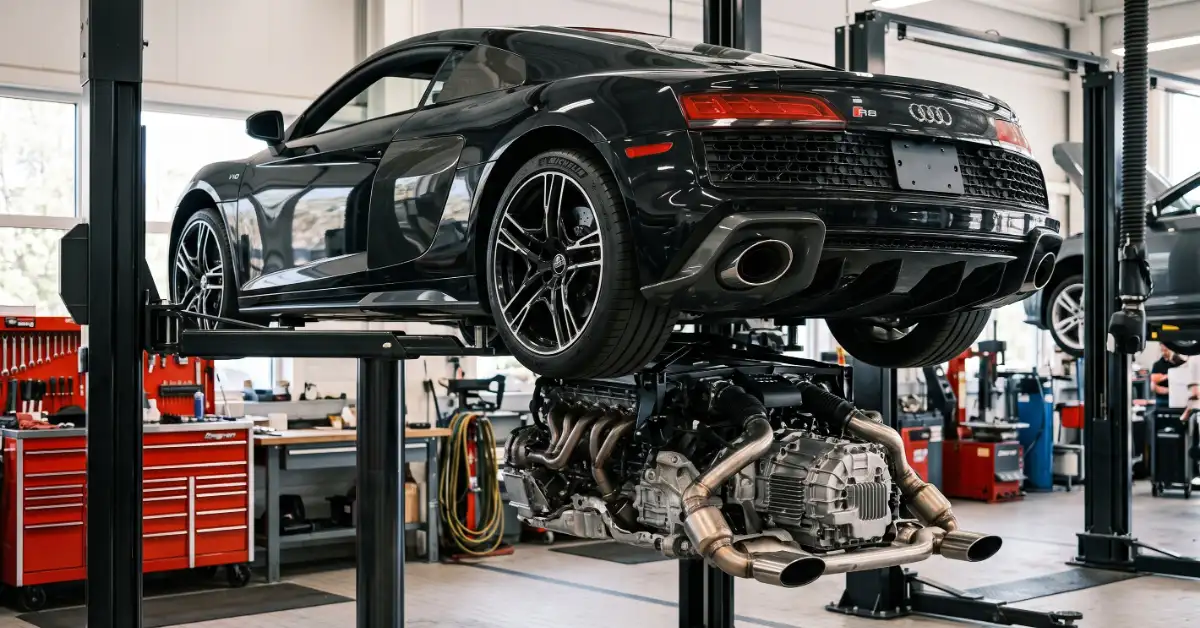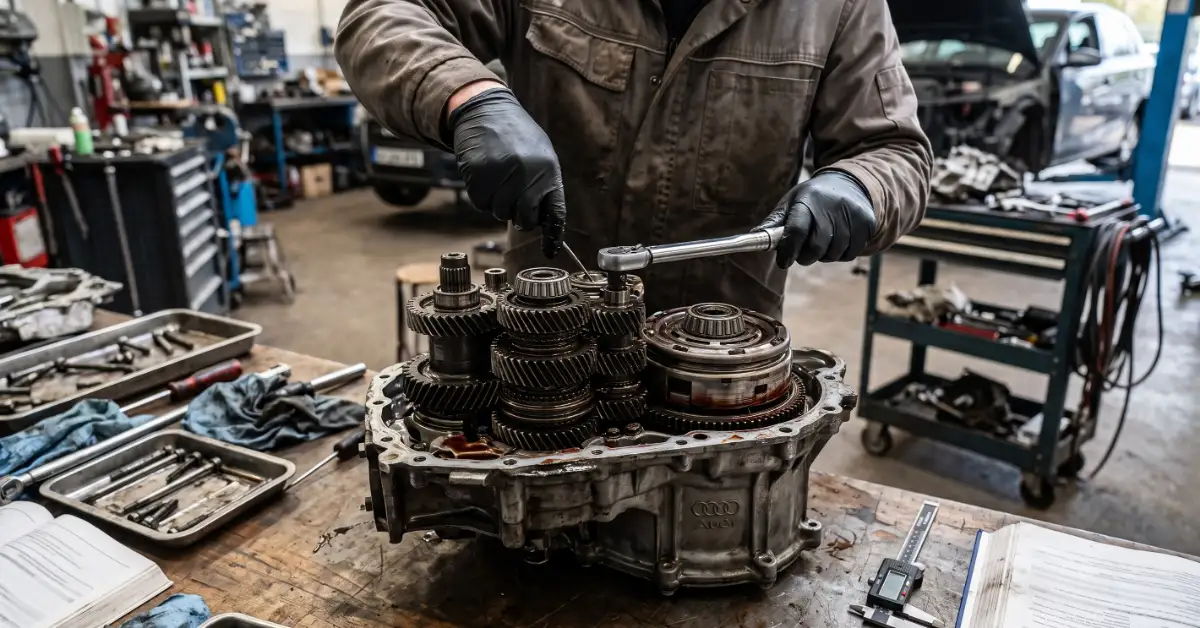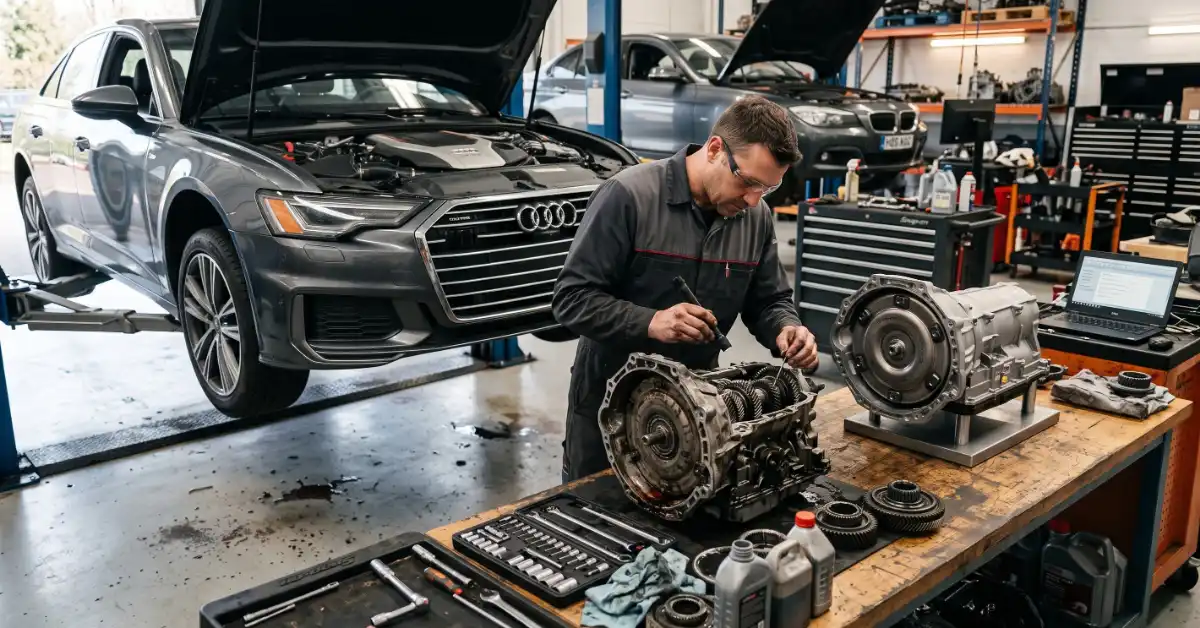
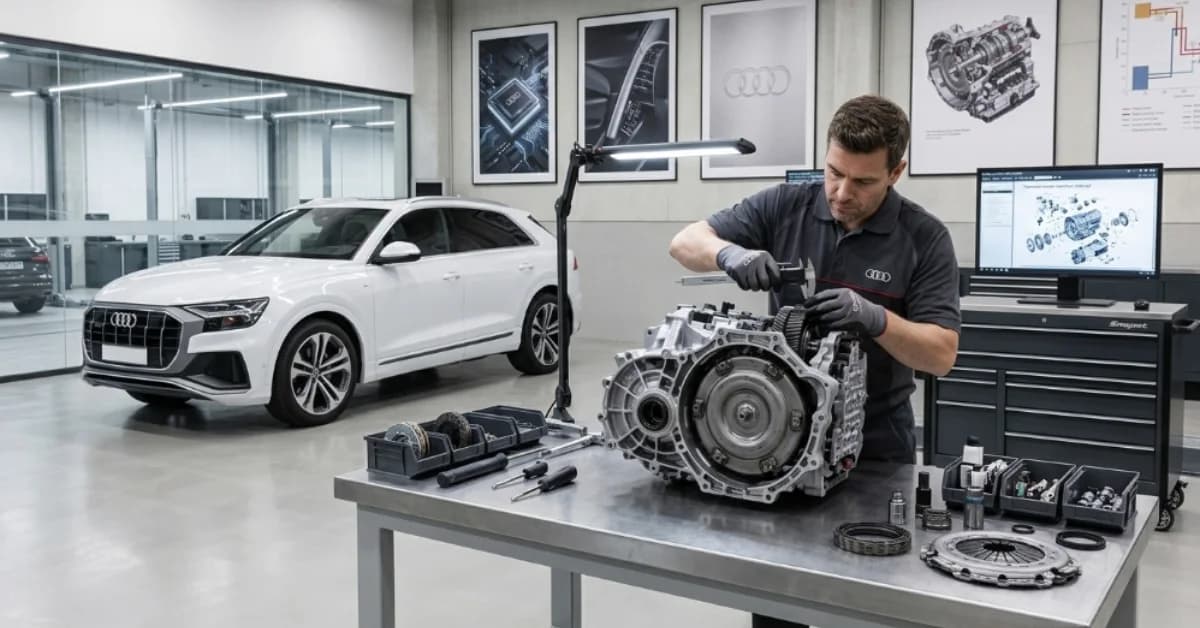
The Q7 pairs a heavy, capable SUV with an eight-speed Tiptronic gearbox that is genuinely good when it is healthy. It is also a gearbox operating close to its thermal limits every summer here, which is why the fault list below is so consistent across local cars.
The recurring problems are rough shifting, delayed gear engagement, slipping, overheating and vibration during changes. Heat, deferred maintenance and stop-start traffic drive nearly all of them, and most respond to fluid, software or component-level repair rather than a replacement gearbox, provided they are caught early.
Why These Faults Appear Here
The Q7 automatic is built for demanding conditions. Abu Dhabi still manages to exceed the assumptions behind that design.
Summer temperatures place sustained heat stress on transmission fluid, sensors and the electronic control systems together. Frequent stop-and-go traffic through the city and the industrial areas around Musaffah forces the gearbox to shift repeatedly at low speed, raising operating temperature without the airflow a highway run would provide to shed it. The vehicle's own mass adds to the load in the torque converter.
The cumulative effect is that fluid performance drops sooner than the service interval anticipates, and once it drops, internal components wear faster. Servicing on the shorter interval and diagnosing early is what keeps the gearbox out of that cycle.
The Five Common Problems
1. Harsh or jerky shifting. The most frequent Q7 gearbox complaint, particularly on higher-mileage cars. Drivers feel a sudden push or vibration during changes, most often between first and second. Old fluid, incorrect fluid level, worn clutch components or outdated transmission software all produce it. In many cases a proper diagnosis and fluid service restores shift quality without any major repair.
2. Delayed gear engagement. A noticeable pause after selecting Drive or Reverse before the car moves. More than two seconds points to a pressure issue, worn internal components, or a valve body problem, since low fluid pressure prevents the transmission from engaging quickly. Checking fluid condition, inspecting the mechatronic unit and running electronic diagnostics identifies which.
3. Gear slipping. Revs rise but the car does not accelerate properly, because the transmission cannot maintain power transfer between internal clutch components. Low fluid, damaged seals, worn clutch packs or contamination cause it. Slipping generates heat, which accelerates the wear causing the slipping, which is why ignoring it leads to a rebuild rather than a repair.
4. Mechatronic unit overheating. The mechatronic unit manages gear selection and hydraulic pressure. Extreme heat affects its sensors, solenoids and circuits, producing warning lights, incorrect shifting or emergency transmission modes. Proper cooling, clean fluid and software checks reduce the stress on it. Professional diagnosis is essential here because electronic and hydraulic faults present almost identically from the driver's seat.
5. Shuddering and vibration. Some owners feel shaking during gear changes, characteristically between 30 km/h and 60 km/h: the car appearing to struggle to shift cleanly. Worn fluid, clutch adaptation issues, torque converter problems or internal wear are the usual causes. An inspection establishes whether it needs fluid, a software adaptation, or mechanical work. Problems specific to the A6 covers how the same symptoms present on the sedan platform.
What the Repairs Involve
The right repair follows from the actual cause, and not every problem needs a replacement gearbox. Most Q7 transmission concerns resolve through maintenance, electronic adjustment, or replacing specific components.
1. Replace the fluid at proper intervals. Fluid does the cooling and protecting, and here it degrades faster because of heat and traffic. Many specialists recommend changing it between 40,000 and 60,000 km for vehicles operating in harsh climates. Take the lower figure for a Q7 that tows or spends its life in city traffic. Fresh fluid maintains hydraulic pressure, reduces friction and improves shift quality. Using the manufacturer-approved specification avoids compatibility problems, and which fluid your platform takes covers how to confirm it.
2. Repair mechatronic components rather than replacing the unit. The mechatronic assembly contains sensors, valves and solenoids. Owners often assume a fault means the whole unit, but many valve body and solenoid issues can be repaired individually after proper testing. Component-level repair restores performance at a fraction of the replacement cost, and the diagnostic work is what makes that route available.
3. Update the transmission software. Q7 transmissions depend heavily on electronic control modules for shift strategy. Rough or delayed shifting is sometimes outdated software rather than mechanical failure. Updating the Transmission Control Module and resetting clutch adaptation values can improve shift quality on its own, and a diagnostic scan establishes whether an update applies.
4. Replace damaged seals and gaskets. Leaks develop as rubber seals, gaskets and pan components wear. Losing fluid means losing hydraulic pressure and gaining internal wear. Small leaks matter because low fluid damages transmission parts quickly, and replacing seals early prevents both the loss and the overheating that follows it.
Signs That Need Inspecting Now
- Delayed response: a noticeable pause shifting from Park to Drive or Reverse
- Unusual vibrations: shaking or shuddering during acceleration or gear changes
- Burning smell: overheated transmission fluid
- Warning lights: electronic or mechanical faults the system has already logged
- Fluid leaks: oil spots under the vehicle from damaged seals or gaskets
- Strange noises: whining, humming or clunking
Early diagnosis reduces the repair cost and prevents further damage, in that order of importance.
Preventing Q7 Transmission Trouble
- Follow the recommended service intervals, adjusted down for local heat
- Use only approved transmission fluid
- Avoid hard acceleration while the vehicle is cold
- Check for fluid leaks during routine inspections
- Keep the cooling system in good condition
- Run regular diagnostic scans
- Address unusual shifting behaviour quickly
- Drive smoothly in heavy traffic, because the gearbox notices
Preventive maintenance is the whole game on a vehicle this heavy. The Q7's advanced systems contain a lot of sensitive electronics and precision hydraulics, and both last far longer when the fluid protecting them is fresh.
Getting a Q7 Gearbox Assessed
The Q7 transmission delivers the comfort and smoothness expected of the car when it is looked after. Heat and demanding conditions increase wear over time, but harsh shifting, delayed engagement, slipping, overheating and vibration are all recoverable positions when they are addressed early.
If yours is showing any of them, or is due for a scheduled inspection, the workshop that rebuilds ZF units can scan the gearbox, read live temperature and pressure data, and identify whether the fix is fluid, software, or a component.
Once a repair is agreed, the next decision is what goes back in. OEM against aftermarket parts covers where the saving is real and where it is not.