The Q3's transmission does more to define how the car drives than almost anything else, and it is also the component least tolerant of a deferred service in this climate.
Most Q3s use an S tronic dual-clutch gearbox that is fast, smooth, and dependent on clean fluid and precise hydraulic pressure to stay that way. Knowing the faults it develops, the correct fluid, and the interval that applies in Abu Dhabi rather than the one printed for Europe is what separates a Q3 that reaches high mileage from one that needs a mechatronic unit at 90,000 km.
The S tronic Gearbox in the Q3
Most modern Q3 models use a 7-speed S tronic dual-clutch transmission. Depending on model year and engine, that means either a DQ200 or a DQ500 gearbox.
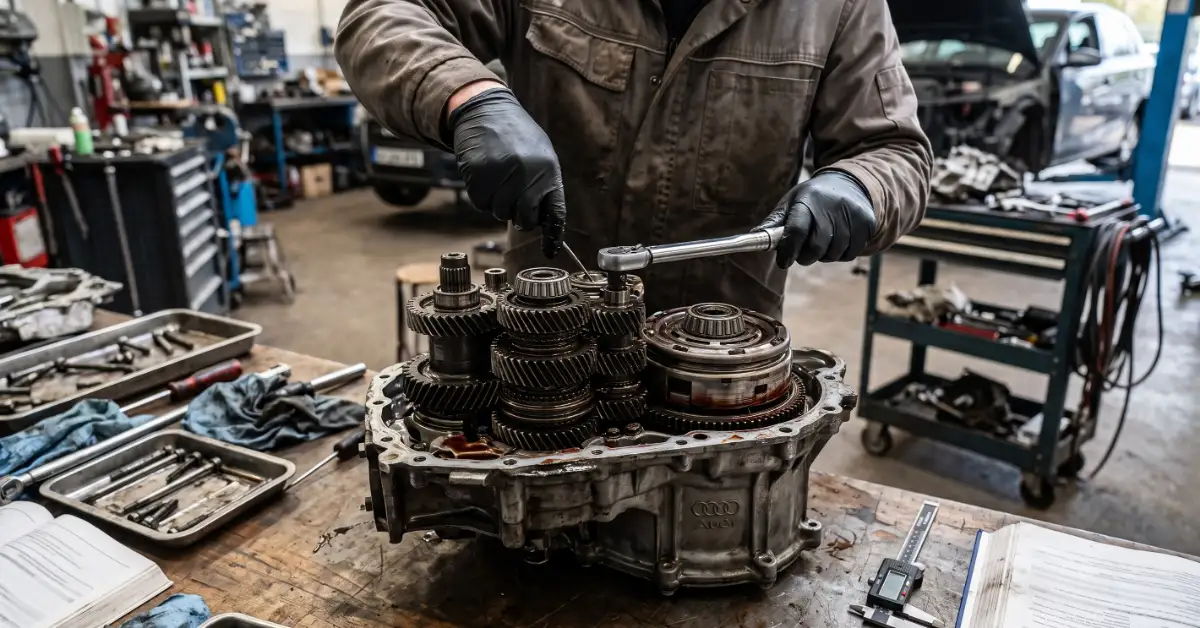
Unlike a conventional automatic, the S tronic uses two clutches to pre-select the next gear before the current shift completes. One clutch handles odd gears, the other even. While one gear is engaged, the next is already prepared, which is what produces near-instant changes without interrupting power delivery.
The whole arrangement is managed by the mechatronic unit, which combines hydraulic valves, sensors and electronic control into a single assembly. It is a brilliant piece of engineering and an expensive one to replace, which is the practical reason fluid condition matters so much on this platform.
Why Abu Dhabi Is Hard on This Gearbox
Summer temperatures here regularly exceed 45°C, and heavy traffic forces the gearbox to shift constantly at low speed. Both conditions push fluid temperature up, and both load the clutch packs and mechatronic system harder than the design case assumed.
The stop-start running around Musaffah and the surrounding industrial areas is close to a worst case for a dual-clutch gearbox. Clutches spend a disproportionate share of their time in the slipping phase of engagement, generating heat, without the sustained airflow a highway run would provide to carry it away.
Over time overheated fluid loses its protective properties. Lubrication drops, wear rises, and repair costs follow. This is the specific reason transmission maintenance should not be deferred on a Q3 driven here. The schedule assumes conditions this city does not provide.
The Faults That Recur
1. Mechatronic unit failure. The unit controls gear selection and hydraulic pressure. Heat and degraded fluid damage its electronic components and hydraulic solenoids. Symptoms are hard shifting, delayed engagement, difficulty selecting reverse, or a Transmission Malfunction warning. Ignored, the car drops into limp mode to protect itself.
The fix: a professional diagnostic scan to identify the exact fault, then repair or replacement depending on the damage. Keeping to the fluid schedule is what reduces stress on this component in the first place.
2. Rough shifting and gear judder. Many owners notice jerky changes, particularly between first and second in slow traffic. Continuous stop-and-go driving makes the dual clutches generate excessive heat, and as clutch temperature rises the gearbox shudders or hesitates under acceleration.
The fix: start with fluid condition and level. A clutch adaptation using proper diagnostic equipment usually improves shift quality significantly. Badly worn clutch packs need replacement.
3. Slipping or delayed engagement. If revs rise without the car accelerating properly, the clutch packs may be worn. Low or contaminated fluid reduces hydraulic pressure and produces the same symptom.
The fix: inspect for low fluid, worn clutch packs and pressure problems. Replacing degraded fluid and repairing worn components early is what prevents complete gearbox failure.
4. Fluid leaks. Heat weakens seals, pan gaskets and overflow plugs over time. Red or dark brown fluid appears under the car after parking. A low level reduces both lubrication and cooling, so overheating and wear follow quickly.
The fix: repair the leaking seal, gasket or plug promptly, refill with approved fluid, and set the level using the correct service procedure.
5. Overheating. High ambient temperature plus heavy traffic raises transmission temperature fast. Overheated fluid stops lubricating and cooling properly, and wear on clutches and bearings increases.
The fix: replace the fluid at the recommended interval and avoid repeated hard acceleration in traffic. If overheating persists, have the cooling system and transmission checked.
6. Limp mode. The control system has detected a serious fault and limited gear selection and power to prevent further damage. It commonly follows overheating or an electronic fault.
The fix: do not drive long distances in limp mode. Get a diagnostic scan immediately to identify the fault before resetting anything or replacing components.
7. Worn clutch packs. The dual-clutch design means clutch packs wear naturally, and stop-and-go driving plus aggressive acceleration speeds that up. Vibration, slipping, poor acceleration and rough changes are the symptoms.
The fix: have clutch wear inspected and a clutch adaptation performed where appropriate. Once the wear limit is reached, replacement is what restores normal performance. Faults seen on the Q7 covers how the same failure modes present on a heavier vehicle.
Warning Signs Worth Acting On
- Hard or delayed gear shifts
- The car jerking during acceleration
- Gear slipping while driving
- Transmission warning light
- Burning smell after driving
- Unusual whining or grinding
- Fluid leaks beneath the vehicle
- The car entering limp mode
If any of these appear, have the transmission inspected rather than continuing to drive and monitoring it.
The Service Interval That Applies Here
Audi describes the transmission fluid as long-life in some markets. That description was not written for conditions like these.
Most transmission specialists recommend replacing the fluid and filter every 40,000 to 60,000 km. Cars that spend most of their time in city traffic should follow the shorter figure, which covers most Q3s doing daily runs between the city and the industrial districts.
Fresh fluid maintains lubrication, hydraulic pressure and cooling together. All three protect components that cost far more to replace than the service does. How a fluid change is done covers the wider procedure.
Which Fluid the Q3 Takes
The S tronic has specific lubrication requirements, and this is not a place to economise. Most wet-clutch systems require Audi specification G 052 182 fluid, or an approved equivalent such as Pentosin FFL2.
These fluids are formulated to handle high temperatures while holding stable hydraulic pressure, exactly the two demands this climate places on them. Mixing fluid types, or using a universal automatic transmission fluid, produces poor shifting, overheating and premature gearbox wear. The symptoms arrive months after the saving, which is what makes it such a costly shortcut.
Why Drain and Fill Beats a Pressure Flush
Owners often ask whether the gearbox should be flushed completely. For most Q3 models, a standard drain, filter replacement and refill is the safer option.
High-pressure flushing machines disturb accumulated particles inside older gearboxes and can push debris into sensitive hydraulic valves. That creates new shifting problems rather than solving existing ones. The manufacturer's drain-and-fill procedure maintains reliability without stressing internal components, and a scheduled oil change follows exactly that method.
How the Level Is Actually Set
The Q3 transmission has no dipstick. The level has to be established through a precise service procedure with diagnostic equipment attached. A correct service runs:
- Drain the old fluid
- Replace the transmission filter
- Refill with approximately 4.5 to 5 litres of approved DSG fluid
- Start the engine and cycle through P, R, N and D
- Monitor fluid temperature with an OBD2 diagnostic scanner
- Make the final level adjustment once the fluid reaches 35°C to 45°C
That temperature window is the part that cannot be skipped. ATF expands as it warms, so a level set outside the window leaves the gearbox over or underfilled once it reaches working temperature, and on a dual-clutch unit both are damaging.
When to See a Specialist
Any time shifting becomes inconsistent or a warning light appears. Modern dual-clutch gearboxes need advanced diagnostic tools to read fault codes, monitor live transmission temperature, perform clutch adaptations and check hydraulic pressure, none of which a general workshop scanner will do.
Delaying repairs is what turns a small issue into a gearbox replacement. Early diagnosis almost always means a lower bill and a more reliable transmission afterwards.
Keeping the Q3 Out of the Workshop
Regular fluid changes, the correct DSG specification, and acting on warning signs early are what keep an S tronic gearbox performing for years. None of it is difficult, and all of it is cheaper than the alternative.
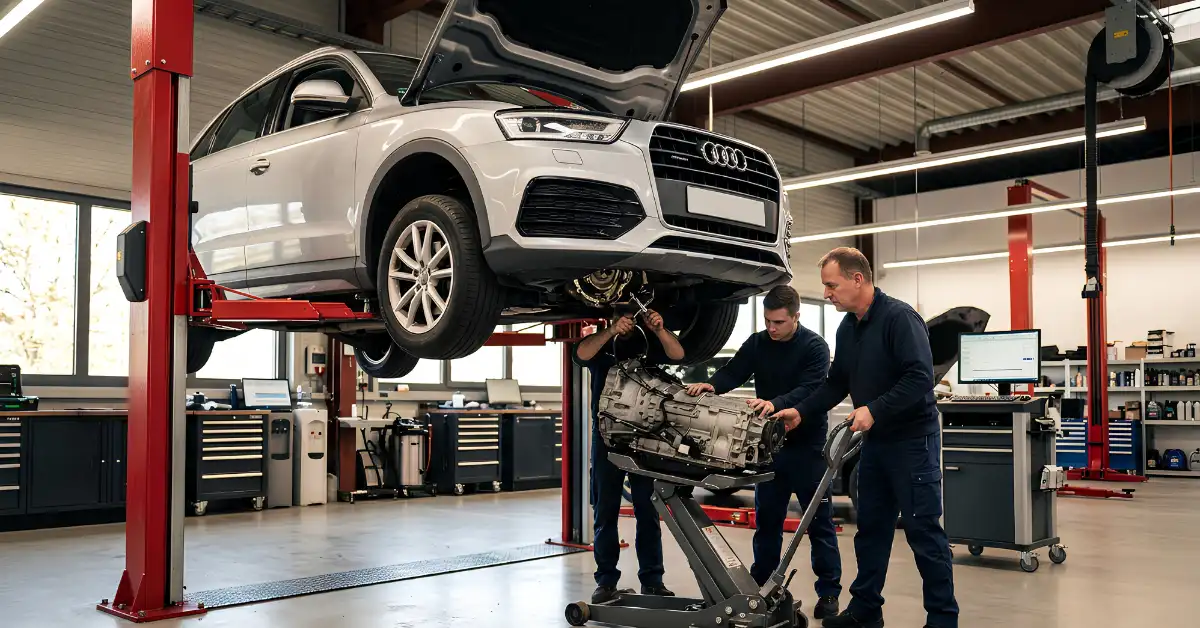
If your car has rough shifting, warning lights, delayed engagement, or is simply due for a service, a Q3 gearbox inspection in Musaffah can have the gearbox scanned, the fluid condition assessed, and the level set properly at temperature.