
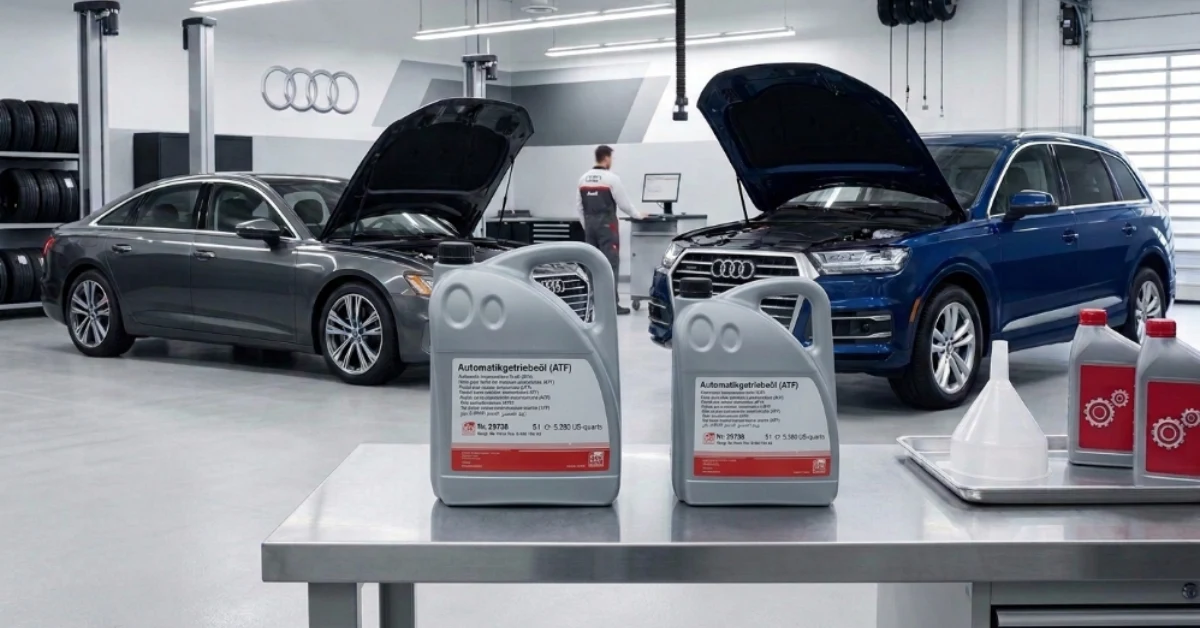
Driving an Audi is all about smooth performance, quick response, and comfort on the road. One important factor that helps achieve this is the transmission fluid. Many Audi owners focus on engine oil changes but often overlook the transmission system, which plays a major role in vehicle performance and reliability.
Audi transmission fluid capacity varies depending on the model, transmission type, and production year. For example, an Audi A6 may require a different amount of fluid than an Audi Q7 or Audi A4.
Most Audi automatic transmissions hold between 6 and 10 liters of transmission fluid during a complete service, while some larger SUV models may require even more. Knowing the correct fluid capacity helps maintain smooth gear shifts, prevents overheating, and extends transmission life.
Why Transmission Fluid Is Important in Audi Vehicles?
Audi transmission fluid performs several critical functions inside the gearbox. It lubricates moving parts, reduces friction, controls heat, and helps transfer hydraulic pressure needed for gear changes. Modern Audi transmissions are highly advanced and depend on clean fluid to operate correctly.
When transmission fluid becomes dirty or drops below the recommended level, drivers may notice rough shifting, delayed gear engagement, unusual noises, or increased operating temperatures. Regular maintenance helps avoid these issues and keeps the transmission functioning efficiently for many years.
Audi Transmission Fluid Capacity Overview
Different Audi models use different transmission systems, including Tiptronic, S Tronic, Multitronic, and ZF automatic gearboxes. Each transmission has its own fluid requirements and service procedures.
The amount of fluid needed depends on whether a simple drain and refill is performed or a complete transmission service is completed. During a drain and refill, only a portion of the fluid is replaced. A complete service generally requires more fluid because it includes replacing fluid stored throughout the transmission system.
Common Audi Transmission Fluid Capacities
Audi Model | Transmission Type | Approximate Fluid Capacity |
Audi A3 | S Tronic | 5.5 – 7 Liters |
Audi A4 | Tiptronic / S Tronic | 6 – 9 Liters |
Audi A5 | S Tronic | 6 – 8 Liters |
Audi A6 | Tiptronic / ZF Automatic | 7 – 10 Liters |
Audi A7 | S Tronic | 7 – 9 Liters |
Audi Q3 | S Tronic | 5.5 – 7 Liters |
Audi Q5 | Tiptronic / S Tronic | 7 – 9 Liters |
Audi Q7 | ZF Automatic | 9 – 12 Liters |
Audi Q8 | Tiptronic | 8 – 11 Liters |
Audi S and RS Models | Performance Transmission | Varies by model |
These figures are general estimates. Always verify specifications using the vehicle identification number and manufacturer recommendations.
Audi A6 Transmission Fluid Capacity
The Audi A6 is one of the brand’s most popular luxury sedans and has been offered with several transmission options over the years. Depending on the engine and gearbox configuration, fluid capacity can range from approximately 7 to 10 liters.
Many newer Audi A6 models use ZF automatic transmissions that require specialized transmission fluid meeting Audi specifications. Using the correct fluid grade is essential because modern gearboxes rely on precise hydraulic pressure and friction characteristics. Incorrect fluid can affect shift quality and potentially cause internal wear.
Signs the Audi A6 Needs Transmission Service
Several warning signs may indicate that transmission maintenance is overdue. Drivers should pay attention to any changes in shifting performance or unusual behavior while driving.
Common symptoms include:
- Hard or rough gear changes
- Delayed acceleration response
- Slipping gears
- Transmission warning lights
- Vibrations during shifting
- Unusual whining or grinding sounds
- Burning smell from overheated fluid
Addressing these symptoms early can help prevent expensive transmission repairs.
Audi Q7 Transmission Fluid Capacity
The Audi Q7 is a larger SUV with a heavier drivetrain and greater towing capability. Because of its size and performance demands, the transmission typically requires more fluid than smaller Audi models. Most Audi Q7 transmissions hold between 9 and 12 liters during a complete fluid service.
The Q7 often uses a ZF 8-speed automatic gearbox known for smooth shifting and durability. However, this transmission still depends on proper maintenance. Heavy loads, frequent stop-and-go driving, high temperatures, and towing can place additional stress on transmission components and fluid.
Why Q7 Owners Should Monitor Transmission Health?
A large SUV generates significant heat during operation. Transmission fluid helps remove that heat and protects internal parts from excessive wear. As fluid ages, its cooling and lubricating properties gradually decline.
Regular fluid inspections can help identify contamination, leaks, or low fluid levels before they become serious problems. Preventive maintenance often costs far less than rebuilding or replacing a damaged transmission.
Audi A4, A5, and Other Popular Models Fluid Capacity
Audi’s smaller sedan and coupe models generally require less transmission fluid than larger SUVs. The Audi A4 and A5 commonly use S Tronic dual-clutch transmissions or Tiptronic systems, depending on model year and engine configuration.
These transmissions are engineered for quick and efficient gear changes. Because they contain advanced electronic and hydraulic systems, maintaining the correct fluid level is extremely important. Even small deviations can affect performance, fuel economy, and overall driving comfort.
Transmission Capacities for Other Audi Models
Fluid requirements vary across the Audi lineup because each vehicle is designed for different performance and driving conditions.
Typical capacity ranges include:
- Audi A3: 5.5 to 7 liters
- Audi A4: 6 to 9 liters
- Audi A5: 6 to 8 liters
- Audi Q3: 5.5 to 7 liters
- Audi Q5: 7 to 9 liters
- Audi Q8: 8 to 11 liters
Always check the specific transmission code before ordering fluid or scheduling maintenance.
How Often Should Audi Transmission Fluid Be Changed?
Many vehicle owners wonder whether transmission fluid really needs replacement. While some manufacturers previously marketed certain transmissions as “lifetime filled,” automotive experts generally recommend periodic service to maintain long-term reliability.
For most Audi vehicles, transmission fluid service is commonly recommended between 50,000 and 80,000 kilometers, depending on driving conditions. Vehicles that experience heavy traffic, extreme temperatures, towing, or aggressive driving may benefit from more frequent maintenance intervals.
Clean fluid helps maintain proper hydraulic pressure, reduces wear, and supports smoother shifting performance throughout the transmission’s lifespan.
What Happens If Transmission Fluid Is Low?
Low transmission fluid can create several problems that affect both performance and reliability. Because fluid provides lubrication and hydraulic pressure, insufficient fluid can quickly lead to increased wear and overheating.
Potential consequences include:
- Slipping gears
- Delayed shifting
- Overheating transmission components
- Increased internal friction
- Premature clutch wear
- Reduced fuel efficiency
- Expensive repair costs
Ignoring low fluid levels can turn a minor maintenance issue into a major mechanical failure.
Choosing the Correct Audi Transmission Fluid
Not all transmission fluids are the same. Audi transmissions require fluids that meet specific manufacturer standards. Different gearboxes use unique friction materials and hydraulic systems that are designed around approved fluid formulations.
When selecting transmission fluid, technicians should verify:
- Vehicle model and year
- Transmission type
- OEM fluid specification
- Service bulletin updates
- Transmission code
Using the correct fluid helps maintain factory performance and protects sensitive transmission components from unnecessary wear.
Professional Transmission Service vs DIY Maintenance
Some vehicle owners attempt to change the Audi transmission fluid themselves, but modern Audi transmissions often require specialized tools and procedures. Fluid levels are commonly checked at specific operating temperatures using diagnostic equipment.
Professional service technicians can accurately measure fluid levels, inspect transmission components, replace filters when required, and verify proper operation after service. This reduces the risk of incorrect filling procedures that may affect transmission performance.
Factors That Affect Transmission Fluid Life
Transmission fluid does not wear out at the same rate in every vehicle. Several factors can accelerate fluid degradation and increase maintenance requirements.
These factors include:
- High ambient temperatures
- Frequent traffic congestion
- Heavy towing loads
- Aggressive acceleration
- Mountain driving
- Extended idling
- Poor cooling system performance
Understanding these conditions helps owners develop a maintenance schedule that matches their driving habits.
Conclusion
Audi vehicles are engineered with advanced transmission systems that depend on clean, properly filled fluid for smooth operation. Audi transmission fluid capacity varies between models, such as the A6, Q7, A4, Q5, and others, with most systems requiring anywhere from 5.5 to 12 liters, depending on the transmission type and service procedure.
Checking the correct specification, using approved fluid, and following recommended service intervals can help prevent costly repairs and maintain long-term reliability.
If your Audi needs transmission fluid replacement, transmission inspection, complete gearbox maintenance, or any other Audi transmission service, contact 800Sayara. Our experienced technicians can diagnose transmission issues, perform professional fluid services, and help keep your Audi running smoothly on every journey.