An Audi should accelerate smoothly when you press the gas pedal. If your car starts shaking, vibrating, or jerking as its speed increases, something may be wrong with the engine, tyres, suspension, or drivetrain. The problem may be small at first, but ignoring it can lead to more damage and higher repair costs.
The most common reasons an Audi shakes when accelerating include worn spark plugs, faulty ignition coils, damaged engine mounts, and unbalanced tyres. Problems with the driveshaft, CV joints, or the transmission can also cause strong vibrations when the car picks up speed.
In some cases, blocked fuel injectors or air intake leaks can affect engine power and make the car shake. Finding the cause early helps protect your Audi and keeps your drive safe and comfortable.
8 Reasons Your Audi Shakes When Accelerating
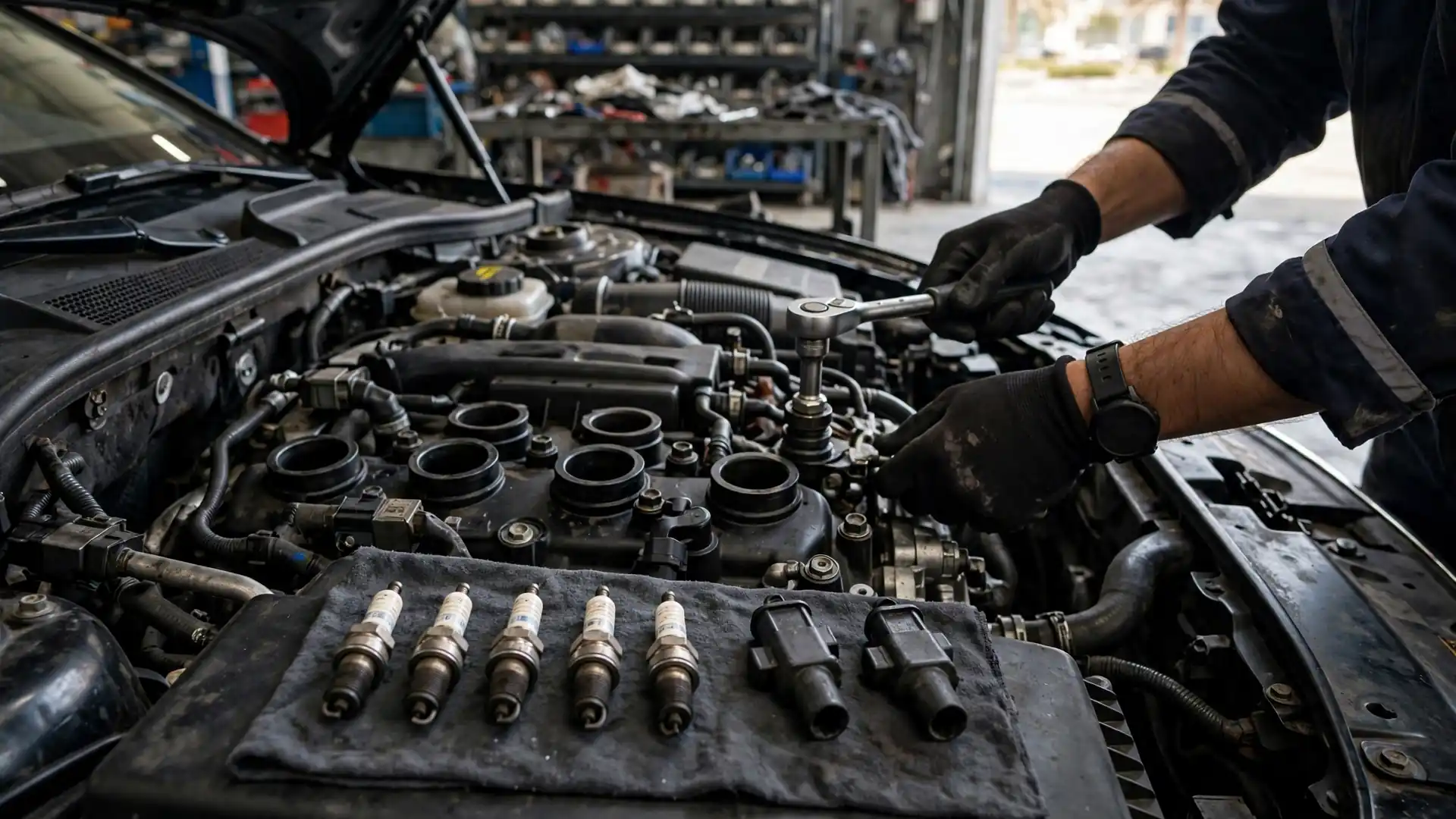
1. Worn Spark Plugs Can Cause Engine Misfires
Spark plugs create the spark needed to burn the fuel inside each engine cylinder. When they become worn, dirty, or damaged, they may not produce a strong spark at the right time. This can cause an engine misfire, which means one or more cylinders fail to burn the fuel properly.
Your Audi may shake when you press the accelerator, especially when climbing a hill or trying to gain speed quickly. You may also notice weak power, rough engine sounds, or higher fuel use.
Signs of Bad Spark Plugs
A spark plug problem may become more noticeable when the engine is under load. This happens because the engine needs a stronger, steady spark to produce more power during acceleration.
Common warning signs include:
- Shaking when pressing the gas pedal.
- Rough idling while the car is stopped.
- Slow acceleration or loss of power.
- Poor fuel economy.
- An engine warning light on the dashboard.
A mechanic can inspect the spark plugs and check for misfire codes using a diagnostic scanner. The correct spark plug type and replacement interval depend on your Audi's engine. Replacing worn plugs can restore smooth engine operation when they are the cause of the problem.
2. Faulty Ignition Coils
Ignition coils supply the high voltage needed for spark plugs to ignite the air and fuel mixture. If a coil becomes weak or fails, the affected cylinder may stop producing power correctly. This can make the engine shake during acceleration, particularly when you press the accelerator firmly.
Some Audi models may run roughly even at idle, while others show symptoms only at higher speeds or under heavy load. A faulty coil can also cause the engine warning light to flash.
How Do Ignition Coil Problems Affect Acceleration?
When one cylinder does not burn fuel properly, the engine loses some of its power. The other cylinders continue working, creating uneven engine operation that you may feel through the steering wheel, seats, or pedals.
A diagnostic scan may show a cylinder-specific misfire code. A technician can then inspect the ignition coil, spark plug, and wiring to find the exact cause. Replacing a coil without checking the related parts may not solve the issue if a worn spark plug or wiring fault is responsible.
If the engine warning light flashes while the car shakes, avoid hard acceleration and arrange a prompt inspection because an active misfire can damage the catalytic converter.
3. Damaged Engine Mounts
Engine mounts hold the engine in place and reduce the vibrations that reach the cabin. They often use rubber or fluid-filled sections to absorb movement. Over time, heat, age, and engine movement can weaken these parts. When a mount breaks or wears out, the engine may move too much as you accelerate. This can create a strong vibration, a knocking sound, or a sudden jolt when power reaches the wheels. The shaking may become worse when shifting gears or moving away from a stop.
How to Recognize Worn Engine Mounts
A damaged mount often causes more vibration when the engine is under load. You may feel it through the steering wheel or floor, even when the tyres and wheels are in good condition. A clunk may occur when you press or release the accelerator.
A mechanic can inspect the mounts for cracks, separated rubber, loose bolts, or leaks from fluid-filled designs.
The technician may also check the gearbox mounts because they help support the transmission and control movement. If the mounts are worn, replacing the damaged parts can reduce vibration and protect nearby hoses, wiring, and other components from extra movement.
In this climate the mounts are worth checking early rather than last. Summer temperatures above 45C age rubber faster, so on an older Audi in Abu Dhabi a hardened or split mount is a more likely cause of vibration under load than it would be in a cooler country.
4. Unbalanced Tyres and Wheel Problems
If your Audi shakes mainly as its road speed increases, the tyres and wheels are worth checking. Each wheel needs to be balanced so its weight is spread evenly around the centre. If a wheel is unbalanced, it can vibrate as it spins faster. You may feel the shaking through the steering wheel, seat, or floor.
A bent wheel, uneven tyre wear, or a damaged tyre can create similar symptoms. Although the vibration may become more noticeable during acceleration, it can also continue when you maintain a steady speed.
Signs of Tyre or Wheel Imbalance
Wheel imbalance often causes vibration within a certain speed range. For example, the car may feel smooth at low speeds but begin shaking as you drive faster. Steering wheel vibration often points toward the front wheels, while vibration through the seat may involve the rear wheels, although this is not a definite rule.
Check for:
- Uneven wear across the tyre tread.
- Bulges or cuts on the tyre sidewall.
- Missing wheel balance weights.
- Bent rims after hitting a pothole.
- Loose wheel bolts or unusual wheel movement.
A tyre specialist can inspect the wheels, check tyre pressure, and carry out wheel balancing. If a tyre has structural damage, balancing alone will not fix the problem. Damaged tyres should be assessed promptly because they can affect road safety.
5. Damaged Driveshaft or CV Joints
The driveshaft transfers power from the transmission to the wheels. Constant velocity joints, often called CV joints, help deliver that power while allowing the wheels to move with the suspension and turn during steering.
If a CV joint wears out or the driveshaft becomes damaged or unbalanced, your Audi may shake when accelerating. The vibration can be stronger when climbing a hill or applying more power. In some cases, you may hear clicking during turns or feel a clunk when changing between acceleration and deceleration.
What Are the Signs of a CV Joint Problem?
A damaged outer CV joint often makes a clicking sound when turning sharply, while an inner CV joint can cause vibration under acceleration. A torn rubber CV boot may allow grease to escape and dirt to enter, speeding up joint wear.
A mechanic can inspect the CV boots, joints, driveshafts, and related connections for damage or excess movement. The repair may involve replacing a CV joint or the complete driveshaft, depending on the design and condition of the parts. Do not ignore strong vibration that becomes worse as you accelerate because a damaged drivetrain part can affect how power reaches the wheels.
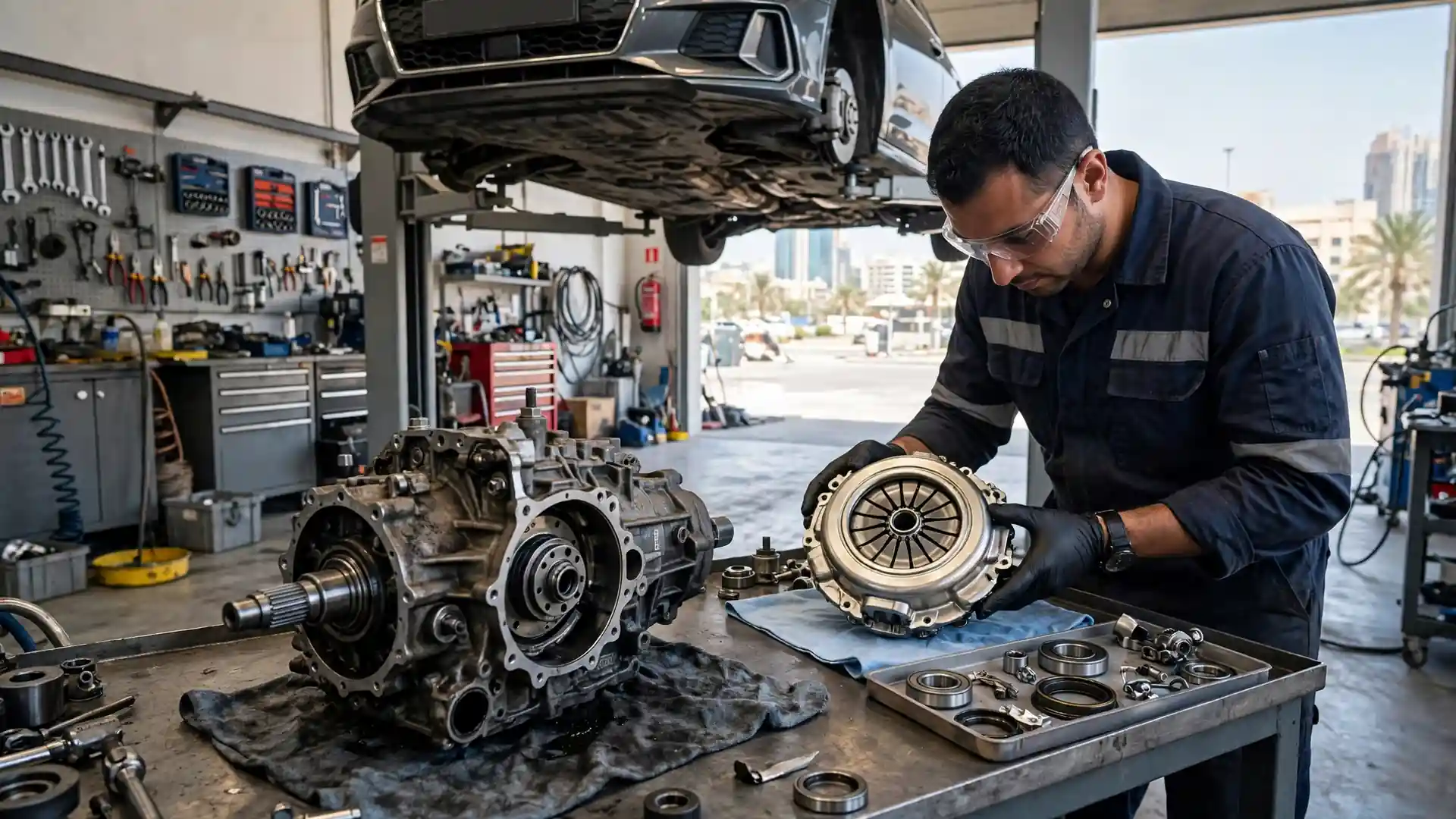
6. Transmission Problems
Your Audi's transmission changes the gear ratio to match the engine's speed and the car's driving conditions. If the gearbox has a fault, you may feel shaking or shuddering when accelerating.
Possible causes include worn clutch parts, incorrect transmission fluid levels, damaged internal components, or problems with the electronic control system.
Some cars may hesitate before moving, while others may jerk as the transmission changes gears. The exact symptoms depend on whether your Audi uses an S tronic, tiptronic, manual, or another transmission type.
How Transmission Faults Cause Shaking
In some automatic gearboxes, worn clutch parts may not engage smoothly. This can create a shudder when the car moves away from a stop or changes gears. Incorrect fluid levels or fluid that no longer meets the gearbox's needs can also affect how smoothly the transmission operates.
Watch for these signs:
- Shaking during gear changes.
- Delayed response when selecting drive.
- Engine revs rising without normal acceleration.
- Harsh shifts or sudden jerks.
- Transmission warning messages.
A qualified technician can scan the transmission control module, check fluid condition where applicable, and review operating data. The correct diagnosis is important because transmission symptoms can overlap with engine misfires and worn mounts. What the mechatronic unit does explains how the gearbox controls each change, and if the shaking comes mainly during gear changes rather than steady acceleration, rough shifting and its causes goes through those faults one by one.
7. Fuel Injector Problems
Fuel injectors deliver a measured amount of fuel into the engine. If an injector becomes blocked, leaks, or fails to work correctly, the engine may not receive the right amount of fuel in one or more cylinders.
This can cause uneven combustion and make your Audi shake when accelerating. You may also notice weak power, rough idling, higher fuel use, or difficulty starting the engine. The problem may be more noticeable when you press the accelerator because the engine needs more fuel to produce additional power.
Can Dirty Fuel Injectors Cause Vibration?
Yes. Deposits can affect the injector's spray pattern, making it harder to deliver fuel evenly. An electrical fault can also stop an injector from opening or closing as intended. However, similar symptoms can come from faulty spark plugs, ignition coils, fuel pressure problems, or air leaks.
A technician can check fuel pressure, scan for fault codes, and test injector operation. Depending on the findings, the repair may involve cleaning the injectors using a suitable method or replacing a faulty part.
Avoid using random cleaning products as a substitute for proper testing. Finding the real cause helps prevent unnecessary part replacement and restores smooth engine performance.
8. A Blocked Air Filter or Air Intake Leak
Your Audi's engine needs the right balance of air and fuel to run properly. A dirty air filter can restrict airflow, while a leak in the intake system can allow extra air to enter without being measured correctly.
These problems may affect engine performance and cause hesitation or uneven acceleration. Some drivers notice shaking when the engine is under load, especially when climbing a hill or speeding up to join highway traffic. The symptoms depend on the engine type and the location of the fault.
How Airflow Problems Affect Engine Performance
Modern Audi engines use sensors to measure or estimate incoming air and adjust fuel delivery. If an intake hose cracks or a connection becomes loose, the engine control unit may receive incorrect airflow information. This can affect the air-fuel mixture and cause rough running.
A mechanic can inspect the air filter, intake hoses, clamps, and related sensors. Smoke testing may help find small leaks that are difficult to see.
Replacing a dirty filter or repairing a damaged hose may solve the problem if airflow is the cause. If the shaking continues, further engine testing may be needed to check for other faults.
Why Does My Audi Shake Only When Accelerating at High Speeds?
If your Audi shakes mainly at higher speeds while you press the accelerator, the problem may involve the drivetrain, engine performance, or wheels. A worn inner CV joint or driveshaft can cause vibration when power is applied.
Engine misfires may become more noticeable under heavy load, while wheel imbalance or tyre damage may create vibration as the wheels spin faster. The speed at which the shaking begins and whether it stops when you release the accelerator can help the technician narrow down the cause.
How Much Does It Cost to Fix an Audi That Shakes When Accelerating?
Repair costs depend on the cause, Audi model, parts required, and labour time. Replacing spark plugs or repairing a small intake leak is usually less complex than repairing a damaged driveshaft or internal transmission fault.
Wheel balancing may be enough if the problem comes from wheel imbalance, but it will not fix a damaged tyre or worn suspension part. The workshop should test the car before giving a final repair estimate.
Common Repairs and Their Cost Factors
| Repair type | What affects the cost? |
|---|---|
| Spark plug replacement | Engine type, number of plugs, and access |
| Ignition coil repair | Number of faulty coils and related wiring |
| Wheel balancing | Wheel size, tyre condition, and balancing needs |
| Engine mount replacement | Number of damaged mounts and labour time |
| CV joint or driveshaft repair | Part design, damage level, and labour |
| Fuel system repair | Pump, injector, pressure control, or wiring faults |
| Transmission repair | Gearbox type, internal damage, and parts needed |
| Suspension repair | Damaged components and alignment requirements |
These are general repair categories, not fixed prices. Ask for a diagnostic report and a written estimate before approving major work. A reliable workshop should explain which parts have failed, why they need repair, and whether there are safe repair options for your vehicle.
Conclusion
If your Audi shakes when accelerating, the cause may be a worn spark plug, faulty ignition coil, damaged engine mount, unbalanced wheel, worn CV joint, or transmission fault. Fuel delivery problems, air intake leaks, and worn suspension parts can also affect how smoothly the car drives.
The timing of the vibration, the road speed, and any warning lights can help a technician narrow down the possible causes. Do not ignore strong shaking, repeated loss of power, unusual sounds, or any of the other symptoms to watch for.
Early diagnosis can help prevent more damage and reduce repair costs. A proper inspection of the engine, wheels, transmission, and drivetrain is the best way to find the right solution.
If your Audi needs professional attention, bring it in for Audi repair at the M9 workshop. An experienced workshop can inspect the cause of the vibration, explain the repair options, and help restore smooth and safe performance.